
Israeli Election to Be Held Tomorrow: Eight Scenarios That Could Decide Netanyahu’s Fate
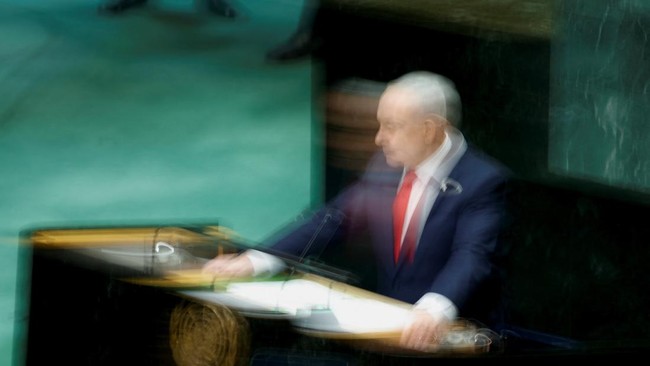
Israel will hold a general election on 27 October 2026. The vote could bring an end to Prime Minister Benjamin Netanyahu’s long period in power, although the result may not immediately remove him from office.
The election will determine all 120 seats in Israel’s parliament, the Knesset, and is the first since the Hamas-led attack on 7 October 2023. The attack was followed by Israel’s war in the Gaza Strip, which some parties have described as genocide, and a widening regional conflict that has seen Israel launch attacks in several countries in the region.
Opinion polls indicate a close contest between the right-wing bloc supporting Netanyahu and an opposition coalition dominated by Jewish groups. However, an opposition victory at the ballot box would not automatically mean Netanyahu loses power.
Israel’s proportional electoral system requires parties to negotiate to form a coalition commanding a majority in the Knesset. No single party has ever won an outright majority of at least 61 of the 120 seats.
According to several recent polls, the opposition bloc is projected to win 52 seats, while the nationalist-religious alliance supporting Netanyahu is forecast to take 50. In that situation, parties led by Palestinians in Israel could prove pivotal in forming a government.
Here are eight possible political scenarios after the Israeli election, as reported by Al Jazeera.
- Netanyahu forms a government again
Although he is narrowly trailing in some polls, Netanyahu could remain prime minister if his Likud party secures sufficient parliamentary support from long-standing allies and potential new coalition partners.
His traditional partners include the Jewish Power party, led by far-right National Security Minister Itamar Ben-Gvir, and the Religious Zionism party, led by Finance Minister Bezalel Smotrich.
The two ultra-Orthodox parties, Shas and United Torah Judaism, could also play an important role. Both have joined Netanyahu-led coalitions several times, but have also withdrawn their support, most recently in 2025.
If these parties again provide sufficient backing, Netanyahu could form a new government even if his bloc does not finish first in the election.
- The opposition forms a majority government
In late September, four opposition parties signed a non-aggression pact agreeing to work together to remove Netanyahu from power.
The parties are Yashar, the Democrats, Yisrael Beiteinu and the Together alliance. They said they shared the goal of “preserving and strengthening Israel as a Jewish and democratic state”.
The opposition bloc has not announced who would lead a government if it secured a majority. However, former military chief Gadi Eisenkot, leader of the Yashar party, is seen as a potential prime minister.
Another possible candidate is former prime minister Naftali Bennett, who leads the Together alliance with Yair Lapid.
If the bloc can unite enough parties to command at least 61 seats, a new government without Netanyahu could be formed.
- A government involving Ra’am
The two Arab-led parties, Joint List and Ra’am, are expected to win around 13 seats between them. They represent Palestinians who hold Israeli citizenship and make up about 20% of the country’s population.
Ra’am, also known as the United Arab List, made history in 2021 by joining Bennett’s governing coalition. It became the first Arab-led party to take part in an Israeli government coalition.
Ra’am leader Mansour Abbas has openly indicated that the party could do so again if the opposition coalition needs additional seats to form a government.
Abbas has identified several priorities, including tackling the wave of violent crime affecting Palestinian communities and changing government policies he considers discriminatory, including those concerning housing.
However, most opposition leaders, including Eisenkot, have rejected the possibility of forming such an alliance. That stance could make it harder for the opposition to secure the parliamentary support it needs.
- A minority government
If a coalition falls short of 61 seats, it could seek support from other parties in parliament without bringing them directly into government. Parties led by Palestinians in Israel could be among those offering such backing.
The Joint List, comprising the Hadash, Ta’al and Balad factions, has said it could act as a kind of safeguard for an anti-Netanyahu coalition by withholding support for a motion of no confidence, without formally joining the cabinet.
In return, the Joint List is reportedly expected to make demands, including a pathway towards the establishment of a Palestinian state and efforts to combat organised crime.
A minority government would nevertheless risk instability. Disagreements over key policies or defections by members of parliament could cause it to lose support at any time.
- A national unity government
According to the Israeli parliament, a national unity government is “a government based on a broad coalition, whose members also include representatives of competing parliamentary groups”.
Such governments are usually formed during a national emergency, such as war, a natural disaster or an economic crisis.
In May 2020, Netanyahu and Benny Gantz formed a unity government after three previous elections failed to produce a stable administration. Their agreement collapsed in less than a year.
In 2023, after the Hamas-led attack on Israel, Gantz and several members of his party again joined Netanyahu’s coalition. The move was seen as the formation of an emergency unity government, although Gantz had previously been one of Netanyahu’s staunchest opponents.
A similar arrangement could be considered again if the election results prevent either bloc from governing alone and the political situation pushes the two sides to work together.
- The premiership is rotated
Another option is a power-sharing agreement under which two political leaders take turns serving as prime minister.
Netanyahu and Gantz agreed to such an arrangement in 2020, but their coalition collapsed before Gantz could take over the premiership.
Bennett and Lapid also used a similar arrangement when they formed a government in June 2021. Under their agreement, the premiership was due to pass to Lapid after Bennett had served first.
However, Bennett’s coalition lost its parliamentary majority in June 2022. Lapid then became caretaker prime minister in July that year.
A rotation agreement could be considered again if parties need to compromise over competing leadership claims and secure majority support.
- A new prime minister from the same political bloc
A change of prime minister does not necessarily require a change in the political bloc in power. In Israel, members of the Knesset determine who will lead the government after an election through the coalition-forming process.
If negotiations reach an impasse because some parties refuse to work with a particular leader, they could agree on another candidate from the same political camp.
Under this scenario, parties supporting Netanyahu could choose another member of parliament who is more acceptable to potential coalition partners. The same could happen in the opposition camp if its parties struggle to agree on a candidate for prime minister.
Netanyahu could therefore lose his position even if his political bloc remained part of the government.
- No agreement, and Israel holds another election
The final scenario is that all sides fail to reach an agreement to form a government. If no leader can secure sufficient support in the Knesset, Israel could face renewed political uncertainty and another election.
The country held five elections between 2019 and 2022 after rival political blocs repeatedly struggled to form a stable government.
If the same situation recurs, Netanyahu would remain in office as caretaker prime minister until a new government is formed and begins work.
The 27 October election will therefore determine not only how many seats each party wins, but also set off a series of negotiations that could decide who ultimately leads Israel.
Source: jawawa.id (https://jawawa.id/newsitem/israeli-election-to-be-held-tomorrow-eight-scenarios-that-could-decide-netanyahus-fate-1792975830)
Originally published by CNBC Indonesia (https://www.cnbcindonesia.com/news/20261026064218-4-779297/pemilu-israel-digelar-besok-ini-8-skenario-penentu-nasib-netanyahu), translated from Indonesian