
Israeli Election Deadlock Leaves Netanyahu on a Knife Edge as Shekel Soars 2%
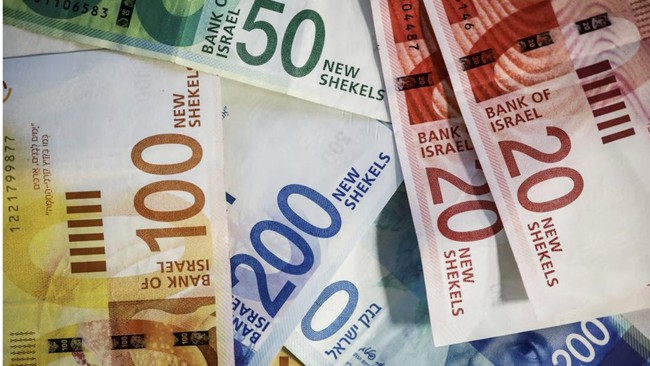
Jakarta, CNBC Indonesia — Israel’s currency has been volatile amid the general election that will determine the fate of Prime Minister Benjamin Netanyahu’s government.
The shekel (ILS) briefly surged nearly 2% against the US dollar, although it has since weakened after preliminary election results failed to identify a clear winner.
Refinitiv data show that at the close of trading on Tuesday (27 October 2026), the shekel stood at ILS 3.0541 per US dollar, up around 0.77% from the previous day’s close of ILS 3.0777 per US dollar.
During Tuesday’s intraday trading, it rose by around 1.8% to ILS 3.02 per US dollar, its strongest level in five weeks, or since 22 September 2026.
However, the gains proved short-lived. By 10.20am WIB on Wednesday (28 October 2026), the shekel had reversed course, falling around 0.94% to ILS 3.0832 per US dollar.
Despite this, the Israeli shekel was still up 3.15% against the US dollar year to date in 2026.
The currency’s change of direction over the past two days is closely linked to the election, which is taking place amid domestic political tensions in Israel and the protracted conflict in the Middle East.
Markets had welcomed the possibility of Netanyahu’s government ending, but now face renewed uncertainty after exit polls showed a close contest.
Why Did the Shekel Strengthen During Israel’s Election?
The shekel’s rise on Tuesday came as millions of Israelis voted in the first election since the Hamas attack on 7 October 2023.
The election is a major political test for Netanyahu, who has led Israel for nearly two decades, though not consecutively.
His leadership has come under pressure over the protracted war in Gaza, national security concerns and government policies that have fuelled political divisions at home.
Voter turnout in this election rose sharply.
Israel’s Central Elections Committee reported turnout of 77.7%, the highest since 1999. This was well above the approximately 70.6% recorded in the 2022 election.
The high turnout led some market participants to expect increased support for parties opposed to Netanyahu.
Particular attention was focused on Gadi Eisenkot, a former Israeli military chief of staff who is now one of Netanyahu’s main challengers.
Eisenkot leads the Yashar party and is seeking support from centrist parties and other political groups that want a change of government.
For some investors, the prospect of Netanyahu’s government ending was seen as a positive development.
His government’s policies have drawn criticism from several countries, particularly over the war in Gaza, the Palestinian issue and changes to Israel’s judicial system.
A change of government was seen as potentially improving Israel’s relations with international partners and reducing some of the political risks weighing on the country’s financial markets.
That expectation helped drive the shekel higher during voting.
Similar optimism had appeared in the Israeli equity market. The Tel Aviv 125 index rose 1.8% ahead of the election, while the local stock exchange was closed on voting day, Tuesday.
However, high turnout did not produce a clear winner.
Election Deadlock Leaves Netanyahu’s Future Unclear
After voting ended, exit polls indicated that neither Netanyahu’s bloc nor the opposition group led by Eisenkot had secured a majority in parliament.
According to updated exit polls from Israel’s three main television networks, the opposition bloc led by Eisenkot was projected to win 52 seats, while Netanyahu’s coalition was expected to take 50.
Arab parties were projected to win 18 seats and could hold the key to forming the next government.
Israel’s parliament, the Knesset, has 120 seats. A coalition needs at least 61 to command a majority and form a government.
On these projections, neither bloc has enough support to form a government outright.
Although Likud, led by Netanyahu, was expected to remain the largest party by seat count, the opposition parties together had more seats than the prime minister’s supporting coalition.
But the opposition also faces obstacles to forming a government.
Eisenkot has so far been reluctant to rely on support from Arab parties to build a coalition, even though they could play a pivotal role in determining the next government.
If the deadlock continues, Israel could face lengthy coalition negotiations. A fresh election remains possible if no side succeeds in forming a government.
Meanwhile, Netanyahu could remain at the head of a caretaker government while coalition-building continues.
This situation has made markets cautious again.
Investors who had hoped that a change of government would reduce political risks must now reckon with the possibility of continued uncertainty in Israel.
That uncertainty could also weigh on the shekel after its sharp rise on election day.
JPMorgan Forecasts Shekel Could Move by Up to 3%
The possibility of election-driven turbulence in Israel’s currency had already been anticipated by several international financial institutions.
In a report published on 27 August 2026, JPMorgan forecast that the election could cause the shekel to move by around 3% against the US dollar, depending on who ultimately forms the government.
In a scenario in which the opposition wins, JPMorgan expects the shekel could strengthen by around 2% to 3%.
That forecast is based on hopes that a new government could ease investor concerns over judicial changes, improve international relations and reduce Israel’s political risks.
Conversely, if Netanyahu wins the election again, the shekel could weaken by around 3%.
If the result leads to a broad coalition or prolonged political uncertainty, JPMorgan expects the currency’s movements to be more limited.
The projections show that the shekel’s direction is shaped not only by economic conditions, but also by investor confidence in political stability and the government’s policy direction.
Short-term shekel volatility indicators have also risen to their highest level since Israel attacked several Iranian nuclear facilities in mid-2025.
The increase reflects the scale of exchange-rate movements that market participants are anticipating as a result of Israel’s political developments.
Even so, an opposition victory would not necessarily end geopolitical tensions.
Eisenkot is known for his firm position on national security. The former Israeli military leader has also supported tough action against Hamas.
A change of government would therefore not automatically guarantee an end to the conflict or improved relations between Israel and countries in the region.
The shekel’s direction will depend heavily on the official election result, the coalition-building process and the policies of the government that is ultimately formed.
If a new government can provide political certainty and reduce the risk of conflict, the shekel could regain support.
Conversely, if Israel becomes mired in a prolonged political deadlock, the currency could remain under pressure.
Source: jawawa.id (https://jawawa.id/newsitem/israeli-election-deadlock-leaves-netanyahu-on-a-knife-edge-as-shekel-soars-2-1793166668)
Originally published by CNBC Indonesia (https://www.cnbcindonesia.com/research/20261028102931-128-780118/pemilu-israel-buntu--netanyahu-di-ujung-tanduk-shekel-terbang-2), translated from Indonesian