
Israeli Aggression in Lebanon Threatens US-Iran Peace Deal
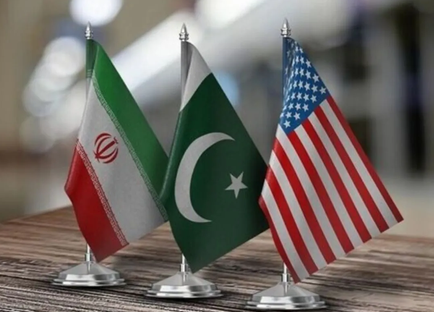
A member of the Expert Council of the Pancasila Ideology Development Agency (BPIP) for Foreign Relations Strategy, Darmansjah Djumala, has assessed that the peace agreement between the United States (US) and Iran is at risk of being rendered futile due to Israel’s military aggression in Lebanon. Although the digital signing of the Memorandum of Understanding (MOU) on 17 June brought new hope, Israel’s military actions in South Lebanon are considered the main obstacle to stability in the Middle East.
“Even though the US and Iran have agreed to a peace deal, its prospects in the Middle East remain doubtful because Israel continues to launch military attacks on Lebanon. The US-Iran MOU could be obstructed by Israel’s acts of aggression,” Djumala said in a written statement on Friday (21/6).
The former Indonesian Ambassador to Austria and the United Nations explained that the MOU holds three strategic meanings. First, it reduces tensions between Washington and Tehran, which are a source of regional instability. Second, it strengthens diplomacy as a mechanism for dispute resolution. Third, it promotes broader security stability in the Gulf region.
However, this optimism now faces a serious test. Israeli military strikes in South Lebanon resumed just two days after the agreement was approved. According to Djumala, for Iran, this aggression is not merely a threat to an ally, but a systematic effort to hinder the normalisation of relations between Tehran and Washington.
“The escalation in South Lebanon could trigger a chain reaction. Iran may face domestic pressure to increase support for proxy groups, while the US is in a difficult position between maintaining its MOU commitment or preserving its strategic support for Israel,” continued the international relations academic from FISIP Unpad.
Djumala stressed that the success of this peace effort depends heavily on the ability of both parties to align de-escalation in the Strait of Hormuz with a cessation of aggression in Lebanon. He urged Washington to be more active in restraining Israel’s military escalation so that the diplomatic process is not damaged.
“Peace in the Middle East cannot be built solely through bilateral agreements. Without controlling regional escalation and commitment from all parties, the US-Iran agreement will be futile amidst a vortex of prolonged conflict,” he concluded.