
Israel 'Playing with Fire': 660 Attacks, 1,100 Palestinians Killed
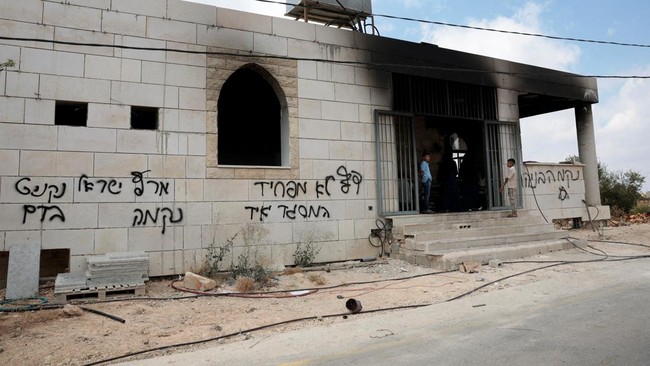
Tensions are rising again in the West Bank. Violence involving Israeli settlers against Palestinians continues to increase, while the response of Israeli security forces is considered unable to calm the situation.
One of the latest examples occurred in Qusra. A Palestinian home was besieged by Israeli settlers for days. The settlers erected temporary shelters around the house, while the family inside chose to remain. The Israel Defence Forces (IDF) was then deployed to the location. However, instead of immediately dispersing the settlers, a number of soldiers were reported to have joined them in prayer.
Three days later, the IDF replaced the unit and attempted to evict the settlers. That effort again ended in clashes after the settlers brought in reinforcements.
The situation has made the West Bank a flashpoint once more, especially ahead of the Israeli election on 27 October 2026. Land seizures and clashes between Israeli settlers and Palestinians are likely to increase further.
Data shows the escalation is not merely a series of sporadic incidents. In the first six months of 2026, 660 attacks categorised as ‘nationalistic’ were recorded in the West Bank. That figure jumped from 405 attacks in the same period the previous year, an increase of around 63%.
Since the Hamas attack on 7 October 2023 that triggered the war in Gaza, more than 1,100 Palestinians have been killed in clashes with Israeli soldiers and settlers in the West Bank.
Israel has a large security presence in the area. Around 25 IDF combat battalions are stationed in the West Bank, plus a network of Shin Bet agents and informants. The West Bank itself is home to more than 3 million Palestinians and around 500,000 Israeli settlers.
However, the size of the security force does not automatically mean Palestinians receive equal protection. Most Israeli forces in the area are used to protect settlers and to counter threats of attacks against Israel.
The Qusra case is one example of how conflict develops from land seizure into a siege of residents. In early 2026, a settlement outpost called Tel Talpiot was built using several tents and a caravan on a hill overlooking three Palestinian villages.
On 9 August, a group of settlers from Tel Talpiot entered the yards of several homes on the outskirts of Qusra. They erected temporary shelters and besieged one house, forcing a family to remain inside for days.
The IDF was then sent in on the grounds of preventing clashes. However, a number of soldiers were reported to have joined the settlers in prayer.
Three days later, the IDF replaced the unit with a more disciplined infantry battalion. Troops attempted to evict the settlers and dismantle the Tel Talpiot outpost. However, the effort was only partially successful because the settlers brought in reinforcements and clashed with soldiers.
The tactics used by settlers often involve creating friction with Palestinians living near settlements. When tensions rise, the IDF intervenes. In a number of cases, the situation ends with Palestinians leaving their homes and land. Afterwards, land around the settlement can be taken over and the outpost expands further.
A similar pattern has been seen in the past month. On 24 July, a group of armed settlers went to the village of Tel in an activity they claimed was ‘hiking’. Clashes then killed four Palestinians and two Israelis.
The IDF responded by adding troops and closing several Palestinian towns, including Nablus, one of the largest cities in the West Bank.
The Israeli government’s response has also come under scrutiny. Prime Minister Binyamin Netanyahu gave no public response to the Qusra incident. Meanwhile, Defence Minister Israel Katz said law enforcement against settlers in the West Bank would in future be the responsibility of the police, not the IDF.
The problem is that Israeli police are said to lack personnel in the West Bank. The police also fall under National Security Minister Itamar Ben-Gvir, a right-wing figure who is also a settler.
In several cases when the IDF tried to take action against settlers, the move faced pressure from government officials.
The Israeli government has also approved around 200 settlement outposts in less than four years. This policy is seen as giving settlers even more room to expand their presence in the West Bank.
In the Qusra case, serious IDF intervention only came after diplomatic pressure from the United States. One of the besieged homes was known to be owned by an American citizen.
US Ambassador to Israel Mike Huckabee, who is known to support settlers, even called for the settlers he described as ‘Israeli terrorists’ to be removed from the location.
A number of security officials warn that settler actions could provoke a new intifada, or Palestinian uprising. The risk is no longer limited to clashes in villages. If an uprising breaks out, the IDF could enter Palestinian cities in the West Bank to control it.
This means violence that initially occurs around settlement outposts and villages could develop into a conflict involving urban areas and more residents.
For Palestinians, escalation means a growing risk of displacement, casualties, and loss of homes. For Israel, the outbreak of an uprising also means a broader security threat.
The West Bank is now at a very sensitive point. Amid rising attacks, increasingly aggressive settlers, and an election only weeks away, the situation remains highly volatile.