
Israel Offended, Iran-US Ceasefire on the Brink
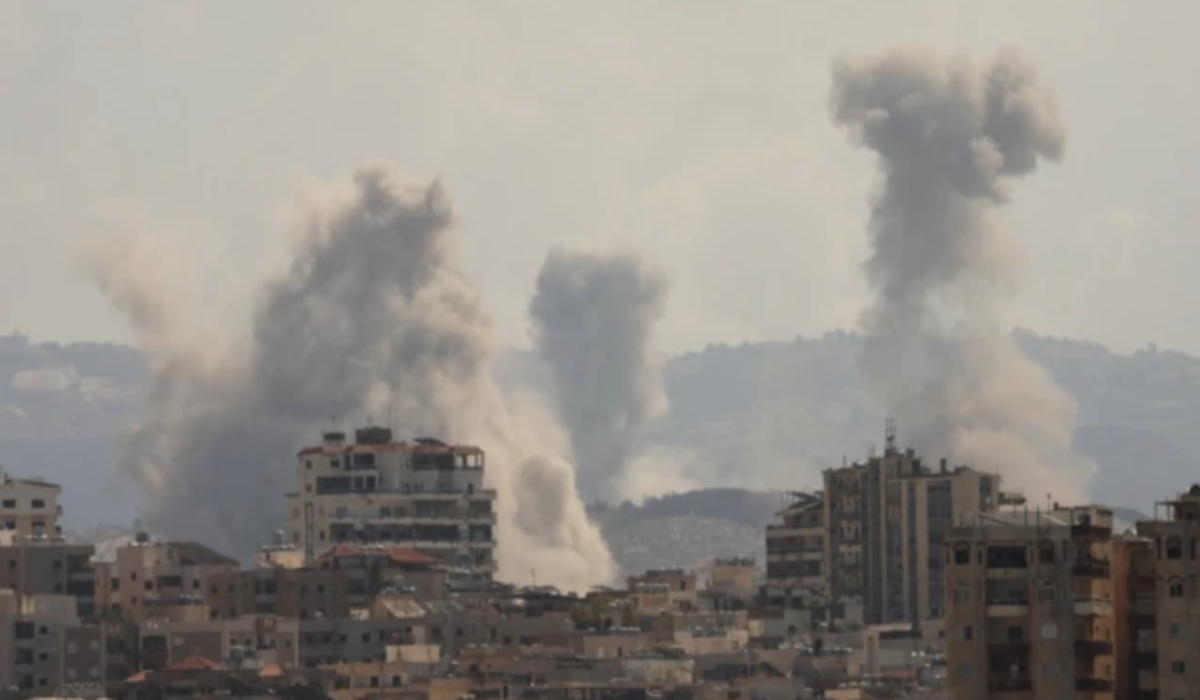
The chances of a ceasefire between Iran and the United States, involving Israel, are assessed as highly likely to fail from the outset, particularly if military operations continue outside the scope of the agreement.
Teuku Rezasyah, an observer of international relations from Universitas Padjadjaran (UNPAD), stated that the chances of the ceasefire wilting before it develops are quite significant.
“The chances of it wilting before developing are quite significant. Considering that Israel feels it was not consulted, and suddenly President Donald Trump accommodates Iran’s 10 demands,” said Rezasyah when contacted by Media Indonesia on Thursday (9/4).
According to him, this situation has triggered offence on Israel’s part, leading to a military response.
“That is why Israel is offended and has attacked southern Lebanon recklessly,” he stated.
Rezasyah also highlighted the potential for wider conflict escalation if the situation continues to deteriorate, especially if Lebanon remains a target of attacks.
He assessed that Iran is not merely issuing threats but is prepared to take concrete actions.
“Iran is not joking with its threats,” he said.
According to him, Iran currently holds a relatively superior military position compared to Israel, while military support from Middle Eastern countries for Israel is also deemed to be declining.
“In addition to already being militarily superior to Israel, the majority of countries in the Middle East no longer dare to support Israel militarily,” he stated.
Rezasyah added that limitations on the use of US military bases in the region further restrict Washington’s room for manoeuvre.
“Also, many US military bases can no longer be used,” he said.
Given this situation, he warned that escalation could increase dramatically if attacks on Lebanon continue.
“Therefore, if Lebanon continues to be attacked, Iran’s retaliation against Israel will become even more severe,” he explained.
Furthermore, Rezasyah explained the fundamental differences in interpreting the ceasefire between Iran and Israel. For Iran, a peace agreement encompasses a broader area of conflict.
“For Iran, a ceasefire includes Lebanon, Gaza, and the West Bank,” he continued.
Meanwhile, Israel has a different approach, focusing on control over territories it has seized.
“For Israel, although the Israel-Lebanon border is not long, every inch of land that has been captured must be defended militarily with full force,” he concluded.
This difference in perception is assessed as one of the main factors making the future of the ceasefire increasingly uncertain, while also increasing the risk of the conflict developing into a broader regional war.
Further negotiations will be held in Islamabad on Friday (10/4).
Iran has once again closed the Strait of Hormuz amid the ceasefire period with the United States, following Israel’s airstrikes on Lebanon on Wednesday (8/4) local time.
The reopening of the Strait of Hormuz is expected to normalise logistics supplies, including plastic prices, according to Minister of Industry Agus Gumiwang Kartasasmita.
US Vice President JD Vance called Iran foolish if it cancels the ceasefire for the sake of Lebanon. Tehran insists that Lebanon be included in the agreement points, while Israel’s attacks continue.
Prominent cleric Muhammad Zainul Majdi, or Tuan Guru Bajang (TGB), recalls Iran in relation to verse 38 of Surah Muhammad and the hadith of Salman Al-Farisi.
Commission I of the DPR RI welcomes the temporary ceasefire between the United States, Iran, and Israel. The agreement is hoped not to be merely temporary but permanent.
UN Secretary-General Antonio Guterres condemns Israel’s attack on Lebanon. He warns of significant risks to the Iran-US ceasefire and urges immediate diplomatic channels.
The US-Iran ceasefire is in a critical situation following Israel’s major attack on Lebanon. Tehran threatens to cancel negotiations and close the Strait of Hormuz again.