
Israel, Nuclear Programme, and Hormuz: Three Complex Challenges That Could Derail the US-Iran MoU
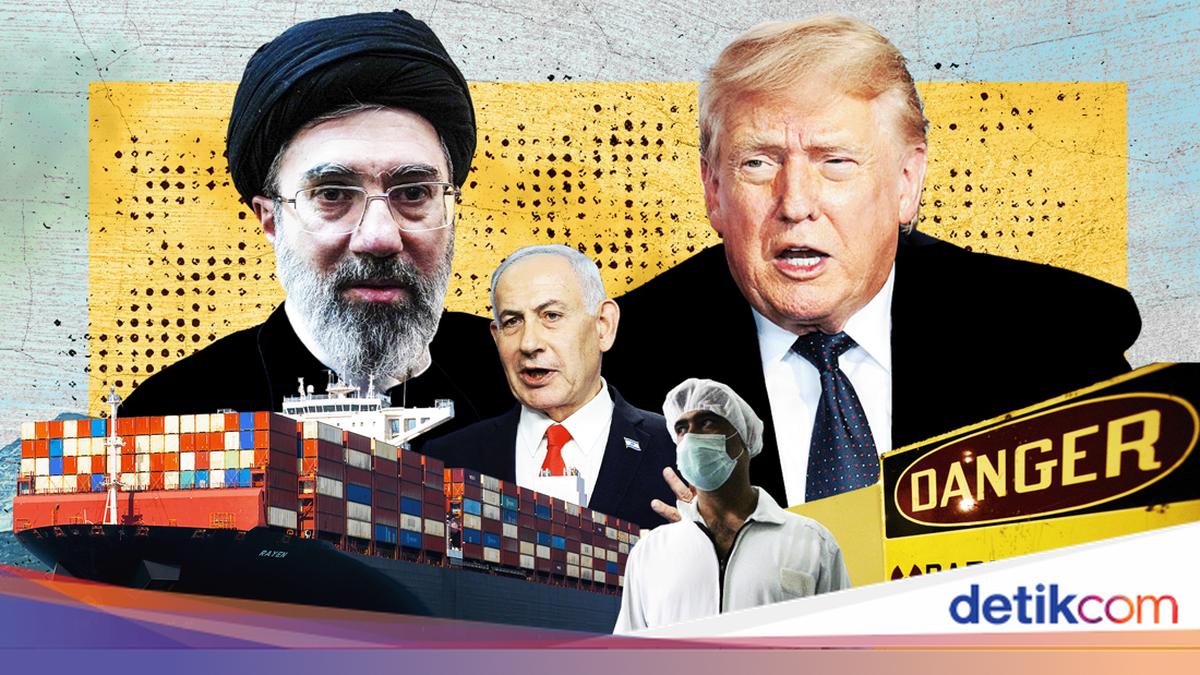
After weeks of negotiations, the United States and Iran have reached a preliminary agreement. However, attention is now turning to the biggest challenge: how both countries can end the conflict.
On Wednesday (17/06), a senior US official read a 14-paragraph memorandum of understanding to reporters, including the BBC. The agreement was signed by US President Donald Trump and Iranian President Masoud Pezeshkian ahead of a planned formal signing in Switzerland on Friday (19/06).
The agreement paves the way for a “final deal” to be reached within “a maximum of 60 days, with the possibility of extension by mutual consent.” It includes commitments to begin lifting the US naval blockade, restore shipping through the Strait of Hormuz, and negotiate the removal of “all types of sanctions” against Iran. The document also outlines plans for a fund of at least US$300 billion (over Rp5,000 trillion) for Iran’s reconstruction and economic development, alongside a reaffirmation of Tehran’s commitment not to develop nuclear weapons.
President Trump cautioned that the preliminary agreement is “not final” and said the US could “go back to dropping bombs” if the deal fails. Meanwhile, Iran’s Parliament Speaker and chief negotiator, Mohammad Bagher Ghalibaf, told state media that his distrust of the US remains and that “Iran’s finger is still on the trigger.”
Here are the three biggest threats that, according to experts, could derail the negotiation process:
Israeli military attacks in Lebanon
Both parties stated an “immediate and permanent cessation of all military operations on all fronts, including in Lebanon.” This point was delivered by Pakistani Prime Minister Shehbaz Sharif, who acted as one of the main mediators, during the announcement of the preliminary agreement. The document read on Wednesday also explicitly covers Lebanon, guaranteeing its “territorial integrity and sovereignty.”
However, Israel has continued its attacks on Lebanon, even after Trump said at the G7 summit in France that his Israeli counterpart, Benjamin Netanyahu, should be “more responsible towards Lebanon.” On Wednesday, Israeli jet fighters struck the Nabatieh al-Fawqa area and the outskirts of Kfar Tebnit, according to Lebanon’s state news agency.
US officials stated that while Lebanon is included in the ceasefire framework, the withdrawal of Israeli forces from Lebanese territory is not a condition of the agreement. They added that Israel retains the right to self-defence. Iran, however, maintains that ending the war in Lebanon is “an inseparable part of the agreement to end the war.” Hezbollah, the Iran-backed militant group in Lebanon, echoed a similar stance. Iran has assured its allies that it will demand a full withdrawal of Israeli forces from Lebanon in the next stage of talks, Hezbollah’s media relations office told Reuters.
Israel has also explicitly signalled that it does not feel bound by Iran’s interpretation of the deal. Israeli Defence Minister Israel Katz said Israeli forces would remain in a security zone in Lebanon “indefinitely” and warned they would “attack with full force” if Iran strikes Israel over Lebanon. Prime Minister Benjamin Netanyahu stated that Israeli forces would remain in southern Lebanon and maintain the capability to strike security threats.
H.A. Hellyer, a political scientist at the Royal United Services Institute, a UK-based think tank, suggested Israel could be the “main spoiler” in US-Iran peace efforts. “Israel’s military adventurism, whether directed at Iran or reflected in the ongoing destruction in Lebanon, is the biggest threat to diplomatic progress,” he said. Hellyer assessed that the process could collapse even before “substantive negotiations on the nuclear issue begin” if Tehran is drawn into a direct confrontation.
Lebanese President Joseph Aoun welcomed the preliminary agreement, expressing hope that it could be translated into “concrete steps that will definitively end the cycle of violence.” For Lebanon, the impact of the war has been devastating, with more than 3,700 people reported killed, around one million displaced, and widespread destruction across much of the south.
Iran’s nuclear programme
Another crucial sticking point is the uranium Iran has already enriched, although Trump said there is no urgency to seize it. According to the International Atomic Energy Agency, Iran had accumulated around 400 kilograms of uranium enriched to 60% last year. For use in a nuclear weapon, enrichment levels typically reach around 90%.
Iran has consistently maintained that its nuclear programme is peaceful and reaffirmed in the agreement that it will not seek to develop nuclear weapons. However, key questions—including the handling of the already enriched uranium material—will still be discussed in the final deal, which has yet to be completed. The US and Iran have agreed in principle to determine how to manage the stockpile of enriched uranium, which will at least be “diluted” under IAEA supervision. Under the 2015 nuclear deal negotiated by then-US President Barack Obama, Iran limited enrichment to 3.67%. After the US withdrew from that deal under Trump, Iran began enriching to higher levels.