
Israel Launches Attacks on Southern Lebanon a Day After Ceasefire Extension
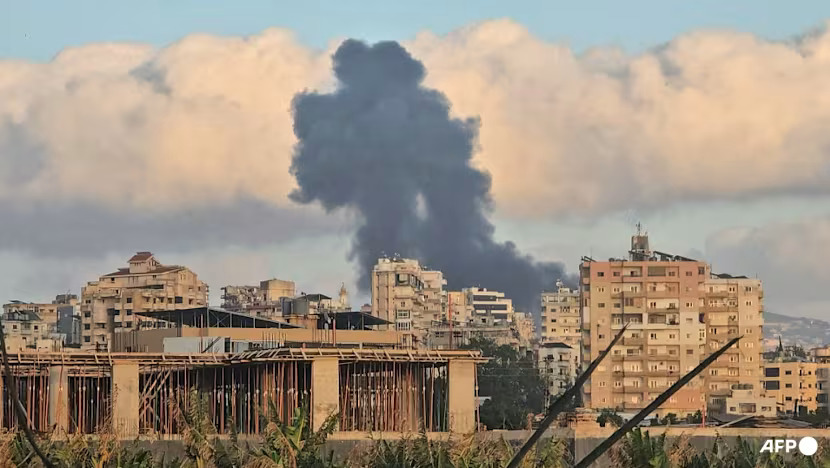
Israel launched a series of large-scale aerial attacks on southern Lebanon on Saturday (May 16th) local time, just a day after an extension of the ceasefire between the two countries was agreed upon.
The Israeli military stated that the attacks targeted Hezbollah. However, prior to the attacks, Israel issued evacuation warnings covering nine villages in southern Lebanon.
The Lebanese state news agency, National News Agency (NNA), reported that the attacks hit more than two dozen villages, including one area more than 50 kilometers from the Israeli border.
The attacks triggered a new wave of displacement of residents towards the city of Sidon and the capital, Beirut.
Amidst this situation, Hezbollah announced that it had attacked Israeli military targets in northern territory using combat drones.
The group stated that its forces targeted “Ya’ara barracks … with a swarm of attack drones,” after previously claiming to have carried out several operations against Israeli forces in southern Lebanon.
On Friday, Israel and Lebanon agreed to extend the ceasefire for 45 days. The previous ceasefire took effect on April 17th but was marred by violations from both sides.
UN Secretary-General Antonio Guterres welcomed the extension and urged all parties to respect the cessation of hostilities.
However, Israel continues to launch attacks in Lebanon and maintain troops in areas near the border. On the other hand, Hezbollah routinely claims attacks on northern Israel and Israeli forces in southern Lebanon.
The Israeli military stated on Saturday that one of its soldiers was killed in fighting in southern Lebanon. Thus, the number of Israeli casualties since the war with Hezbollah broke out in early March has reached 21 personnel.
According to Lebanese authorities, more than 2,900 people have been killed as a result of Israeli attacks since the conflict began, including more than 400 since the ceasefire took effect.
The latest attacks came after Israeli and Lebanese envoys held negotiations in Washington. The talks were the first direct dialogue between the two countries in decades, although they do not have formal diplomatic relations.
Hezbollah, backed by Iran, rejected the negotiations and stated that the attacks on Israel were in response to violations of the ceasefire.
The group said their actions were triggered by “attacks targeting villages in southern Lebanon”.
Displaced Lebanese civilians believe the ceasefire is not truly in effect.
“This is not a ceasefire when Israeli attacks continue against the south and its people, with deaths, injuries, and destruction,” said Ali Salameh, 60, who has been displaced in a school in Beirut since the war began.
Another resident, Nawal Mezhir, expressed support for Hezbollah’s resistance.
“What kind of ceasefire is this when they are just threatening villages and people are being displaced again? Where is the state? We only stand with the resistance,” she said. (CNA/B-3)
Israel claimed to have killed Ezzedin al-Haddad, a Hamas military commander, in an airstrike in Gaza City during the ceasefire.
Abu Najjeh, leader of the Bedouin community Ein Samiya, faces his seventh eviction since 1948 amid increasing attacks by Israeli settlers in the West Bank.
A 15-year-old teenager was shot dead by Israeli forces in the West Bank. Meanwhile, the burning of a mosque by Israeli settlers sparked international condemnation.
The Flag Parade in Jerusalem was marked by racist slogans, “Death to Arabs”. Minister Itamar Ben-Gvir waved flags at the Al-Aqsa complex, sparking tensions.
Fatema Obaid, 95, lost 70 family members but refuses to leave Gaza City. Read the poignant story of this two-time survivor of the Nakba.
FOREIGN Minister Hakan Fidan said that the United States and Iran are now showing enough willingness to stop the war.
Pakistan denied reports by CBS News that there were Iranian military aircraft at Nur Khan Air Base.
Alan Eyre, a former nuclear negotiator from the Obama era, said that Iran’s current hardline leadership is making Donald Trump’s diplomatic efforts difficult.
US President Donald Trump outright rejected Iran’s peace proposal and said the current ceasefire was in critical condition.
US President Donald Trump announced a Russia-Ukraine ceasefire on May 9-11, 2026, and an exchange of 1,000 prisoners as a first step towards peace.