
Israel "Jealous" If US Deals with Iran, Netanyahu Reveals Reasons
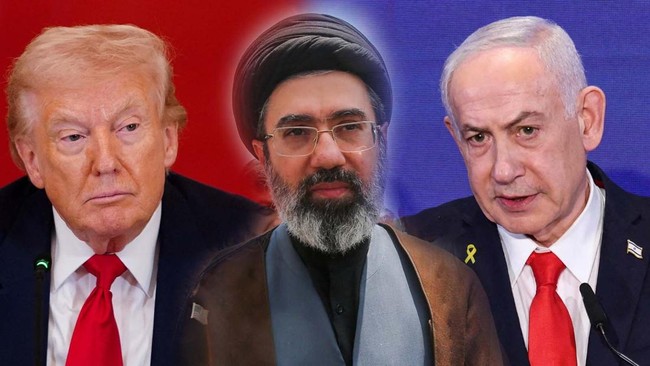
The Israeli government is reportedly growing anxious about the direction of negotiations being conducted by US President Donald Trump with Iran. Several Israeli sources indicate that Tel Aviv is worried Washington will agree to a peace deal with Tehran before all major war objectives are fully achieved.
This concern arises amid the ongoing diplomatic process between the US and Iran following weeks of war that have shaken the Middle East and triggered a surge in global energy prices. Israel views a partial agreement as merely giving Iran a new lease on life without truly crippling its military capabilities.
Several Israeli sources told CNN that the most feared scenario is if Trump accepts a deal that still allows parts of Iran’s nuclear programme to continue, while issues like ballistic missiles and Iran’s proxy networks in the region are sidelined.
“The main concern is that Trump will grow tired of the talks and agree to any deal, with last-minute concessions,” said one Israeli source, quoted on Wednesday (13/5/2026).
That source said US officials have indeed assured Israel that Iran’s stockpile of highly enriched uranium will be addressed in the negotiations. However, the absence of discussions on ballistic missiles and Iran’s proxy groups is seen as a major issue for Tel Aviv.
“This is a big problem,” he said.
During the war, Iran is known to have fired more than 1,000 ballistic missiles at Israeli territory and Gulf Arab states, in addition to launching waves of attack drones.
According to Israeli officials, a partial deal that fails to address Iran’s core capabilities but eases economic pressure on Tehran could stabilise the Iranian regime and provide it with a large influx of new funds.
This situation reveals an emerging divergence in perspectives between Trump and Israeli Prime Minister Benjamin Netanyahu. Trump is seen as reluctant to resume the war, while Netanyahu fears the conflict will end without fulfilling all the initial objectives of the military operation against Iran.
White House spokesperson Olivia Wales emphasised that Iran understands its current position is unsustainable. She stated that Trump still holds full control over the negotiations.
“They know full well that their current reality is unsustainable,” said Wales.
“Their ballistic missiles are destroyed, their production facilities dismantled, their navy sunk, and their proxies weakened,” she continued.
“Now they are being economically strangled by Operation Economic Fury and losing US$500 million per day thanks to the successful US military blockade of Iranian ports.”
Nevertheless, the prospect of achieving a permanent peace agreement remains far from certain. The US and Iran are said to still have major differences regarding the reopening of the Strait of Hormuz and the future of Iran’s nuclear programme.
Israel is even reportedly preparing for the possibility of war breaking out again if diplomacy fails completely.
On the other hand, the Trump administration continues to push the diplomatic track because it appears unwilling to become re-entangled in a prolonged conflict that has already caused petrol prices in the US to spike sharply.
At the start of the war, Trump stated that the US wanted to destroy Iran’s ballistic missile programme, end Tehran’s support for regional proxy groups, and shut down Iran’s nuclear facilities to ensure the country could never build a nuclear bomb.
However, after 10 weeks of conflict, the focus of negotiations has now narrowed to Iran’s uranium, particularly enrichment to weapons-grade levels, and the reopening of the Strait of Hormuz.
This shift in focus is also evident in Netanyahu’s own statements.
In a speech in Jerusalem last February, before the war broke out, Netanyahu outlined five conditions for an acceptable deal for Israel: the elimination of all enriched uranium, the dismantling of enrichment capabilities, resolution of the ballistic missile issue, the dissolution of Iran’s regional proxy networks, and strict nuclear inspections.
However, last week, Netanyahu emphasised only one main point.
“The most important goal is the elimination of enriched material from Iran, all enriched material, and the dismantling of Iran’s enrichment capabilities,” he said in a video speech before an Israeli security cabinet meeting.
He no longer mentioned ballistic missiles or Iran’s support for proxy groups like Hezbollah in Lebanon and Hamas in Gaza.
One source familiar with the discussions said Israel understands that the missile and proxy issues “are likely off the table” because they were not included in the initial draft of the diplomacy.
Therefore, Netanyahu is now prioritising Iran’s uranium as the most immediate threat.
Another Israeli source said Netanyahu is heavily relying on direct communication with Trump. He is reportedly not fully trusting Trump’s envoy Steve Witkoff or Trump’s son-in-law, Jared Kushner, who are leading the negotiations with Iran.
Netanyahu is even said to be conducting his own backchannel diplomacy with Iran through intelligence from Pakistan, Qatar, and Iran.
“There is real concern that Trump will reach a bad deal. Israel is trying to influence it as much as possible,” another Israeli official told CNN.
Nevertheless, Netanyahu is also being cautious not to appear to be pushing Trump back into the battlefield.
The White House defended Witkoff and Kushner, stating that both have Trump’s “full trust” and a “proven track record of success,” including in ending the Gaza war.
Israel is also concerned that if economic pressure on Iran is eased, even partially, Tehran’s government will stabilise at a time when it is actually in a weak position.
Former national security advisor to Netanyahu, Meir Ben Shabbat, wrote in the Israeli newspaper Makor Rishon last weekend that any deal h