
Israel Hammers Hundreds of Locations in Lebanon's Dahiyeh, 254 Killed in 10 Minutes
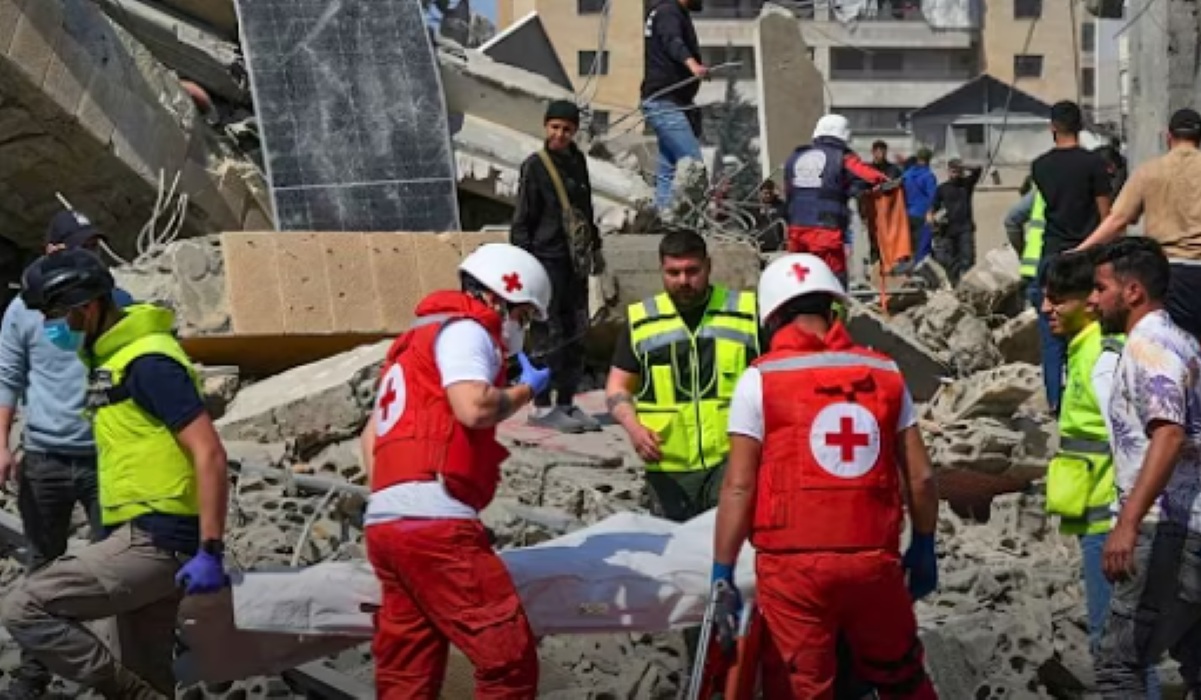
Further negotiations will be held in Islamabad on Friday (10/4). Further negotiations will be held in Islamabad on Friday (10/4). Military escalation in the Middle East has peaked again after the Israeli military launched a large-scale aerial attack in the Dahiyeh area, south of Beirut, Lebanon, on Wednesday (8/4). This attack marks a new phase of violence amid ongoing global diplomatic efforts. According to Anadolu Agency correspondents, loud explosions were heard in succession, and thick black smoke was seen rising from the main target areas of the airstrikes. Dahiyeh, known as a Hezbollah support base, became the focus of this latest bombardment. The Israeli military previously stated that it had attacked more than 100 strategic locations in just 10 minutes. This lightning operation covered a wide area, from the capital Beirut, the Beqaa Valley, to southern Lebanon. Wednesday’s attack is recorded as the largest wave since the outbreak of open conflict between Israel and the Lebanese militant group Hezbollah on 2 March. The latest data shows a very concerning humanitarian impact: “We are facing a dangerous escalation occurring in Lebanon. Israel’s aggression with more than 100 airstrikes targeted innocent civilians in Beirut, Dahiyeh, Bekaa, Mount Lebanon, and the south,” stated Lebanese Health Minister Rakan Nassereddine in his statement to Al Jazeera. Ironically, this massive attack occurred just one day after Iran and the United States announced a two-week ceasefire on Tuesday (7/4). That agreement was initially expected to pave the way for a final agreement to stop the war involving Washington, Tel Aviv, and Tehran since late February. This escalating conflict has not only resulted in loss of life but also triggered systemic global impacts: Egypt strongly condemned Israel’s airstrikes in Lebanon that killed 112 people. Cairo called this aggression an attempt to undermine international de-escalation. The Arab League demanded that the United States ensure Israel halts attacks on Lebanon following the temporary ceasefire agreement between the US and Iran. Iranian Foreign Minister Abbas Araghchi warned the US to choose between a ceasefire or war through Israel amid the escalation of attacks in Lebanon. The United Nations (UN) released preliminary investigation results regarding the incidents on 29 and 30 March that killed three TNI soldiers while on duty in the UNIFIL peacekeeping mission. The government, through Cabinet Secretary Prasetyo Hadi, stated that no decision has been made to withdraw TNI from UNIFIL Lebanon following the incident that killed 3 soldiers. See the full evaluation. The UN confirmed that the death of Indonesian UNIFIL personnel on 29 March was caused by Israeli Merkava tank fire, while the second incident was triggered by an IED. Israeli Defence Minister Israel Katz announced plans to destroy villages on the Lebanon border and establish a buffer zone up to the Litani River. The German government strongly condemned the attack that killed three Indonesian UNIFIL personnel in Lebanon and urged all parties to exercise restraint. Two TNI soldiers serving in the United Nations (UN) peacekeeping mission, UNIFIL, have fallen in Lebanon again. Deputy Chairman of Commission I of the Indonesian House of Representatives, Dave Laksono, urged the government to conduct an evaluation, including the option of troop withdrawal, after an Indonesian TNI soldier in UNIFIL was killed in Lebanon.