
Israel Election Results Do Not Fully Favour Netanyahu
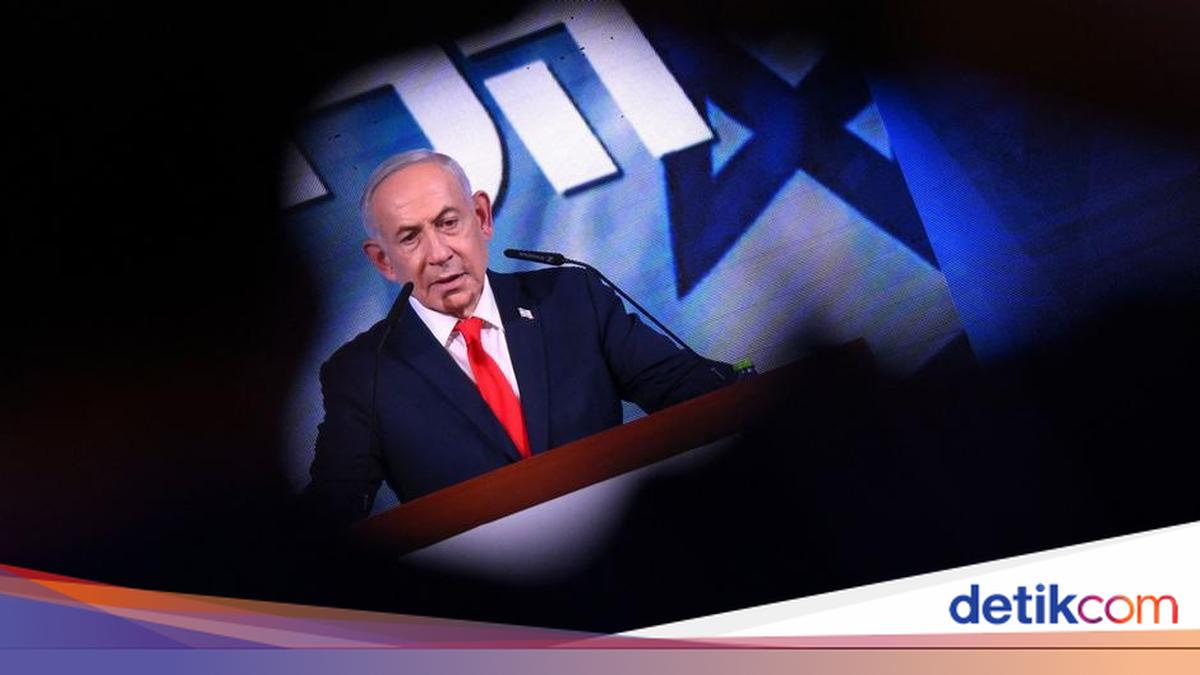
Israel’s Central Elections Committee (CEC) said Prime Minister Benjamin Netanyahu’s coalition had won more seats than the opposition in the legislative election, but had failed to secure the parliamentary majority needed to form a government.
The CEC released the final official results of the election held on 27 October, detikcom reported on Sunday (1 November 2026). Turnout reached 77.9 per cent of the approximately 7.3 million eligible voters, with 5,716,655 ballots cast and counted. This was the highest turnout in several decades.
The final results showed Netanyahu’s right-wing coalition winning 53 of the 120 seats in the Knesset. His Likud party remained the largest single faction, with 27 seats.
The opposition, led by Gadi Eisenkot, head of the Yashar party, won 48 seats.
The full seat tally announced by the CEC was: Likud, 27; Yashar, 21; B’Yachad, 12; Joint List, 11; The Democrats, 8; Ra’am, 8; Yisrael Beytenu, 7; United Torah Judaism, 7; Otzma Yehudit, 7; Shas, 6; and Religious Zionism, 6.
Netanyahu’s coalition consists of Likud, Shas, United Torah Judaism, Otzma Yehudit and Religious Zionism. The opposition comprises Yashar, B’Yachad, The Democrats and Yisrael Beytenu.
Netanyahu’s coalition has a narrow lead over the opposition, but its 53 seats fall short of the 61 needed for a parliamentary majority and to form a government.
Meanwhile, Israeli Arab parties—the Joint List and Ra’am—won a combined 19 seats, a record in the country’s history. Their total is almost double the 10 seats they currently hold.
That tally would be more than enough to give the anti-Netanyahu opposition a strong parliamentary majority, if it were willing to consider forming a coalition with the Joint List and Ra’am.
The Israeli Arab parties, who could hold the balance of power in the coming coalition negotiations, were targeted by unsubstantiated allegations of electoral fraud circulated by Netanyahu’s camp on Thursday night (29 October).
The allegations claimed that the parties had received funding from Qatar to “buy votes”. The Joint List and Ra’am denied the claims, as did the Qatari authorities. Eisenkot, from the opposition, accused Netanyahu of trying to “delegitimise” the election results.
In a statement on Friday morning (30 October), the CEC rejected claims of electoral fraud amid allegations of foreign funding intended to influence the vote, without directly mentioning the accusations against the Israeli Arab parties.
“The reports circulating throughout the day are entirely baseless,” said CEC Acting Director Dean Livne.
The final election results will be formally submitted to Israeli President Isaac Herzog on Wednesday (4 November). Herzog will then consult party leaders before assigning one of them the task of forming a government.
The absence of an outright parliamentary majority points to potentially difficult coalition negotiations that could take weeks.
If no new government can be formed, Israel could face another election, as it has several times in the past.
Four scenarios for resolving Israel’s electoral deadlock
Netanyahu’s lead in the election does not automatically mean he will return to power, as his bloc failed to win a majority of parliamentary seats. Israel now faces a political impasse.
Here are four possible political scenarios for dealing with the election result:
1. A national unity government led by Netanyahu
The first scenario depends on Netanyahu’s ability to persuade his rival, Eisenkot, to join him in a national unity government. To do so, Eisenkot would have to abandon his central campaign platform.
He has presented himself as the sole alternative to Netanyahu and built his campaign around removing him from power.
On election night, he took to the stage at his campaign headquarters and called on Netanyahu to “announce his retirement from political life today”. He told the crowd that Israelis were tired of the “culture of lies”, “division and incitement” that he said Netanyahu had brought about.
Those remarks came before an exit poll that had initially forecast a lead for Eisenkot’s bloc was revised, showing Netanyahu had overtaken him.
Netanyahu could try to persuade Eisenkot’s Yashar party to join Likud in a unity government, while dropping the far-right and ultra-Orthodox parties that are currently his coalition partners.
But at Likud headquarters last night, he thanked his “loyal partners” and called for a “strong right-wing government”, a statement some interpreted as a sign that he intends to maintain his alliance with those parties.
A new conflict with Iran could make a unity government more likely by putting considerable pressure on party leaders to set aside their political differences and work together.
Days before the election, Israeli and US media reported that Netanyahu had urged a new strike on Iran and asked Donald Trump to approve US involvement.
Netanyahu’s critics would regard such a move as an attempt to save his political career by triggering another regional conflict.
2. An Eisenkot-led coalition with Arab parties
This scenario would mark a major shift in Israel’s political landscape. Only one independent Arab party has formally been part of a coalition, in 2021, and that government did not last long.
Eisenkot and every other Jewish party in his bloc, with one exception, have said they will not join a government with the Arab parties. At present, however, this is the opposition’s only route to a majority.
The Arab parties were in the spotlight on election night. They appeared to exceed expectations and could win a record 19 seats, driven by unprecedented turnout among Israel’s Arab population. They make up about a fifth of the country’s population and often describe themselves as Palestinian citizens of Israel.
For years, many have boycotted Israeli elections, arguing that voting would legitimise a system they believe treats them as second-class citizens. Their high turnout this time was driven by a desire to bring down what they regarded as Israel’s most right-wing government in history.
The United Arab List, projected to win eight seats, said it was willing to join an opposition government, while the Joint List, projected to win 11 seats, said it would support one from outside the government.
At present, Yair Golan of The Democrats is the only Jewish leader backing this scenario. Such a coalition would be highly fragile, particularly over issues such as Gaza and the occupied West Bank.
The united front of Jewish parties rejecting Arab participation highlights the depth of division in Israel.
3. Netanyahu leads a majority with support from right-wing opposition parties
Could Netanyahu persuade right-wing parties in Eisenkot’s bloc to break away and join his coalition?
The two likeliest candidates are Naftali Bennett, co-leader of the B’Yachad political alliance, and Avigdor Lieberman, head of Yisrael Beytenu. Both are right-wing figures who take a hard line on security and share political ground with Netanyahu.
However, both campaigned openly to remove him and expand compulsory military service to ultra-Orthodox groups, a policy that puts them in direct conflict with the two ultra-Orthodox parties in Netanyahu’s government. It is therefore difficult to imagine them joining him.
Some argue that Bennett’s and Lieberman’s parties could replace the ultra-Orthodox parties, but current seat calculations suggest such a coalition might still fall short of a majority.
4. A new election
If none of the scenarios can be agreed, the alternative would be another general election.
Many would regard this as a hidden victory for Netanyahu, who would remain caretaker prime minister until the new election and may believe he has a better chance of winning next time.
Some analysts argue that the high turnout among Arab voters may not be repeated, particularly if their record parliamentary representation brings no change. The impasse could also mobilise more right-wing voters in the next election.
Source: jawawa.id (https://jawawa.id/newsitem/israel-election-results-do-not-fully-favour-netanyahu-1793490672)
Originally published by detikcom (https://news.detik.com/internasional/d-8733073/pemilu-israel-yang-tak-berpihak-sepenuhnya-ke-netanyahu), translated from Indonesian