
Israel Election Results and Their Impact on Regional Stability
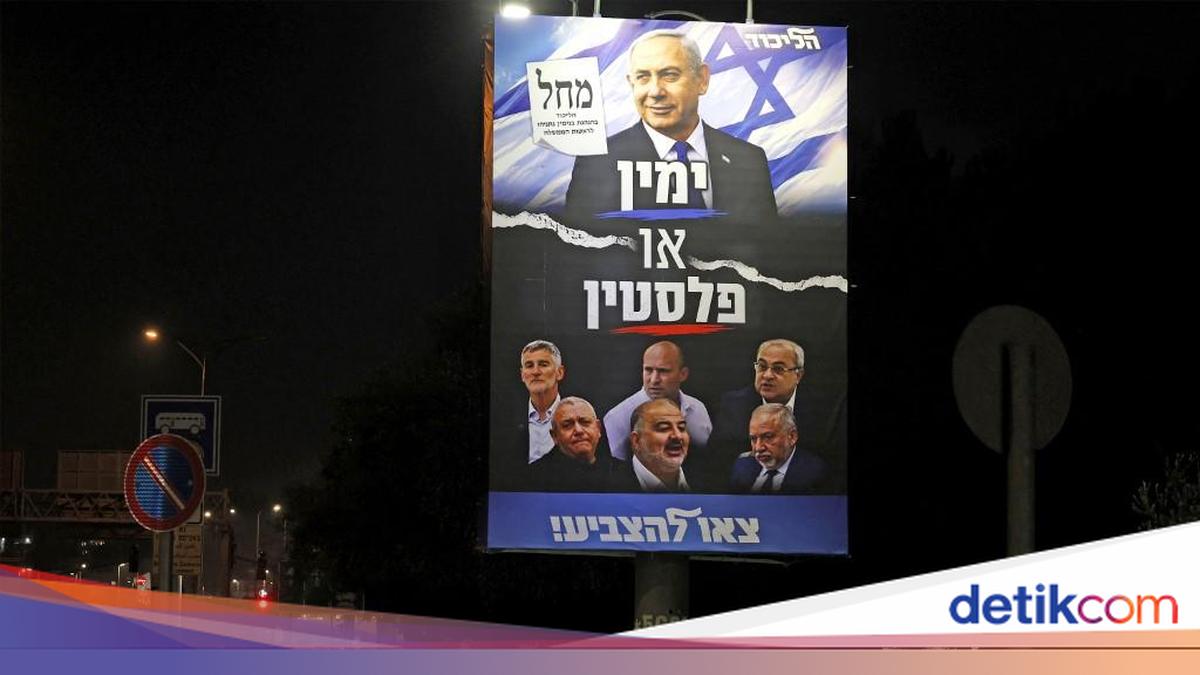
The results of Israel’s election have delivered what many observers had already expected: a political deadlock that resolves nothing, satisfies no one and leaves the region in the same state of tension as before the election.
The final results from Israel’s Central Elections Committee (CEC) show that Benjamin Netanyahu’s bloc won 53 seats, while the opposition led by Gadi Eisenkot won 48. Neither side has secured the 61 seats needed to form a government.
Meanwhile, Arab parties achieved a record result of 19 seats, emerging as the largest bloc capable of shifting the balance. Their gains also amounted to a rebuke of Netanyahu’s racist campaigning and a reminder of the structural marginalisation of Palestinians in Israel’s political system.
What makes the result particularly striking is that, for Netanyahu, it is not a defeat but more likely a reprieve. He was not expecting a majority; he simply hoped to remain the dominant figure in Israeli politics, whether by forming the next government or leading a strong and critical opposition. The election has given him precisely what he wanted.
Likud remains the largest single party, and Netanyahu has claimed that a “Zionist majority” should unite behind him. The statement explicitly rejects any government that depends on Arab parties. The idea is also supported by some members of Netanyahu’s opposition bloc.
Looking ahead, Netanyahu may succeed in drawing defectors from the opposition bloc, a strong possibility given that it is a mosaic spanning left to right. Attracting Naftali Bennett is one option. In the worst-case scenario for Netanyahu, he could instead lead an aggressive opposition, allowing him to continue shaping Israeli politics for the foreseeable future.
That is precisely why the election has resolved nothing. The deadlock is not unusual but a structural feature of a political system that has spent years tearing itself apart. Israel held five elections in less than four years between 2019 and 2022, and the underlying divisions—including Netanyahu’s legal troubles, the role of the ultra-Orthodox, the Arab minority, and the ongoing wars in Gaza and Iran—remain unresolved.
Israeli President Isaac Herzog has signalled that he will push for a unity government between Likud and Yashar. But this would not be easy, since Eisenkot’s entire campaign was built on replacing Netanyahu, not partnering with him. The opposition might try to form a minority government with external Arab support, but the openly stated commitment to a “Zionist government” has closed that route before it can begin.
For the region, the implications are bleak. Netanyahu understands that maintaining a state of emergency would serve his political survival. As he has made clear, confrontation with Iran is his central project, and he will continue waging war abroad, whether in Gaza, Lebanon or Iran.
This matters to Netanyahu because permanent crisis is the most reliable guarantee of his political survival. It could include another general election that prolongs the crisis and keeps him in power at least until March 2027. Rather than constrain him, the election frees him to escalate, since he no longer needs to worry about the electoral cost of expanding the war. Domestic deadlock produces escalation abroad, and the region will continue to bear the consequences.
Ultimately, the Israeli election has confirmed what was already clear: the system cannot resolve its contradictions at the ballot box. Arab parties have more seats than ever, yet remain excluded from any governing coalition.
Netanyahu is weakened but indispensable to his bloc. The opposition has momentum but no path to power. As a result of the deadlock, the war continues, because the person who benefits most from it has just secured a scenario for his political survival. Tensions will not ease; they will deepen, as the election has offered no way out.
The Trump factor
US President Donald Trump’s support for Netanyahu is not merely a moral gesture but a strategic investment, and it has already paid off. On the eve of the election, Netanyahu broadcast a phone recording in which Trump urged Israelis to “vote for Netanyahu” and said, “we have to finish the job we started” in Iran.
Trump later claimed that Netanyahu had succeeded, doing even better than he had expected. This was not passive support but active intervention in a foreign election, intended to keep in power the leader most committed to the Iran agenda.
Post-election developments reinforce the point that the Trump factor is more than rhetoric. Israeli media report that figures close to Trump held private discussions with Israeli officials about a Netanyahu–Eisenkot unity government. Under the proposal, Netanyahu would remain prime minister for two years before handing over power to Eisenkot. A Likud official explained the reasoning bluntly: “What Trump wants is a stable and reliable Israeli government that can be formed as soon as possible.” The proposal would allow Netanyahu to shed right-wing partners such as Smotrich and Ben-Gvir and project a more moderate image, while retaining his position and preserving the Iran war project.
This scenario reinforces the argument that Israel’s election has resolved nothing: the decisive factor is not the Israeli electorate, but the US president, who has decided that Netanyahu is an asset he needs and has offered a solution for his political survival. The American role is not marginal, particularly as Israel faces growing international isolation following the genocidal war in Gaza.
In short, the deadlock in the Knesset is real, and it means tensions and war will continue, leaving the region under the same strain as before the election. The person who benefits most from such a deadlock has had his political survival secured, keeping him in contention in every plausible near-term scenario.
Source: jawawa.id (https://jawawa.id/newsitem/israel-election-results-and-their-impact-on-regional-stability-1793501460)
Originally published by detikcom (https://news.detik.com/kolom/d-8733135/hasil-pemilu-israel-dan-dampaknya-pada-stabilitas-kawasan), translated from Indonesian