
Israel Accused of Creating Conditions for 'Permanent Displacement' in Gaza
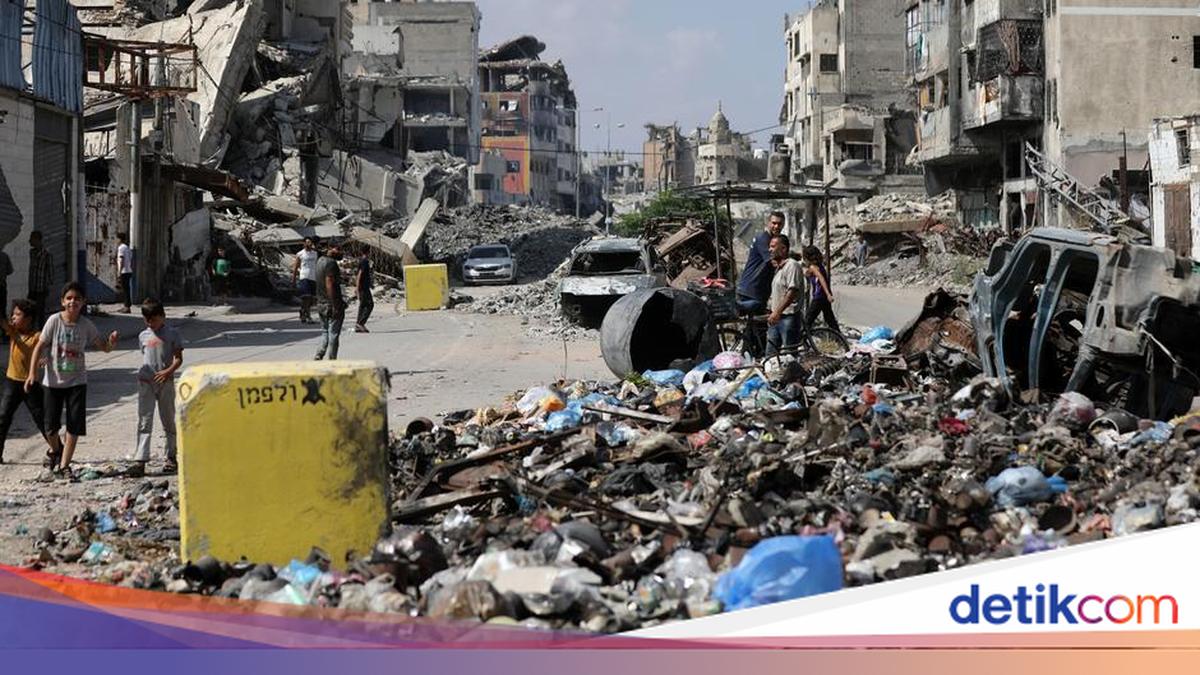
Recent reports regarding the conditions in the Gaza Strip indicate that approximately 1.8 million Palestinians in Gaza, or 86 per cent of the population, living in displacement sites frequently face inhumane living conditions.
The Danish Refugee Council (DRC) published these findings on Thursday (1/10), nearly three years after the Hamas attacks on 7 October that triggered the war in Gaza, and one year after the phased ceasefire plan of 10 October which was intended to end the conflict.
“The October 2025 ceasefire in Gaza was supposed to end civilian suffering. Almost a year later, the ceasefire exists largely in name only. Displacement in Gaza has not ended; it has merely changed form,” the report stated.
The findings are based on focus group discussions with 195 individuals living in internal displacement camps across five administrative regions in Gaza.
The report, titled ‘Confined by Design: The Human Cost of Protracted Displacement in Gaza’, accuses Israel of implementing a “policy of protracted displacement” since the ceasefire agreement was reached. According to the DRC, one method to ensure this continues is through what is known as the “Yellow Line”. This line marks the eastern Gaza territory near the border under Israeli military control and, according to the report, continues to shift towards the coast.
“In addition to the protracted displacement of hundreds of thousands of people, a key feature of the so-called ceasefire is the Yellow Line, which continues to expand westward and swallow more territory, effectively shrinking the space available for families to just 30 per cent of the Gaza territory,” said Alan Moseley, DRC Director for the Occupied Palestinian Territory.
Other groups, including the United Nations (UN), have also reported the westward shift of the Yellow Line. The Israeli government has made similar statements, though specific details differ. Last month, Israeli Prime Minister Benjamin Netanyahu stated that the Gaza territory within the Yellow Line reached 60 per cent, rather than 70 per cent, though he also noted plans to expand the area.
The DRC report also notes that aid organisations describe an inability to operate within a few kilometres of the line due to both access restrictions and security concerns. These conditions, according to the report, cause essential aid and supplies to fail to reach displacement camps located closer to the line.
DRC and the Agricultural Development Association (PARC) highlighted a series of severe shortages in displacement sites, which generally consist of informal tents and emergency camps. These sites have emerged amidst the ruins of Gaza and are believed to house more than eight out of every ten residents.
These shortages include:
80 per cent of respondents reported a lack of water, both for washing and drinking.
Refugee households rely on open latrines.
Numerous families must share a single toilet, increasing the risk of gender-based violence and harassment.
Increases in rat and rodent infestations due to poor sanitation.
Food scarcity and minimal cooking infrastructure increasing the risk of burns or injuries during food preparation.
The rapid spread of diseases and infections; for example, over 4,000 cases of chickenpox were recorded in Khan Younis displacement camps in July alone.
Minimal and overwhelmed healthcare facilities, with only half of hospitals and just over one-third of primary healthcare centres still operational.
Minimal or non-existent formal education services for youth, in some cases lasting nearly three years.
Security issues, particularly among men, due to ongoing artillery, drone, and stray gunfire.
Safety risks from unexploded ordnance, especially when residents attempt to clear rubble or return to former homes.
The report also warns of an increasing risk of domestic violence, driven by limited facilities, shared usage, and the deteriorating mental health of adult men under these conditions.
DRC also noted a lack of management mechanisms in displacement sites. According to the report, only 36 per cent of locations currently have a dedicated manager, usually from national NGOs tasked with coordinating services and managing site conditions. Locations with such partners have structured community channels to identify and resolve issues like collapsing latrines, water shortages, or unsafe pedestrian paths.
Israel has not yet commented on the newly released report.
The DRC and PARC have issued several recommendations directed at all parties to the conflict, the Israeli Government as the occupying power, the international community, and humanitarian donors. These include: fully fulfilling commitments to end hostilities; ending attacks on civilians, humanitarian workers, and medical personnel; guaranteeing humanitarian access and medical evacuation routes; and supporting the establishment of a UN mechanism to monitor ceasefire violations.
Source: jawawa.id (https://jawawa.id/newsitem/israel-accused-of-creating-conditions-for-permanent-displacement-in-gaza-1790909806)
Originally published by detikcom (https://news.detik.com/dw/d-8688822/israel-dituduh-ciptakan-kondisi-pengungsian-permanen-di-gaza), translated from Indonesian