
ISPA Becomes Most Common Illness in NTT Earthquake Refugee Camps, 3,721 Cases Recorded
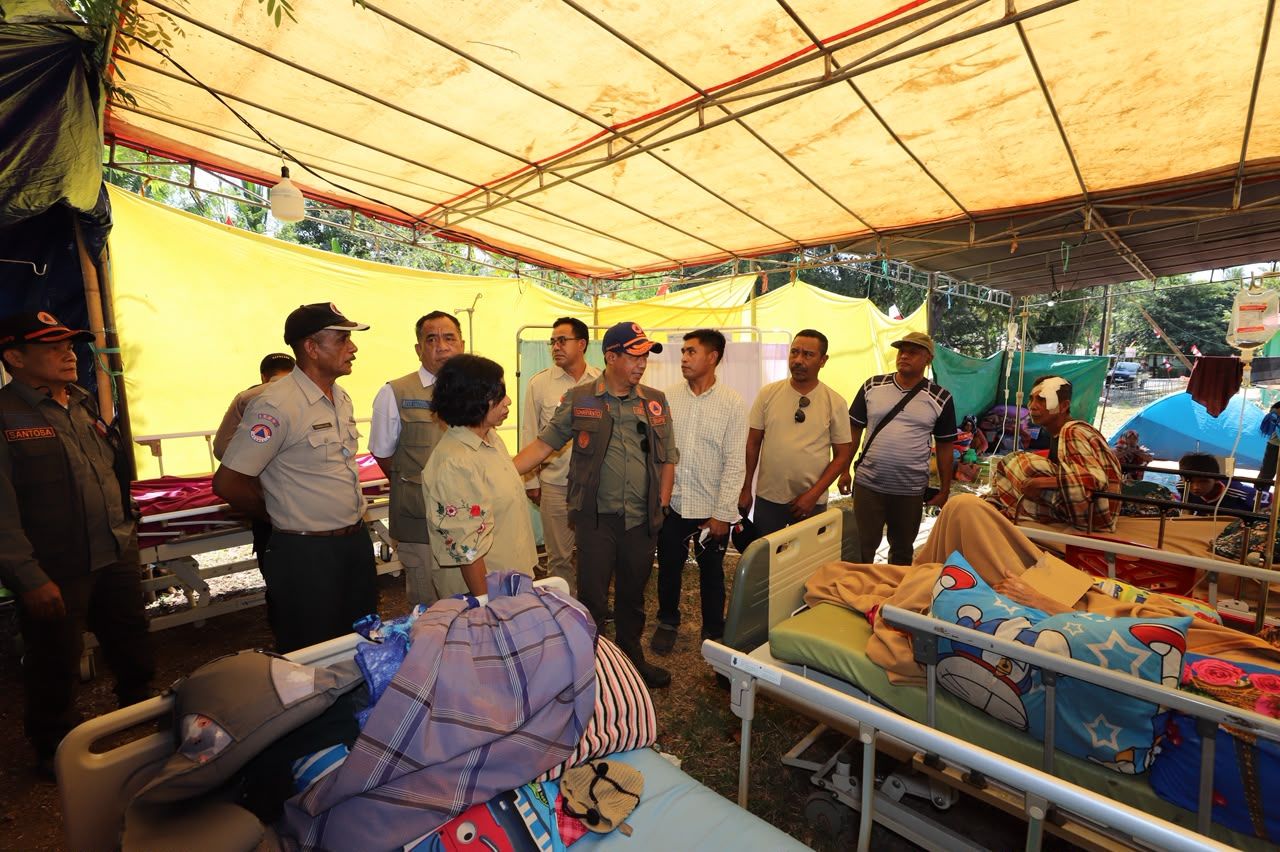
Acute respiratory infections (ISPA) have become the most common illness suffered by residents in refugee camps following the earthquake in Nusa Tenggara Timur (NTT). As of Sunday (23/8) at 16.00 WIB, 3,721 ISPA cases had been recorded in the earthquake-affected areas.
Acting Head of the BNPB Data, Information, and Disaster Communication Centre, Berton SP Panjaitan, said the data was based on reports received from the Ministry of Health.
“We received a report from the Ministry of Health that the highest reported illness is ISPA, with 3,721 cases,” Berton said during an online press conference.
In addition to ISPA, the Ministry of Health also recorded 15 cases of bites from animals that transmit rabies in the affected areas. These cases were reported from Nagekeo Regency and East Manggarai.
According to him, amid the increasing demand for health services, 11,106 health workers are now serving in several earthquake-affected areas. This number consists of 134 doctors, 5,306 nurses, 3,974 midwives, and 1,647 other health workers.
However, there is still a need for additional medical personnel. Currently, 133 health workers are needed, including 63 general practitioners, several specialists, general nurses, orthopaedic nurses, anaesthesia nurses, and pharmacists.
A total of 101 community health centres (puskesmas) are fully operational, 49 are partially operational, while 19 others are not yet able to provide services. To keep health services running, BNPB is helping to erect 6 x 12 metre tents to be used as health facilities and temporary puskesmas.
“The total number of puskesmas affected by this earthquake is 169 units, with details of 101 fully operational, 49 partially operational, and 19 not yet operational,” Berton explained.
Meanwhile, in Sikka Regency, eight tents have been erected at eight locations. In Manggarai Regency, there are 12 tents, four of which are being used to support general hospital services.
The government continues to provide health services for affected residents, especially refugees who are still in evacuation sites.