
Islamic Philanthropy Potential Reaches Hundreds of Trillions, Academics Push for Clean Energy Financing
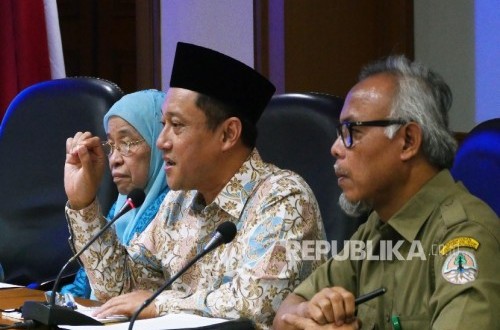
Sharia economics and finance academic Dr Hayu Prabowo has said that Islamic financial instruments have significant potential to support energy transition financing through social funds such as zakat and wakaf for clean energy projects.
“In the context of the energy transition, the concepts of green zakat and green wakaf are beginning to develop. The two have different functions but complement each other in supporting the financing of projects that contribute to reducing carbon emissions and improving people’s access to clean energy,” Hayu said during a discussion on Islamic finance investment in Jakarta on Wednesday.
He said the potential of Islamic social funds in Indonesia is very large, with zakat estimated at around Rp320 trillion per year, while the potential of wakaf reaches around Rp180 trillion per year.
However, their utilisation remains relatively low, leaving ample room to optimise these funds in support of sustainable development.
He also noted that energy transition projects generally carry high-risk characteristics with relatively low profit levels in their early stages. This condition means many renewable energy projects have not yet met banking financing requirements or do not yet have bankable status.
Here, Islamic philanthropic funds can play a role as first-loss capital, helping to reduce project risk through blended finance schemes.
“Wakaf is considered more suitable for long-term financing, while zakat can be used to support community empowerment and capacity building in the early stages of a project,” he said.
Beyond Islamic social funds, commercial sharia financing instruments such as green sukuk have also developed in Indonesia, including through the issuance of retail green sukuk. Nevertheless, these instruments remain commercially oriented, so they are generally intended for projects that already have financial viability.
He also urged academics to continue expanding the use of Islamic social finance instruments for environmental projects through research and policy innovation.
Hayu said more research is needed on how the concepts of green zakat and green wakaf can be developed and implemented in practice within society, so that they can support the financing of clean energy projects and sustainable development.
Source: jawawa.id (https://jawawa.id/newsitem/islamic-philanthropy-potential-reaches-hundreds-of-trillions-academics-push-for-clean-energy-financing-1784274724)
Originally published by Republika (https://khazanah.republika.co.id/berita/tib3rn483/potensi-filantropi-islam-capai-ratusan-triliun-akademisi-dorong-pembiayaan-untuk-energi-bersih), translated from Indonesian