
Islamic Philanthropy Becomes an Alternative to Combat Extreme Drought and Energy Crisis
INDONESIA is once again forced to confront the harsh face of climate change and an energy crisis. Besides the potential for drought expected in 2025 to early 2026, the energy crisis also threatens with disruptions to oil and gas supply due to the ongoing heated situation in the Middle East.
The Meteorology, Climatology and Geophysics Agency (BMKG) predicts a 62 per cent chance that the El Niño phenomenon will develop into a strong category throughout 2026. This phenomenon causes the dry season to become much drier and last longer (predicted until early 2027), with the peak of drought expected between August and October 2026. The El Niño phenomenon threatens to dry up residents’ wells and cause crop failures, with poor communities being the most vulnerable to bearing the impacts.
MOSAIC Programme Director Aldy Permana said that amidst the shadow of water and extreme weather crises, a spiritually-based resistance movement is growing from the grassroots. “The strategic direction of the movement going forward is to build Islamic philanthropy that is far more responsive and resilient in facing climate change and a just energy transition,” he said on Wednesday (24/6).
This real action is driven by MOSAIC (Muslims for Shared Action on Climate Impact), a collaborative movement that since 2021 has consistently translated religious doctrine into environmental action. Muslims in Indonesia have begun to undertake an ‘Ecological Hijrah’—a collective transition to convert charitable funds into concrete solutions for facing climate disasters. One such step is the ‘Wakaf Hutan’ (Forest Endowment) programme, initiated in 2023, which focuses on the root cause of drought: the destruction of water catchment areas.
Aldy Permana explained that MOSAIC breaks the conventional understanding that waqf (Islamic endowment) must only be in the form of physical buildings like madrasahs or tombs. Through Wakaf Hutan, Islamic financial instruments are used systematically to purchase and keep forests sustainable. In extreme dry seasons like the present, the existence of preserved forests is the only guarantee that groundwater reserves around residential areas will not be completely drained. Maintaining this ecological function is now positioned as having strong spiritual legitimacy, equivalent to an act of continuous charity (ibadah jariyah).
On another front, to face increasingly complex climate challenges, MOSAIC also recognises the need for human resource readiness, especially among young people. Through the ‘Bengkel Hijrah Iklim’ (Climate Hijrah Workshop), they have been training young Muslim generations since 2022 to become trusted messengers. These young cadres go into communities and Islamic boarding schools (pesantren) to communicate climate disaster mitigation and encourage the adoption of environmental curricula.
In cyberspace, this narrative is amplified by the ‘Umat Untuk Semesta’ (Community for the Universe) platform. Using a reflective communication style that resonates with young people, the platform transforms public fear over the El Niño threat into a wave of digital participation and real action.
Young climate activist from Depok, West Java, Kholida, said many young people are now aware of the importance of preserving the environment to face the climate crisis. “Through various collaborative movements, young people are no longer just spectators but are actively taking part as solutions to the various ecological problems we face today,” said Kholida, an alumna of the 2022 Bengkel Hijrah programme. One concrete action initiated is the formation of a youth environmental movement. “Through this movement, they held a Future Green Leaders Camp, an environmental training event that brought together 30 selected youth representatives from all over Indonesia,” she revealed.
Chair of the MOSAIC Advisory Board, Dr. Abdul Gaffar Karim, M.A., assessed that climate change and the current energy crisis are real moral challenges. “This moment is a crucial time to shift the community’s concern from symbolic gestures to real action in caring for the earth,” he said.
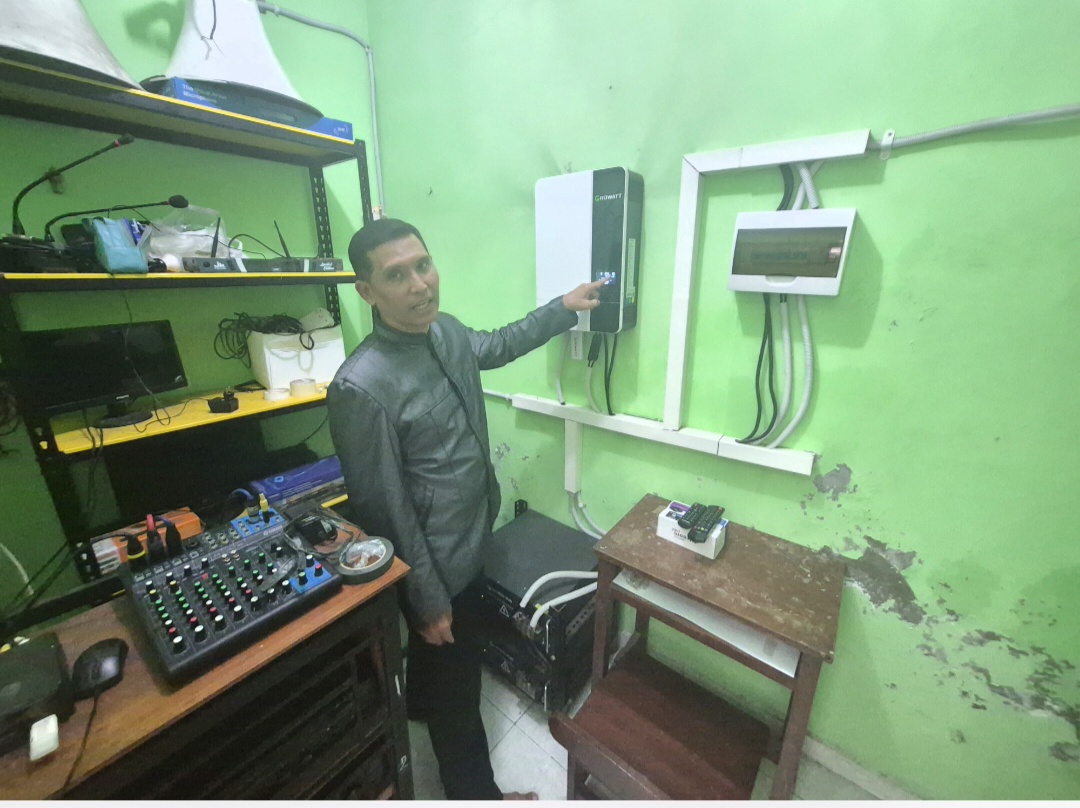
One of the most palpable impacts of the extreme dry season caused by El Niño is the soaring cost of living and energy, while rural community incomes plummet due to livelihood disruptions. Consequently, MOSAIC’s ‘Sedekah Energi’ (Energy Alms) programme has become highly beneficial as a socio-ecological buffer. Through this programme, alms funds are channelled to install solar panels in mosques and Islamic boarding schools. Affiliated mosques are now able to be energy-independent using abundant solar heat. “Sedekah Energi not only aims to reduce emissions but also to strengthen the function of houses of worship as community empowerment centres during the crisis,” he added. The programme has become an oasis in affected areas such as Sembalun (West Nusa Tenggara) and Bantul (Special Region of Yogyakarta), and is currently being expanded to Garut (West Java). Going forward, Sedekah Energi is collaborating with the Al Azhar Waqf Foundation and the Ministry of Religious Affairs to develop the programme in Aceh Tamiang, Cirebon, and North Sumatra.