
Islamic Finance Literacy and Inclusion Decline in 2026, KNEKS Evaluates
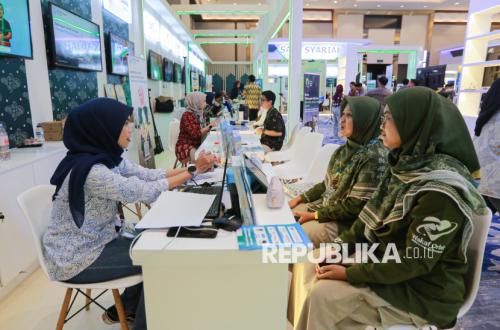
The 2026 National Survey of Financial Literacy and Inclusion (SNLIK) has shown a decline in Islamic financial literacy and inclusion rates compared to the previous year, indicating the need for more intensive efforts from the government and stakeholders to boost the Islamic finance sector in Indonesia.
Citing SNLIK 2026 data released by Statistics Indonesia (BPS), the Islamic financial literacy rate reached 43.07 percent, a decrease of 0.35 percentage points from the 2025 result of 43.42 percent. Meanwhile, the Islamic financial inclusion rate was recorded at 13.24 percent, down 0.17 percentage points from the previous year’s 13.41 percent.
In contrast, conventional financial literacy in 2026 reached 69.57 percent, an increase of 2.93 percentage points from 66.64 percent in 2025. The conventional financial inclusion rate was even higher at 93.53 percent, rising 0.92 percentage points from 92.61 percent the year before.
BPS indicated that the decline in Islamic finance literacy and inclusion rates is related to a new approach in data presentation. The 2025 survey had national coverage, whereas the 2026 survey extended to the provincial or regional level, resulting in more comprehensive data.
Sutan Emir Hidayat, Director of Islamic Ecosystem Infrastructure at the National Committee for Islamic Economy and Finance (KNEKS), responded that from a technical and methodological standpoint, the new data presentation in the 2026 survey could indeed explain the decline. “This is due to the addition of samples. Previously, it did not cover all regions, but now it goes down to the provincial level. This must be underlined; with the addition of samples, scientifically there will be bias,” Emir said when contacted on Wednesday (12/8/2026).
On a more essential level, regarding the slight decline in Islamic financial literacy and inclusion while conventional finance metrics rose, Emir observed that the Indonesian public is still far more familiar with conventional finance. “Generally, people are familiar with conventional finance. If you ask what financial institutions come to mind, the average person thinks of conventional ones, both state-owned (Himbara) and private,” he said.
Beyond criticising the opposing trends between conventional and Islamic finance, Emir also highlighted the persistent large gap between Islamic financial literacy and inclusion in the 2026 SNLIK. The Islamic financial literacy rate was relatively high at 43.07 percent, while the inclusion rate was only 13.24 percent, leaving a gap of approximately 29.83 percentage points.
“The literacy rate is quite decent at 43 percent, meaning around 57 percent of the population is not yet well-literate. But why are people who are literate still not included? The homework is that literacy should lead to intent, then to usage, and become a lasting experience,” he said.
According to Emir’s analysis, several factors contribute to the low level of Islamic financial inclusion or product usage in Indonesia. These range from limited access and service innovation to a lack of physical presence. “The first possibility is access, a classic problem. This means well-literate people have not yet gained easy access to become included in Islamic finance. The second factor is service. Services may not be optimal, such as the completeness of features compared to conventional financial institutions,” he explained.
The third factor is the physical presence of Islamic banks. Conventional banks have used this strategy to reach communities in remote areas, thereby expanding their market. Islamic banking is considered to need a similar proactive approach. “So, all Islamic financial institutions may need to improve. This is the homework that must be addressed going forward,” he stressed.
Source: jawawa.id (https://jawawa.id/newsitem/islamic-finance-literacy-and-inclusion-decline-in-2026-kneks-evaluates-1786582273)
Originally published by Republika (https://sharia.republika.co.id/berita/tjomql423/literasi-dan-inklusi-keuangan-syariah-2026-turun-ini-evaluasi-dari-kneks), translated from Indonesian