
Islamic Finance Industry Sets Record, Spin Off Gives No Mercy
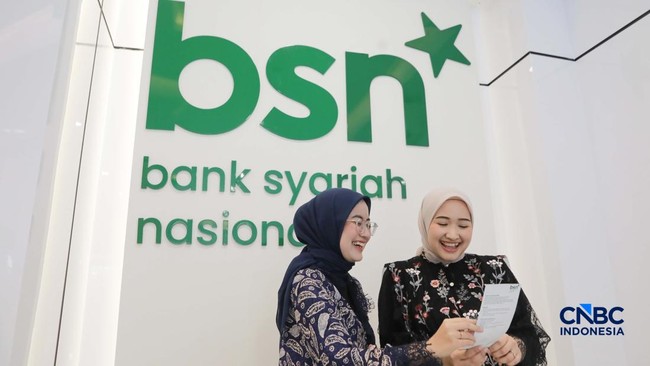
Indonesia’s Islamic finance industry has again recorded a significant achievement. The Financial Services Authority (OJK), through the 2025 Islamic Finance Development Report (LPKSI) released on 6 August 2026, recorded that national Islamic finance industry assets reached Rp3,131.02 trillion. This figure grew 8.56% year-on-year and is the highest in recorded history.
This achievement certainly deserves appreciation. However, amid the celebration of this growth, there is a compliance agenda that must not be overlooked: the obligation to separate or spin off Sharia Business Units (UUS). For the insurance industry, the time remaining until 31 December 2026 is increasingly limited. Meanwhile, in the banking sector, the separation obligation is not based on a single calendar date, but is triggered by the asset threshold of each UUS.
Herein lies the problem. Asset growth can be an indicator of market strength, but compliance with legal provisions remains the primary measure. The industry does not merely need to grow large; it must grow in an orderly, compliant and sustainable manner.
Big Numbers, Big Responsibility
The 2025 LPKSI shows strengthening across almost all industry segments. Islamic banking assets reached Rp1,067.73 trillion, growing 8.92% year-on-year. Islamic capital market assets, excluding Sharia share capitalisation, reached Rp1,875.25 trillion with growth of 8.18%.
In the Sharia Non-Bank Financial Industry (IKNB) sector, assets of insurance, guarantees and pension funds grew 10.59% to Rp74.27 trillion. Meanwhile, assets of financing institutions, venture capital and Sharia microfinance institutions grew 10.29% to Rp124.51 trillion.
In aggregate, the data confirms that Islamic finance is no longer merely a complement to the national financial system. Islamic finance has developed into one of the pillars that is increasingly relevant for deepening financial markets, financing the economy and expanding financial services for the public.
However, the important question is not only how much in assets has been accumulated. An equally fundamental question is: has the institutional structure behind this growth complied with the applicable legal provisions?
Two Different Regimes
Discussion of UUS spin-offs is often simplified as if all sectors face the same deadline. In fact, the legal regimes differ between the insurance and banking sectors. This difference is important to understand so that the public, business actors and stakeholders do not misread the source of obligations, mechanisms and compliance risks.
For the insurance sector, Article 52 of Law Number 4 of 2023 on the Development and Strengthening of the Financial Sector (UU P2SK), which amends provisions in the Insurance Law, was followed up through OJK Regulation (POJK) Number 11 of 2023, establishing the obligation to separate UUS with a uniform deadline of no later than 31 December 2026.
It should be noted that Law Number 4 of 2023 has been amended through Law Number 4 of 2026, but this amendment does not change the substance of Article 52 of the P2SK Law governing the separation of UUS in the insurance business.
This means that all insurance companies meeting the criteria for the separation obligation are on the same countdown. The deadline is collective and does not depend on when a company’s UUS assets reach a certain size.
In the banking sector, the regulation is different. POJK Number 12 of 2023, as a follow-up to Article 68 of the P2SK Law, does not set a single end date applicable to all conventional commercial banks that have UUS. The separation obligation arises if a UUS meets one of the criteria, namely that the UUS assets have reached at least 50% of the total assets of its parent and/or the total UUS assets are at least Rp50 trillion.
This distinction is not merely a technical regulatory matter. We can understand that the compliance risks are different. The insurance sector faces a collective countdown towards the end of 2026, while the banking sector faces obligations that move individually, following the development of each bank’s UUS assets.
Compliance Portrait: Real Acceleration, Work Not Yet Complete
In the insurance sector, the compliance challenge is quite evident. According to Iwan Pasila, Deputy Commissioner of OJK for Insurance, Guarantee and Pension Fund Supervision, as of February 2026 there were 28 companies that had submitted UUS spin-off applications, and as of 24 February 2026 only three companies had completed the separation process.
Entering the middle of the year, the situation improved. As of 27 July 2026, 41 insurance companies had submitted changes to their Sharia Unit Separation Work Plans (RKPUS). A total of 23 companies chose to establish new Sharia entities, while 18 companies chose to transfer portfolios to other companies.
Cumulatively, 15 companies have completed their separation. Five companies pursued the scheme of establishing a new company and 10 companies completed the separation through portfolio transfer. Compared to the February position, this figure certainly shows a very significant jump.
This acceleration deserves appreciation. It means that business actors are beginning to grasp that spin-off is no longer merely a long-term plan. It has become an urgent agenda that must be the focus of directors, commissioners, shareholders, actuaries and risk management.
However, appreciation must not turn into premature complacency. Of the 41 companies that have submitted plans, only 15 have actually completed the process. There are still 26 companies in the process phase, while the 31 December 2026 deadline is only months away. In other words, the crucial point lies precisely in the second half of this year.
This Is a Legal Matter, Not Merely Strategy
Source: jawawa.id (https://jawawa.id/newsitem/islamic-finance-industry-sets-record-spin-off-gives-no-mercy-1786780281)
Originally published by CNBC Indonesia (https://www.cnbcindonesia.com/opini/20260815142054-14-759659/industri-keuangan-syariah-cetak-rekor-spin-off-tak-beri-ampun), translated from Indonesian