
Islamic Economy during the Umayyad Dynasty
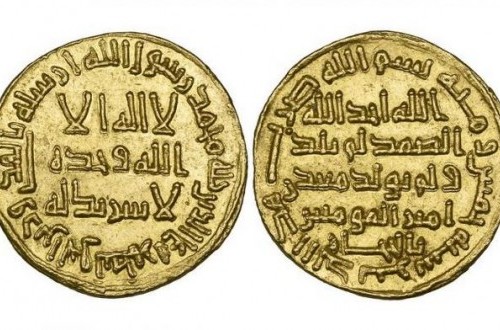
The Umayyad Dynasty was the first dynasty to inherit Islamic leadership following the end of the Rashidun Caliphate. Unlike previous administrations centred in Medina and Kufa, the Umayyads centralised their government in Damascus. This city sat at the intersection of two great civilisations, Persia and Rome, a position facilitated by Mu’awiyah bin Abi Sufyan, the first Umaycaliph, who had previously served as the governor of Damascus.
Damascus held significant economic importance as a vital port city, serving as the western terminus of the Silk Road. Mu’awiyah bin Abi Sufyan ascended to the caliphate during a period of political instability, characterised by friction and differing opinions among companions regarding the assassination of Uthman bin Affan. Furthermore, various factions infiltrated Muslim ranks to incite discord, leading to the climax of the Battle of Siffin. One significant consequence of this civil war was the emergence of the Shia, who opposed Mu’awiyah and venerated Ali bin Abi Thalib. From the perspective of Ahl al-Sunnah wal Jama’ah, historical analysis of this period should avoid partisan blame, recognising that the companions are servants whom Allah has approved.
Mu’awiyah bin Abi Sufyan was a companion and a scribe of the revelation during the time of the Prophet Muhammad (peace be upon him). An accomplished administrator and statesman, he served as caliph from 661 to 680 AD, a position later succeeded by his son, Yazid bin Muawiyah. Indirectly, the Umayyad Dynasty transformed the Islamic system of governance from a caliphate into a monarchy. This systemic shift had broad impacts across various sectors, including the management of the economy within Muslim society. One of the most notable changes during this era was the mechanism for managing the Baitul Maal (the public treasury). Under Umayyad rule, the Baitul Maal was divided into two distinct parts: a general fund for the entire community, and a separate fund for the Sultan and his family. However, in practice, various irregularities occurred in the distribution of Baitul Maal funds, resulting in certain allocations not being distributed proportionally.
Source: jawawa.id (https://jawawa.id/newsitem/islamic-economy-during-the-umayyad-dynasty-1780824503)
Originally published by Republika (https://khazanah.republika.co.id/berita/tg3zbo458/ekonomi-islam-di-masa-bani-umayyah), translated from Indonesian