
Islamic Economic Outlook 2026 Maps Impact of Middle East Crisis on Indonesia
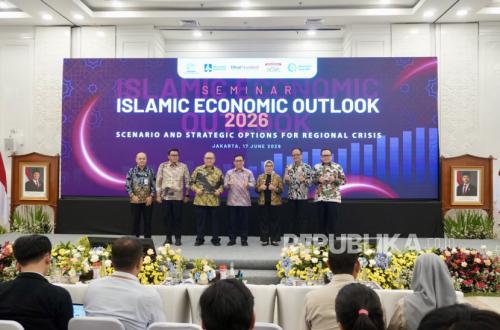
The Middle East crisis influencing global economic dynamics was the focus of the Islamic Economic Outlook 2026: Scenario & Strategic Options from Iran–US–Israel Regional Crisis forum held on Wednesday (17/6/2026) at Bappenas, Jakarta. The collaborative forum between Bappenas, the Indonesia Halal Lifestyle Center (IHLC), and DinarStandard brought together stakeholders from various sectors to examine the implications of the Middle East crisis for the national economy and the sharia economic ecosystem.
Chairman of the Indonesia Halal Lifestyle Center (IHLC), Sapta Nirwandar, assessed that the current geopolitical uncertainty demands Indonesia be more adaptive in reading changes in the global economic landscape. “Geopolitical crises not only impact the conflicting region but also affect trade, investment, supply chains, and the development of the global halal industry. Therefore, Indonesia needs to prepare anticipatory measures early on,” Sapta said. He added that Indonesia has the opportunity to strengthen its position in the global halal economy if it can maintain domestic stability while increasing the competitiveness of its leading sectors.
This view aligns with the government’s efforts to strengthen national economic resilience. Deputy Minister of National Development Planning/Deputy Head of Bappenas, Febrian Alphyanto Ruddyard, assessed that uncertainty is no longer a temporary condition but has become part of global dynamics that must be anticipated through adaptive development strategies. “Our goal is not just to protect the economy from global risks. Our goal is to build an economy that can learn, adapt, and grow stronger from every challenge faced,” he said. According to him, the sharia economy is highly relevant in turning a crisis into a momentum for transformation. Strengthening the sharia economy has become an important part of the national development agenda and one of Indonesia’s new sources of economic growth. Going forward, he emphasised the importance of strengthening intra-OIC economic integration, accelerating the downstreaming of the halal industry, and strengthening cross-sector coordination in facing various global dynamic scenarios.
From a global perspective, Managing Director of DinarStandard, Rafi-uddin Shikoh, presented several economic scenarios that could arise from the Middle East crisis and changes in the world’s geopolitical constellation. “Our focus is to help the government identify strategic options in the medium and long term to maintain stability and economic growth amidst increasing global uncertainty,” he said. Rafi-uddin added that amidst the crisis, Indonesia has the opportunity to make the halal economy and trade a catalyst for growth through strengthening the halal industry, Muslim-friendly tourism, and sharia finance. The forum is expected to become a reference for the government, business players, and other stakeholders in formulating anticipatory steps to face the impact of the Middle East crisis while capturing opportunities for the development of Indonesia’s sharia economy.