
Islamic Centre Needed to Support Muslim Community in Japan
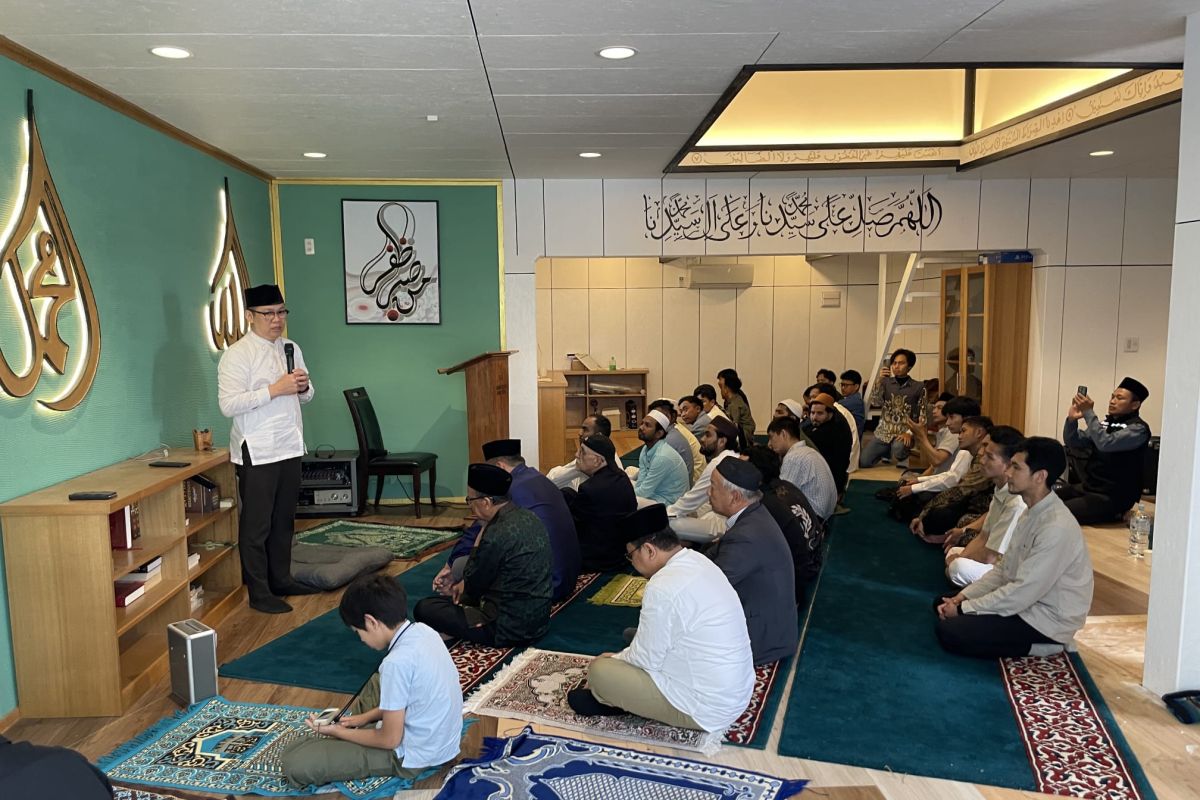
The increasing number of the Muslim community in Japan is driving the need for permanent places of worship and Islamic activity centres. To address this need, Dompet Dhuafa, in collaboration with the Chiba Islamic Culture Centre, is working towards the construction of the Al-Muttaqin Mosque, which will function as an Islamic Centre in the Matsudo area, Chiba Prefecture. This commitment was highlighted during a meeting between Dompet Dhuafa and Sensei Kyoichiro Sugimoto of the Chiba Islamic Culture Centre at the Philanthropy Building, South Jakarta, on Thursday (25/6). The meeting serves as an initial step in unifying the vision to provide a centre for worship, proselytising, and education for Muslims in Japan.
Kyoichiro Sugimoto believes that the presence of a mosque plays a much broader role than merely a place for prayer. In a country where the majority of the population is non-Muslim, he noted that an Islamic Centre serves as a vital foundation for community development and the expansion of Islamic outreach. “In Japan, 99.9% of the population is non-Muslim. Having a mosque or Islamic Centre will certainly have a very significant impact. It is not just for prayer, but for dakwah (outreach), supporting the Muslim younger generation, and converts, as they are the future leaders who must maintain and develop the Muslim community in Japan over the long term,” he said.
Sugimoto likened the construction of the Islamic Centre to the concept of early Islamic community building in Medina. “I find this to be like a pilot project for our first centre. The city centre is the mosque, which then creates the City of Medina. That was the concept of the Prophet Muhammad (PBUH). To create a community and an Ummah, the mosque or Islamic Centre is the foundation,” he stated.
Despite facing challenges, including the emergence of anti-Muslim sentiment on social media, Sugimoto remains optimistic that the development of the Islamic activity centre can be realised through collaboration between various parties. “Even though there are those who create baseless rumours, Islamophobia, and anti-Muslim movements, this remains a path of dakwah, and there will certainly be challenges. God willing, if we are strong and work together, we can overcome them,” he asserted.
Currently, the number of Muslims residing in Japan is estimated to reach approximately 420,000 people. Notably, about half of this total population consists of Indonesian citizens working or living in Japan. In addition to the physical construction of the mosque, the need for Islamic education is also a primary concern. Purwati Kasmaja, the wife of Sensei Sugimoto, stated that the Muslim community requires educational centres so that the younger generation does not have to seek religious education outside of Japan. “We very much need a place for education. If it is not available, we are forced to send these children to Muslim countries. Why not bring that competence to Japan? Our hope for the future is that teachers (ustaz) will be sent there to pioneer a permanent educational model,” she said.
The Chairman of the Board of Trustees of Dompet Dhuafa, Ahmad Juwaini, stated that the construction of the Al-Muttaqin Mosque is part of an effort to strengthen the spread of Islam while addressing the needs of the Indonesian Muslim community and other Muslims in Japan. “This activity is certainly a very challenging endeavour that requires collaboration and synergy from many parties, including individuals who care about supporting the provision of Islamic education facilities, religious activities, and places of worship, as well as campaigning for Islamic culture to the people in Japan,” he said.
Ahmad added that the cooperation between the two parties will not stop at the construction of the mosque but can be expanded to various programmes for outreach and community empowerment. “The hope is that Sensei Sugimoto’s visit to Dompet Dhuafa, both now and in the future, is for the purpose of doing good. We can actually engage in many other forms of cooperation besides the construction of the mosque. At the very least, in the context of dakwah, we can establish several collaborations in the future,” he remarked.
As the Muslim population in Japan continues to grow, the construction of the Al-Muttaqin Mosque in Chiba has become a priority agenda. Dompet Dhuafa is inviting both the public and the business community to participate in supporting the provision of facilities for worship, education, and outreach for the Muslim community in Japan. “We invite all parties, both the public and companies, to help realise the facilities for worship, proselytising, and Islamic education for the community in Japan by joining together to fund the purchase of the building,” Ahmad concluded.