
Islamic Boarding Schools and State Islamic Universities Must Become Engines of the Halal Economy and Skilled Workforce Providers
The requirement for micro and small enterprises (MSEs) to obtain halal certification for food and drink products, which takes effect on 18 October 2026, coincides with the establishment of the Directorate General of Islamic Boarding Schools. These developments are more than administrative agendas for the Ministry of Religious Affairs.
Together, they offer an opportunity to turn Islamic boarding schools and State Islamic Religious Universities (PTKIN) into engines of the national economy: providers of skilled workers, drivers of halal micro, small and medium-sized enterprises (MSMEs), and strategic partners in the government’s priority programmes.
Indonesia has substantial institutional assets. The Ministry of Religious Affairs records more than 42,000 Islamic boarding schools, with around 11 million students, supported by approximately one million kiai and teachers. Indonesia also has 59 PTKIN, out of a total of 932 Islamic higher education institutions.
Yet their economic contribution has not kept pace with their scale. Islamic boarding schools are still often viewed primarily as institutions for education and religious outreach, while PTKIN are frequently caught up in administration, accreditation and performance indicators. Together, however, they could form a community-based economic infrastructure rarely found in other countries.
From Halal Certification to Jobs
The halal certification requirement taking effect on 18 October 2026 is often seen as a regulatory burden for businesses. That view needs to be reconsidered. If managed properly, certification can create a new value chain involving training, auditing, assistance, testing, logistics, marketing and exports of MSME products.
This is where the respective roles of PTKIN and Islamic boarding schools matter. PTKIN can work upstream through Halal Centres and Halal Inspection Bodies (LPH) established at a number of campuses. They can train halal auditors, halal product process (PPH) facilitators, halal supervisors and halal managers.
Islamic boarding schools can work downstream. Through MSMEs, cooperatives and productive business units, they can become community-based hubs for production, certification assistance and the distribution of halal products. Graduates of Islamic senior secondary schools and PTKIN students could be trained as PPH facilitators, auditors, marketing staff, halal managers or certified business operators.
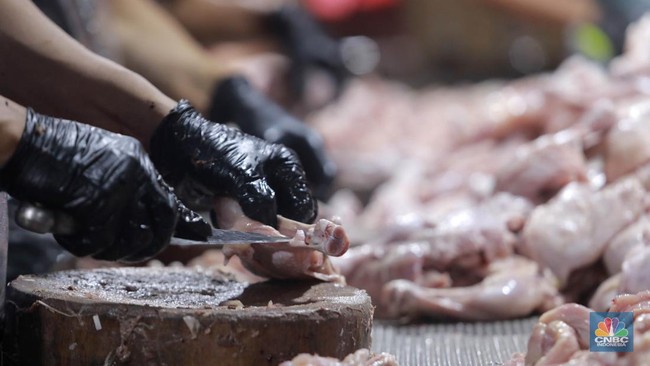
The potential also includes halal slaughterers. Unfortunately, technical curricula for this profession have yet to develop seriously at either Islamic boarding schools or PTKIN, despite clear demand in export markets.
New Zealand, for example, offers an Indonesia Special Work Visa to Indonesian citizens for jobs as halal slaughterers, trained chefs or Indonesian-language teaching assistants. Under the scheme, Indonesian halal slaughterers can work full-time in New Zealand for up to three years, provided they have a job offer of at least 30 hours a week and relevant qualifications or experience. New Zealand has set a quota of 20 Indonesian halal slaughterers at any one time.
This demand is not merely an opportunity for labour diplomacy. More than 90 per cent of animals processed in New Zealand’s meat industry are handled using halal methods, while 43 per cent of its NZ$3.3 billion red-meat exports are halal-certified. The industry also faces a domestic shortfall of about 150 halal workers.
With this approach, halal certification would no longer be just a compliance document. It could become a means of creating jobs, increasing the added value of local products and opening up international employment opportunities.
The Problem Is Governance, Not Potential
The main obstacle is not a lack of potential, but a governance culture that remains dominated by institutional silos. Many ministries and agencies work with blinkers on: they focus on spending their budgets and completing reports without adequately assessing whether programmes are well targeted and have an impact.
Two mechanisms need to be addressed. First, programmes are often judged by budget absorption because agencies believe their allocation for the following year may be cut if they do not spend the full amount. Second, performance is geared towards passing audits by the Audit Board of the Republic of Indonesia (BPK) and securing an unqualified opinion (WTP), even though a WTP opinion assesses the fairness of financial statements and does not automatically demonstrate that a programme is effective.
As a result, ministries tend to operate like “states within a state”, each with its own programmes, indicators and reporting mechanisms. Coordinating ministries often stop at holding meetings instead of establishing integrated government programmes.
In the Ministry of Religious Affairs and the Ministry of Hajj, administrative work continues to dominate. Lecturers are busy accumulating academic publications to qualify for professorships, while ministries concentrate on key performance indicators and budget absorption.
Meanwhile, structural problems in the hajj-umrah ecosystem and halal industry recur year after year. The author’s experience on an assignment with the National Priority Programme Implementation Monitoring Team at the Ministry of Home Affairs points to a simple lesson: priority programmes make a faster impact when ministries and agencies do not merely coordinate, but agree on one or two measurable quick wins that can be delivered in a short time.
In this context, PTKIN and the Directorate General of Islamic Boarding Schools should promptly coordinate with the Ministry of Religious Affairs, the Ministry of Hajj, the Halal Product Assurance Agency (BPJPH) and other relevant institutions to determine concrete quick wins.
PTKIN Research Quality Remains Uneven
PTKIN’s potential as research institutions is also uneven. According to the Research Quality pillar of the Times Higher Education World University Rankings 2027, only four PTKIN feature among Indonesia’s top 10 universities for research quality: Sunan Kalijaga State Islamic University in Yogyakarta, Maulana Malik Ibrahim State Islamic University in Malang, Syarif Hidayatullah State Islamic University in Jakarta, and Sunan Gunung Djati State Islamic University in Bandung.
This means that only a handful of the 59 PTKIN have strong national research competitiveness. The government should change how success is measured: away from publication numbers and budget absorption, and towards adopted recommendations, certified MSMEs, graduates employed in industry and economic partnerships that generate income.
The Global Halal Market and Demand for Skilled Workers
The biggest opportunities are not limited to the Middle East. Japan, Australia and New Zealand also need skilled Indonesian workers, particularly in halal food, hospitality, culinary services and halal slaughter. Yet Indonesia does not have an adequate technical curriculum to train halal slaughterers to a common standard at Islamic boarding schools or PTKIN.
New Zealand is the clearest example. It not only offers a special visa for Indonesian halal slaughterers, but also makes the profession part of a halal meat export industry worth billions of dollars.
In the Gulf, Bahrain Economic Vision 2030 identifies sustainability, competitiveness and fairness as its guiding principles, while Kuwait Vision 2035 aims to make the country a regional financial and commercial centre by 2035.
Saudi Arabia is also developing new destinations such as AlUla, The Red Sea Project, AMAALA, Diriyah, Qiddiya and NEOM, creating demand for tour guides, mutawifs, chefs, waiters, hospitality workers and construction workers.
Islamic Boarding Schools Already Have Global Links
There are already pathways for Islamic boarding school graduates to go abroad. MAN PK/MAN 2 Padang Panjang regularly sends dozens of its graduates to Al-Azhar University in Cairo, the Islamic University of Madinah and various universities in the United Arab Emirates. MANPK Makassar also consistently sends more than a dozen graduates each year to Al-Azhar and Ibn Tufail University in Morocco.
This track record shows that graduates of Islamic senior secondary schools can compete internationally, with Arabic-language skills and academic networks across the Muslim world. So far, however, this mobility has largely been viewed as the sending of students rather than the creation of career pathways.
The Directorate General of Islamic Boarding Schools should turn these links into a bridge for careers and academic exchange between Indonesia and the Muslim world. The government could build an alumni database, map job opportunities, provide Arabic and English training and professional certification, and develop partnerships with universities, embassies and industries in destination countries.
Strategic Plans Must Be Revised
The Ministry of Religious Affairs should ask all PTKIN and Islamic boarding school units to reformulate their strategic plans. These plans should not focus solely on accreditation targets, student numbers, publications and budget absorption.
At least six priorities should be included:
Mapping labour demand in Saudi Arabia, Bahrain, Kuwait, Qatar, the United Arab Emirates, Japan, Australia and New Zealand.
Establishing standardised, accredited vocational programmes for halal slaughterers, linked to the needs of export industries.
Developing skills in hospitality, religious tourism, halal cuisine and destination management.
Strengthening professional Arabic and English for tourism, business, employment law and diplomacy.
Strengthening the halal ecosystem at Islamic boarding schools by supporting MSMEs, cooperatives and productive business units.
Creating pathways for further study in the Middle East, particularly through scholarships focused on the economic shift from oil towards hospitality, tourism, the digital economy and Islamic finance.
Theses and dissertations must also change. Academic work should not end up solely in libraries, seminars or focus-group discussions. Every research project should produce policy recommendations, business models, training standards, job-opportunity maps or products that stakeholders can use.
Policy Recommendations
The government should position Islamic boarding schools and PTKIN as strategic nodes in national priority programmes, not merely as units that spend budgets. The first step is to agree on joint quick wins: training and certifying 1,000 halal facilitators from among Islamic senior secondary school graduates and PTKIN students; helping 1,000 boarding-school MSMEs obtain halal certification; and launching halal slaughterer programmes at selected boarding schools and PTKIN.
The next steps are to revise PTKIN strategic plans and Directorate General of Islamic Boarding Schools programmes to align them with labour-market needs in the Gulf, Japan, Australia and New Zealand. The government should also form a consortium of 59 PTKIN and leading Islamic boarding schools for research and training in hajj and umrah, the halal industry, hospitality, religious tourism and halal slaughter.
Performance indicators should shift from budget absorption and publication numbers to tangible outcomes: recommendations adopted, MSMEs certified, graduates employed and economic partnerships established. The government should also develop a “Islamic Boarding Schools and PTKIN for the Global Halal Market” programme covering Arabic, English, hospitality, halal cuisine, tourism management, entrepreneurship and halal slaughterer certification.
Finally, the Ministry of Religious Affairs, the Ministry of Hajj, the Ministry of Higher Education, the Ministry of Manpower, BPJPH, Danantara and the coordinating ministries should be brought together under a single roadmap. Without this integration, programmes will continue to operate separately and end with reports.
Indonesia is not short of assets. More than 42,000 Islamic boarding schools, around 11 million students and 59 PTKIN could be channelled into a powerful economic force. What is needed is a change in policy direction: from administration to impact, from budget absorption to value creation, and from sending students abroad to building global careers.
If this direction is pursued, Islamic boarding schools and PTKIN can drive the halal economy, provide workers for the Middle East, Japan, Australia and New Zealand, and make a tangible contribution to national priority programmes.
Source: jawawa.id (https://jawawa.id/newsitem/islamic-boarding-schools-and-state-islamic-universities-must-become-engines-of-the-halal-economy-and-skilled-1791867093)
Originally published by CNBC Indonesia (https://www.cnbcindonesia.com/opini/20261013105705-14-775649/pesantren-ptkin-mesti-jadi-mesin-ekonomi-halal-penyedia-sdm-terampil), translated from Indonesian