
Islamic Banking and the Future of Indonesia's Halal Industry
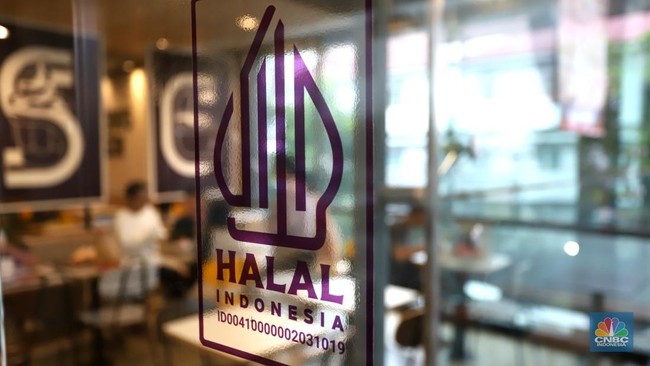
Indonesia stands at a critical crossroads in the development of its Sharia economy. On one hand, the nation possesses a massive Muslim market, a steadily growing halal industry, and an increasingly robust Sharia financial ecosystem. On the other hand, Indonesia still faces a classic problem: the vast market potential has not yet fully translated into production strength, exports, and mastery of the global value chain.
In this context, Islamic banking should no longer be viewed merely as an institution for collecting funds and distributing financing to the Muslim community. Islamic banking must be positioned as one of the primary financing engines for the national halal industry.
The momentum is actually opening up. The Financial Services Authority (OJK) noted that Islamic banking assets reached IDR 1,067.73 trillion by the end of 2025, growing 8.92% annually. Distributed financing reached IDR 705.22 trillion, an increase of 9.58%, while third-party funds reached IDR 892.99 trillion, up 10.14%.
Entering 2026, this growth continues. As of March 20.26, Islamic banking assets reached IDR 1,061.61 trillion, while financing grew by 9.82% to IDR 716.40 trillion. These figures indicate one thing: the capacity of Islamic banking is increasing. The question now is: where should this capacity be directed?
So far, the discourse on Islamic banking has too often stalled at the question of market share. While important, this question is insufficient. A more strategic question is how much Islamic banking financing actually enters the sectors that form the halal value chain.
This is because the halal industry is not merely a matter of halal certification. The halal industry is a long value chain. It includes agriculture as a raw material provider, the food and beverage industry, pharmaceuticals, cosmetics, modest fashion, Muslim-friendly tourism, logistics, warehousing, trade, and the digital economy.
This means financing needs are also highly complex. Halal food producers require working capital. Farmers need financing to increase productivity. The cosmetics industry requires investment in machinery and technology.
Modest fashion players need capital to expand their markets. Exporters require trade finance. Even the halal industry requires financing for certification, standardisation, traceability, brand development, and global market penetration.
This is where Islamic banking has significant room to operate. Islamic banks should not merely ask, “Does this business need financing?” Furthermore, banks need to ask, “Where in the halal value chain does this business sit, and how can financing increase its added value?” This shift in perspective is what is required.
Indonesia possesses a massive market. Globally, Muslim consumer spending across various halal economic sectors—ranging from food, pharmaceuticals, cosmetics, and modest fashion to travel, media, and recreation—reached US$2.43 trillion in 2023 and is projected to rise to US$3.36 trillion by 2028. In the SGIE 2024/25 report, Indonesia ranks third in the global Sharia economic ecosystem.
Indonesia also holds high positions in several global halal sectors. Based on the SGIE 2025/2026 cited by Bank Indonesia, Indonesia ranks first in modest fashion, second in Muslim-friendly tourism, and third in halal food.
This potential is certainly encouraging. However, there is an issue that cannot be ignored: being a consumer of halal products does not automatically make Indonesia a leading producer of halal products globally. These are two different things.
We may have millions of halal food consumers, yet our raw materials are still imported. We may be a large market for halal cosmetics, but much of the raw materials and technology still originate from abroad. We may have a large modest fashion market, but challenges in exports, design, branding, and global distribution still need to be strengthened.
Therefore, the next agenda is not merely to increase the consumption of halal products. The grand agenda is to transform Indonesia from a halal market into a global centre for halal production and export. Islamic banking must be a vital part of this transformation.
However, stating that the halal industry needs financing does not mean the problem is automatically solved by providing credit or loans. In fact, this is where the greatest challenge lies. Most players in the halal industry are MSMEs. They often face classic problems such as limited collateral, inadequate financial records, small business scale, income volatility, and unintegrated business data.
From a banking perspective, these conditions increase risk. Consequently, a “halal industry financing gap” emerges, where financing needs are high, but the risk profiles of business actors do not always align with banking standards.
This is where conventional financing approaches, even if conducted by Islamic banks, are not always sufficient. Islamic banks must begin developing a value-chain financing approach. For example, financing should not only be provided to MSMEs as individual entities but also to their entire ecosystem.
Farmers serve as raw material suppliers for the halal industry. The industry acts as the offtaker. The bank finances both the farmers and the industry based on contracts within the supply chain. Logistics companies become part of the ecosystem. Halal certification becomes part of the quality improvement process. Digital platforms provide transaction data. Thus, risk is not solely read from the MSME’s balance sheet, but from the strength of its business ecosystem.
Source: jawawa.id (https://jawawa.id/newsitem/islamic-banking-and-the-future-of-indonesias-halal-industry-1789710884)
Originally published by CNBC Indonesia (https://www.cnbcindonesia.com/opini/20260918114024-14-768960/perbankan-syariah-dan-masa-depan-industri-halal-indonesia), translated from Indonesian