
Islamic and Catholic Private Universities Urge Government to Evaluate Student Admissions System
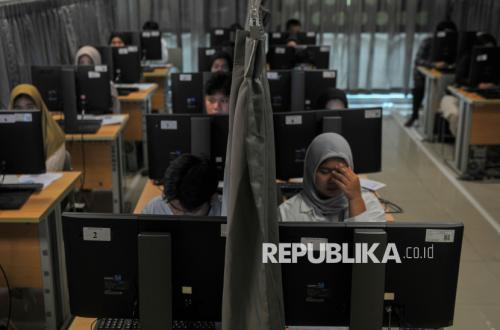
Private higher education institutions (PTS) are requesting the government to re-evaluate the student admission ecosystem, which is deemed to be increasingly threatening the sustainability of private universities. The expansion of student capacity in state universities (PTN), particularly legal entity state universities (PTN-BH), is seen as creating an uneven playing field between public and private campuses.
This plea was issued by the Indonesian Association of Islamic Private Higher Education Cooperation (BKSPTIS) and the Indonesian Catholic Higher Education Association (APTIK). Both associations believe that the issues faced by private universities are no longer merely about each campus’s ability to attract students, but have reached the level of national higher education policy design.
“Private universities should be viewed as strategic partners of the state in fulfilling the citizens’ right to higher education, not as competitors to state universities,” stated the joint declaration from BKSPTIS and APTIK, released following an academic forum titled “Private Universities Educating the Nation: Reflecting on Contributions, Opportunities, and Challenges” at Sanata Dharma University, Yogyakarta, on 8 September 2026.
The forum was attended by representatives from 17 private universities. The joint statement was signed by the Chairman of BKSPTIS, Fathul Wahid, and the Chairman of APTIK, Johanes Eka Priyatma.
This concern is not without cause. The Rector of Universitas Islam Indonesia (UII), Hari Purnomo, noted that the autonomy granted to PTN-BH allows state universities the freedom to expand their student intake. Consequently, student interest is being diverted towards state universities, leading to a decline in new applicants for several private institutions.
This issue is further compounded by public perception. BKSPT_PTIS previously noted that a sense of favouritism towards state universities has been established as early as the high school level, through the emphasis on the percentage of graduates accepted into state universities. This condition is believed to reinforce the perception that state universities are inherently superior to private ones.
More Than Just Campus Competition
BKSPTIS and APTIK argue that the pressure on private universities occurs because several policies operate within an uneven playing field. In addition to the expansion of student intake in PTN and PTN-BH, they highlighted rapid regulatory changes, differences in flexibility regarding the opening and management of study programmes, and limited budget support for private institutions.
These issues are considered more severe for private universities in regional areas. A decrease in the number of prospective students, demographic shifts, and public perception regarding the superiority of state universities could lead some private institutions to face sustainability crises.
This situation is critical because private universities have played a major role in expanding access to higher education. Many private institutions provide education funded largely by institutions and the community.
Therefore, BKSPTIS and APTIK believe the state should not position private universities merely as education providers that must survive through market mechanisms. “Indonesia will not be able to expand access, improve quality, and strengthen the competitiveness of higher education by relying solely on state universities,” the statement added.
State Universities Urged Not to Expand Without Limits
One of the most firm demands from both associations is an evaluation of the expansion of student intake in PTN and PTN-BH. According to them, the autonomy of state universities should not be interpreted as the freedom to increase student intake without considering learning capacity, the quality of academic services, and the impact on the higher education ecosystem in their respective regions.
The number of students admitted, they stated, must be aligned with lecturer capacity, facilities, learning systems, and institutional mandates.
This issue becomes increasingly relevant as PTN-BH possesses greater autonomy in institutional management. Hari Purnomo previously mentioned that such expansion has resulted in a decrease in the number of new students at several private universities.
BKSPTIS and APTIK are not proposing that state universities stop admitting students. Instead, they are encouraging a clearer division of roles. State universities, which possess greater capacity and state resource support, could, for example, be directed towards strengthening postgraduate education, research, innovation, and the development of science.
Meanwhile, the expansion of undergraduate access could be developed through a division of roles with private universities. Under such a scheme, public and private campuses would not be placed in competition for the same students, but rather in a functional division within a single higher education ecosystem.
Source: jawawa.id (https://jawawa.id/newsitem/islamic-and-catholic-private-universities-urge-government-to-evaluate-student-admissions-system-1790229472)
Originally published by Republika (https://news.republika.co.id/berita/tluq43393/pts-islam-dan-katolik-desak-pemerintah-evaluasi-sistem-penerimaan-mahasiswa), translated from Indonesian