
ISESS Urges Corruption Probe by Police's Kortas Tipikor to Be Free from Intervention
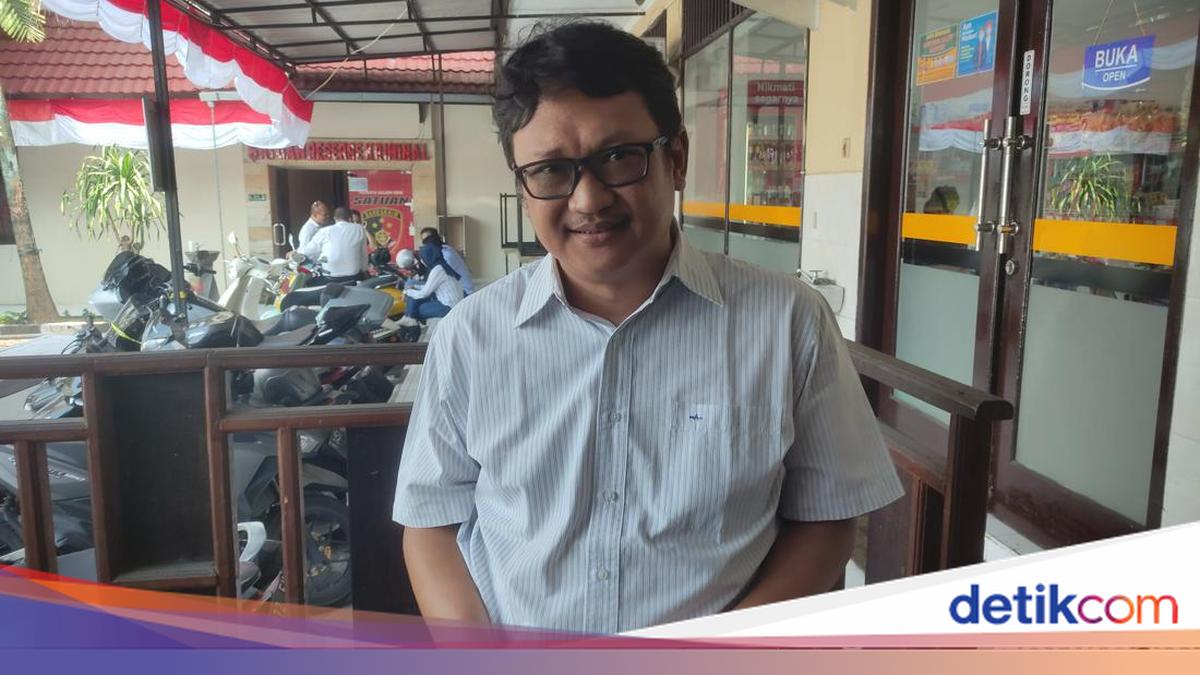
Police observer Bambang Rukminto from the Institute for Security and Strategic Studies (ISESS) has urged that the investigation into alleged corruption in coal supply fulfilment, which triggered blackouts in Sumatra and several other Indonesian regions, proceed swiftly and transparently. Bambang also expressed hope that the probe into the alleged scandal would be conducted thoroughly and free from any party’s intervention. “The National Police must be free from intervention, both internal and external, in handling this case,” Bambang told journalists on Thursday (8/7/2026). Bambang specifically highlighted the involvement of certain military personnel who recently visited the Metro Jaya Police headquarters. According to him, the act of visiting the police headquarters had exceeded the boundaries of professional military doctrine and tended to interfere in the realm of civilian law enforcement. He stressed that the presence of the military unit there actually degraded the dignity of the military institution’s reform itself. “It has exceeded the boundaries of professional military doctrine. It embarrasses the dignity of the TNI as the guardian of state sovereignty,” said Bambang. “Security provided by the TNI for officials must also be proportional, not obstructing the law enforcement process. It does not mean ‘securing’ the behaviour of individual law enforcement officers, whether from the Police or the Attorney General’s Office,” he continued. Therefore, Bambang urged the TNI Commander to take immediate firm action. The TNI Commander must withdraw all his personnel and impose sanctions on those who act beyond the limits of the constitution and legislation. Security provided by the TNI for state officials, including within the prosecutor’s office, must be carried out proportionally, not used to obstruct the law enforcement process. “The TNI Commander must withdraw his personnel and sanction those who act outside the boundaries of the constitution and legislation. The TNI, as the guardian of sovereignty, must return to the barracks, not guard the corrupt behaviour of officials,” he asserted. Bambang also reminded that Presidential Decree Number 66 of 2025 concerning protection for prosecutors in carrying out their duties cannot be used as a shield. According to him, this regulation must not become a basis for protecting allegedly corrupt behaviour. The Prosecutor’s Office is also demanded to be an example of a law-abiding culture by following all applicable procedures, rather than triggering power conflicts or seemingly exploiting military force. “Presidential Decree Number 66 of 2025, which relates to the protection of prosecutors in carrying out their duties, cannot be a basis for protecting allegedly corrupt behaviour,” he said. On the other hand, the Police as investigators are required to move quickly, transparently, and meticulously in presenting these findings to the public. Considering this case has reportedly been under investigation since 2020, the Police force is obliged to clearly explain the articles, suspects, motives, and modus operandi to avoid wild speculation. This includes the validity of evidence confiscation, which must be immediately legalised by the court so it is not vulnerable to challenge through pre-trial proceedings. This conflict, according to Bambang, also serves as serious evaluation material for Indonesia’s criminal justice system. Moreover, the new Criminal Procedure Code has only been in effect for six months since its enactment on 1 January 2026. The absence of a Supervisory Judge mechanism, which was once proposed by civil society, has left the current system faltering when clashes occur between police investigators and prosecutors. Bambang emphasised that his party supports corruption eradication measures. He warned that this major case should not end anticlimactically at a compromise table between leaders. “The legal process must be escorted until it reaches the court. It must not end merely with handshakes between leaders, which would create a public perception of merely dividing up territory or a tit-for-tat action,” he concluded.