
ISEF 2026 Seeks to Turn Sharia Economy’s Potential into a National Economic Force
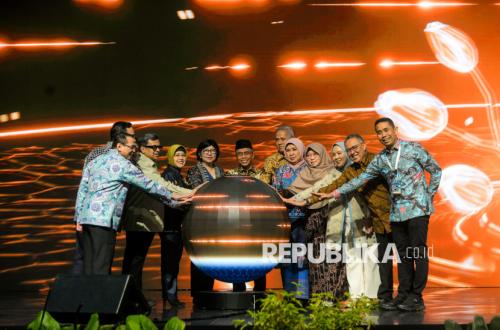
JAKARTA — Indonesia continues to push to realise the potential of the sharia economy as an engine of national economic growth. Ranking fourth in the world for the sharia economy is not enough, given the country’s substantial potential.
Speaking at the opening of the 13th Indonesia Sharia Economic Festival (ISEF) in Jakarta on Wednesday (14 October 2026), Deputy Coordinating Minister for Economic Affairs Dradjad Hari Wibowo said global Muslim consumer spending was projected to reach US$3.56 trillion by 2029.
To seize this opportunity, the government is promoting the strengthening of the halal industry and micro, small and medium-sized enterprises (MSMEs), expanding exports, and developing sharia finance and social funds. Access to financing for MSMEs also needs to be widened so that businesses can grow and reach larger markets.
Dradjad also stressed that the sharia economy is not solely about religion, but promotes principles of fair trade that can be applied universally.
“We should not look at the sharia economy only from a religious perspective; its message is universal. One of its messages is fair and just trade among us all,” Dradjad said.
According to the State of the Global Islamic Economy (SGIE) Report 2025/2026, Indonesia ranks fourth in the world for the sharia economy. Meanwhile, the country’s halal value chain grew by 5.5 per cent year on year in the second quarter of 2026, outpacing national economic growth.
At the opening of ISEF 2026, Bank Indonesia Governor Destry Damayanti cautioned that Indonesia’s global position was no reason for complacency. She said there remained considerable scope to develop the sharia economy and finance, particularly by expanding markets and developing financial products.
“With a broader scale in view, the opportunities to develop the sharia economy and finance will be very significant,” Destry said.
The need to turn potential into productive business activity was also emphasised by Bank Indonesia Deputy Governor Solikin M. Juhro at the close of ISEF at the Jakarta International Convention Center (JICC) on Sunday (18 October 2026). Indonesia, he said, could not rely solely on its market potential, but needed to convert it into productive and competitive business activity.
“That potential must be converted into more productive and competitive businesses which ultimately improve the welfare of the wider community,” Solikin said.
Source: jawawa.id (https://jawawa.id/newsitem/isef-2026-seeks-to-turn-sharia-economys-potential-into-a-national-economic-force-1792468256)
Originally published by Republika (https://halalhub.republika.co.id/berita/tn6pnc502/isef-2026-dorong-potensi-ekonomi-syariah-jadi-kekuatan-ekonomi-nasional), translated from Indonesian