
Is the United States Still Capable of Running the World?
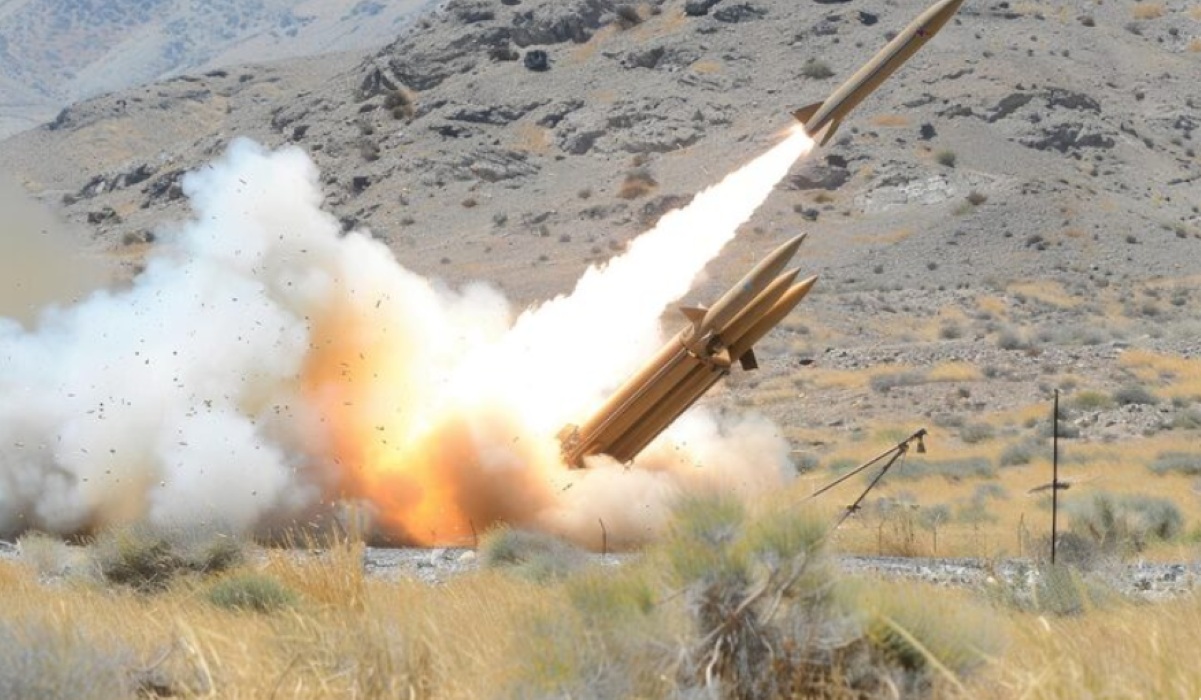
The return of Donald Trump to the White House has sparked deep concern among United States allies. It is not only about Washington’s political intentions, but the focus has now shifted to the actual capability of the US military. The war against Iran, which ended without a clear conclusion, has drained US weapons stockpiles and exposed the limits of American hard power.
Officials in the capitals of allied and rival nations are now questioning whether industrial decline, strategic inconsistency, and political dysfunction have weakened the US to the point where it is no longer able to provide decisive power in multi-front conflicts spanning Europe, the Middle East, and Asia.
Strategist Matthew Kroenig of the Atlantic Council stressed that deterrence depends on capability and credibility. “Previously the question was about credibility, namely whether the US would actually do it. But now, capability has become a crucial part. With reports of depleted ammunition, it is logical for adversaries to assume the US is less capable than it was a few years ago,” he said.
Several of Trump’s policy moves have worsened these doubts. In Europe, officials privately doubt the American nuclear umbrella. German parliamentarian Roderich Kiesewetter stated that the US is unlikely to risk its own security for the sake of the Baltic states or Germany.
Although the White House, through deputy press secretary Anna Kelly, denied any weapons shortage, data from military analysts show a worrying condition. The Center for Strategic and International Studies (CSIS) estimates that the US Patriot missile inventory is down to fewer than 830 units and THAAD interceptors to below 280 units.
This condition has direct implications for deterrence against China. A Council on Foreign Relations (CFR) study noted that the US arsenal no longer has the capacity to deter a Chinese attack on Taiwan if a conflict were to break out in the near future.
The main problem lies in the speed of production. While autocratic states such as Russia, China, and Iran have placed their defence industrial bases on a war footing, Western countries are still operating under peacetime rules that prioritise corporate calculations and shareholder interests.
Russia is reported to be capable of producing more than 100 ballistic missiles per month. By contrast, Western missile interceptor manufacturers such as Lockheed Martin have only recorded moderate increases. Last year, they delivered 620 PAC-3 MSE interceptors, up 20 per cent from the previous year. However, this number is still far from enough to cover consumption across multiple fronts.
John Bew, a professor at King’s College London, warned of the risk of an acute crisis in various areas due to the shortage of missile defence systems. “This has direct implications for the Gulf, European defence, and major consequences in Asia,” he said.
Nevertheless, some analysts such as Michael Fullilove of the Lowy Institute remain optimistic that the US has the financial and technological strength to bounce back. However, for many allies, this wake-up call shows that relying on American power alone is no longer sufficient in the current era of global uncertainty.
Source: jawawa.id (https://jawawa.id/newsitem/is-the-united-states-still-capable-of-running-the-world-1787323843)
Originally published by Media Indonesia (https://mediaindonesia.com/internasional/924577/apakah-amerika-serikat-masih-mampu-untuk-mengatur-dunia), translated from Indonesian