
Is the State Conducting a Hostile Takeover of BCA?
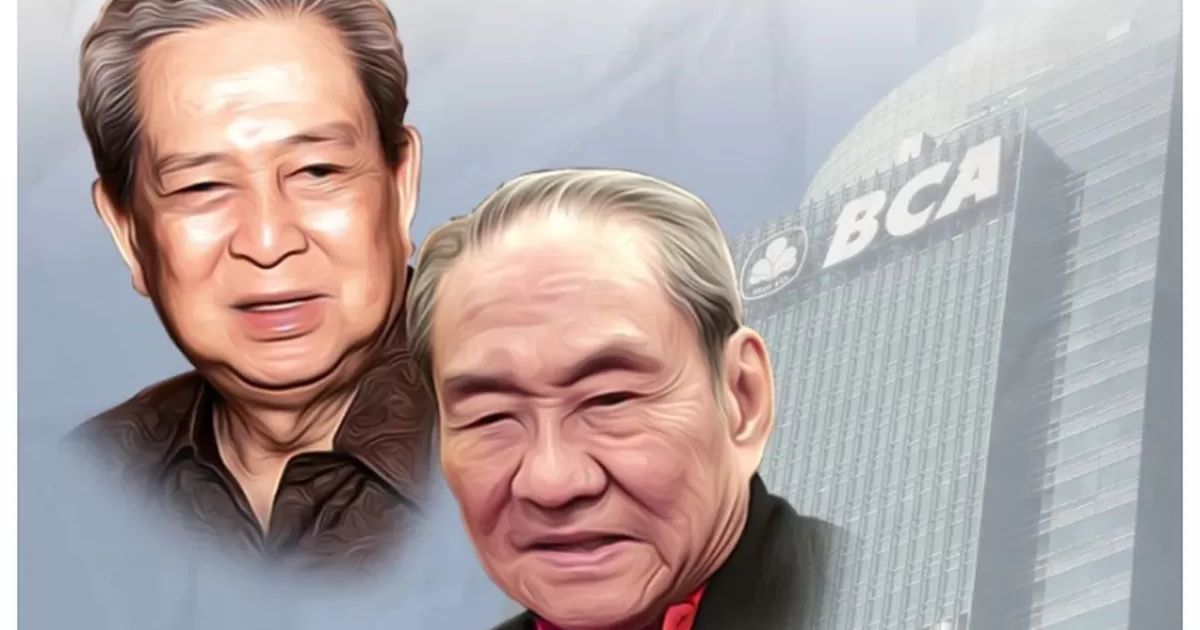
The BCA case serves as a reminder that the state holds a dual obligation: to complete the accountability for the use of public funds and to maintain legal certainty for owners who have acquired their rights through legitimate means. Both must proceed in tandem through audits, measured law enforcement, and respect for official transactions.
Investor confidence is built over many years but can be shaken by a single signal that ownership obtained through official mechanisms could be challenged at any time. In this context, the discourse regarding a potential takeover of PT Bank Central and Central Asia Tbk (BBCA) by the state must be treated with extreme caution. The stakes include the government’s credibility in respecting transactions, contracts, and business certainty.
As of investigations conducted on Sunday (27/09/2026), no official announcement has been found regarding a decision by the state to take over BCA. Similar discourse emerged in August 2025, which was subsequently denied by the CEO of Danantara, Rosan Perkasa Roeslani, and the Deputy Chairman of the House of Representatives, Sufmi Dasco Ahmad. Therefore, discussions regarding a hostile takeover of BCA should be viewed as an assessment of the risks of an idea, rather than a report that the government is currently executing a takeover.
A fundamental fact that needs to be emphasised is that the entry of the Hartono family business group, known as the Djarum Group, occurred through a consortium participating in the government’s official divestment process. Through the Financial Sector Rescue Agency (BPPN), the government offered shares to strategic investors, and the FarIndo consortium emerged as the tender winner. The state provided investment opportunities, established the sale mechanism, and received payment for the shares released.
In 2002, FarIndo Investment (Mauritius) Limited purchased 51% of BCA’s shares from BPPN for approximately Rp5.3 trillion, or Rp1,775 per share. According to media investigations, in the early stages, FarIndo was approximately 90% owned by Farallon Capital Management and 10% by Alaerka Investment. Alaerka is an investment vehicle linked to the Djarum Group. The Hartono family’s portion subsequently increased through subsequent changes in ownership.
Thus, the meaning of “Djarum entered because it was invited” needs to be explained concretely: the government opened a tender to potential investors, and the consortium involving Djarum participated and won the process. This was participation in a divestment programme organised by the state. There is no evidence from the investigated documents to describe Djarum’s entry as a seizure of BCA ownership.
In a clarification to the Indonesia Stock Exchange on 20 August 2025, BCA rejected allegations that the purchase of 51% of shares for approximately Rp5 trillion was an unlawful transaction. BCA’s Corporate Secretary at the time, I Ketut Alam Wangsawijaya, explained that the tender was conducted by the government through BPPN in a transparent and accountable manner. According to the company, the transaction value reflected the market conditions at that time.
The process of changing controllers was also under regulatory supervision. Reports regarding the FarIndo structure noted the involvement of Bank Indonesia in the examination of potential owners. In January 2007, BCA management stated that the change in FarIndo’s ownership had been reported to Bank Indonesia and Bapepam. These facts demonstrate that the change in ownership proceeded through corporate channels and reporting to the authorities.
The accountable position is that the Hartono family’s ownership was born from official transactions recognised and supervised by the authorities. Media investigations found no ruling that invalidated the legitimacy of these transactions. Criticism of government sale policies does not, in itself, prove that the buyer violated the rules.
The government and the public need to assess the sale of BCA shares by looking at the overall context of the banking rescue following the 1998 crisis. At that time, the state faced a heavy task: restoring banks, regaining customer confidence, and attracting investors into an economy still shadowed by risk. Share prices in such a state cannot be valued as if BCA already possessed its current business conditions and prospects. Documents from the 1999 economic recovery programme show that restructuring and preparing for bank sales were part of the crisis management agenda.
Investors entered through opportunities opened by BPPN to secure strategic investors. The 2002 transaction by FarIndo Investment (Mauritius) Limited, purchasing 51% of BCA shares from BPPN for approximately Rp5.3 trillion, was conducted according to procedure. The transaction reflected market conditions at the time, and the tender was carried out transparently and accountably. Therefore, criticism of the government’s divestment decisions must be distinguished from allegations that the buyer obtained shares illegally.
Indeed, there is a nominal difference of Rp55.577 trillion between the government bonds of Rp60.877 trillion received by BCA during the rescue process and the sale price of 51% of the shares at Rp5.3 trillion. However, this difference does not automatically constitute a net loss for the state. The bonds were related to the balance sheet rescue of all banks, including the transfer of affiliated loans and the settlement of obligations, whereas the Rp5.3 trillion was the price for a portion of the shares. BLBI and recapitalisation bonds should not be directly summed without investigating the accounting relationship, as this risks double-counting components.
A fair calculation must include all state costs and revenues: the repayment of liquidity assistance, asset and claim recovery, bond interest, dividends, and the proceeds from all stages of divestment. The state sold BCA shares through an IPO in 2000, subsequent offerings in 2001, the sale to FarIndo in 2002, and further divestments up to 2005. Consequently, state revenue was not…