
Is the Business World Ready to Navigate the Biodiversity Credit Market?
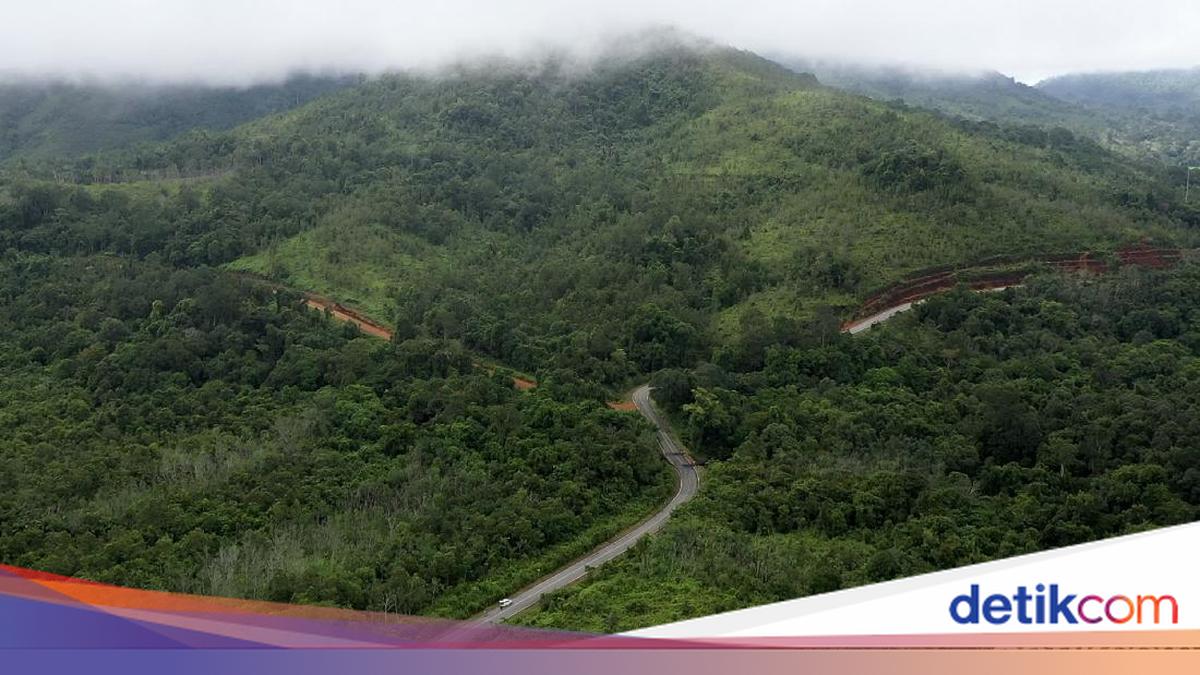
Imagine one tonne of carbon in a forest in Kalimantan and one tonne in the Amazon. To the market, they are equivalent: one tonne of CO2 here can be bought to compensate for one tonne of emissions anywhere in the world.
Now compare a bird of paradise in Papua with a coral reef off Lombok. Both are part of Indonesia’s natural wealth, but they are entirely different, cannot be exchanged for one another and cannot be replaced by species or ecosystems elsewhere in the world.
This is the basic logic behind a new economic instrument being prepared by the Ministry of Environment (KLH/BPLH): Biodiversity Credits. After businesses became familiar with carbon trading, the government is now drafting a regulatory framework that treats nature not merely as a passive conservation object, but as an asset whose services can be traded accountably.
For businesses, this is not simply an environmental issue; it represents a fundamental shift in the business landscape. The question is: how ready are Indonesian companies to navigate it?
The biodiversity credit market did not emerge from nowhere. Businesses have known the concept of biodiversity offsets since the 1970s in the United States, where companies that damaged land were required to restore another area as an ecological counterbalance. However, conventional compliance-based approaches have often reached an impasse because the complexity of nature means it cannot simply be ‘exchanged’ like physical property.
The global turning point came in December 2022, when the world agreed the Kunming-Montreal Global Biodiversity Framework (KMGBF) at COP15 in Montreal, Canada. The agreement targets the protection of 30 per cent of land and sea by 2030 and the mobilisation of up to US$200 billion a year in funding for nature restoration. This gave rise to the voluntary biodiversity credit market, supported by global integrity standards such as the Biodiversity Credit Alliance (BCA) and Verra, to enable companies to contribute without resorting to greenwashing—misleading claims of environmental responsibility.
As a megabiodiverse country, Indonesia faces a substantial conservation funding deficit. Incorporating this policy into a draft ministerial regulation on the environment is urgent for three non-negotiable reasons.
First, it concerns sovereignty and the protection of Indigenous peoples’ rights, ensuring local territories are not exploited by foreign brokers without fair benefit-sharing. The principle of Free, Prior and Informed Consent (FPIC) must be upheld.
Second, it is a matter of survival in the global market. Indonesian companies are now closely scrutinised under international supply-chain regulations such as the European Union’s Corporate Sustainability Reporting Directive (CSRD) and EU Deforestation Regulation (EUDR), as well as the global framework for disclosing nature-related risks, the Taskforce on Nature-related Financial Disclosures (TNFD).
Third, it is a practical step to prevent premature financial exploitation. Indonesia must develop its own local metrics and standards rather than becoming a bystander or selling its assets cheaply.
A misconception must be corrected for companies: biodiversity credits are not an instant licence to continue damaging the environment as long as a company has the money. The instrument is not an offset that allows destruction to continue, but a means of making a tangible contribution to restoration, subject to a strict mitigation hierarchy: avoid damage, minimise impacts and restore affected ecosystems.
Only after these steps have been taken, and residual impacts remain, may a company access the credit market. What is traded is not the existence of an already-standing forest, but the principle of additionality: measurable ecological gains, such as habitat restoration or an increase in wildlife populations.
The introduction of this instrument requires companies to develop new capabilities across three strategic roles. As buyers, companies with high ecological dependencies must demonstrate the integrity of their supply chains.
As project developers, companies can invest directly in ecosystem restoration to generate credit units validated against precise baseline data.
As land concession holders, companies can provide project sites while involving local communities transparently.
Businesses should also take note of research by the University of Nottingham (2025), which records challenges relating to the integrity of global suppliers. Close oversight is therefore essential to prevent the instrument from turning into a speculative commodity.
While awaiting formal approval of the ministerial regulation, the private sector can act proactively. Companies can begin mapping biodiversity in their operational areas to strengthen ESG (Environmental, Social and Governance) reporting and PROPER evaluations. PROPER is the Environment Ministry’s programme for assessing companies’ environmental management performance and measuring their environmental compliance and performance in Indonesia.
Companies should also honestly test their internal mitigation hierarchy and build inclusive partnerships with communities around their operating areas.
The Environment Ministry’s move to prepare a biodiversity credit market is a visionary policy breakthrough. Businesses should see this moment as a call to change their outlook: nature is not a cheap commodity that can be exploited without limit, but a critical asset whose sustainability determines the long-term viability of business itself.
The biodiversity credit market could become both an instrument for saving ecosystems and a source of new economic growth, provided it is built on a firm foundation of scientific integrity and social justice.
Source: jawawa.id (https://jawawa.id/newsitem/is-the-business-world-ready-to-navigate-the-biodiversity-credit-market-1793764363)
Originally published by detikcom (https://news.detik.com/kolom/d-8737477/siapkah-dunia-usaha-menavigasi-pasar-kredit-kehati), translated from Indonesian