
Is Nata de Coco Safe? Expert Clarifies Urea Content Concerns
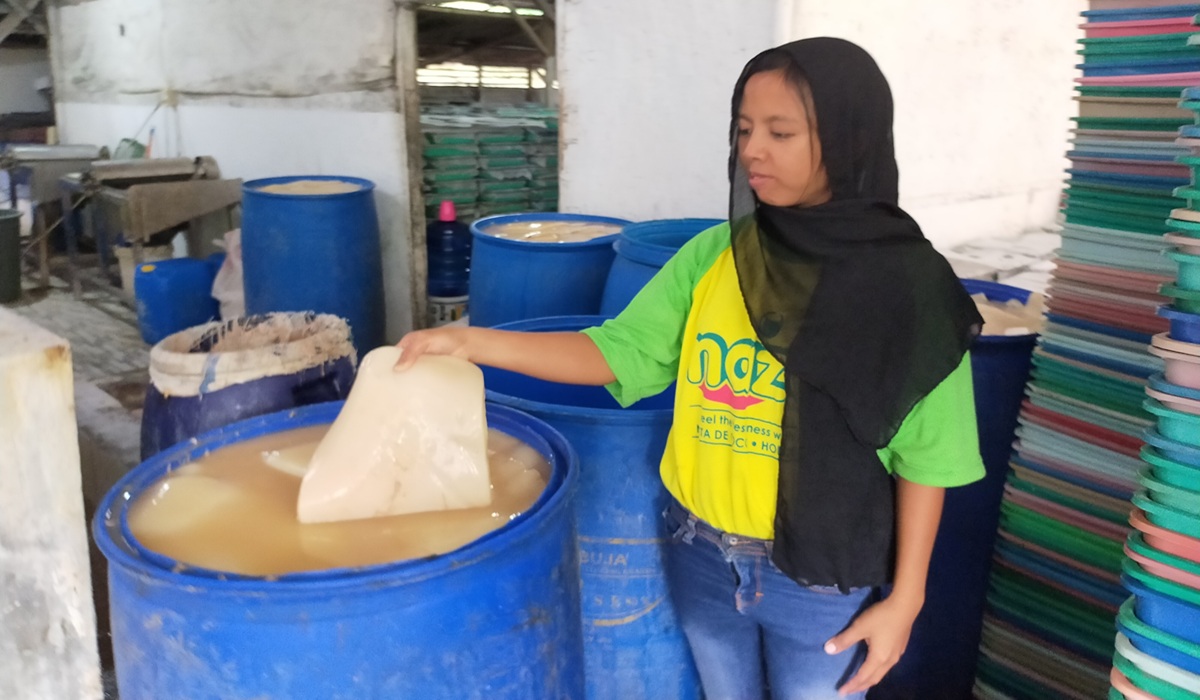
Nata de coco has long been a favourite complement to refreshing drinks and desserts in Indonesia. Its chewy texture, sweet taste, and clear white appearance make it popular among all ages, from children to adults. However, amidst its popularity, concerns have arisen among the public regarding the product’s safety. The issue highlights the use of urea and ammonium sulphate (ZA) in its production process, which is often misunderstood as a substance harmful to human health. Responding to this, Professor Khaswar Syamsu, a Professor at the Faculty of Engineering and Technology at IPB University, provided scientific clarification. He asserted that nata de coco available on the market is completely safe for consumption, provided it is produced according to correct fermentation procedures. Prof Khaswar explained that the use of urea and ZA in the nata de coco making process does not function as a food ingredient intended for human consumption. Instead, these materials play a vital role as nutrients for bacteria during the incubation period. “Nata de coco is pure microbial cellulose produced by the activity of Acetobacter xylinum bacteria. In this process, the microorganisms require a source of carbon and nitrogen to grow and form the nata de coco structure,” said Prof Khaswar. In this context, urea and ZA act as the nitrogen source needed by the bacteria to synthesise cellulose from coconut water. Without sufficient nitrogen intake, the bacteria cannot work optimally to form the chewy layer we know as nata de coco. Furthermore, Prof Khaswar emphasised that the public need not worry about urea or ZA residues in the final product. After the fermentation process is complete, the nata de coco sheets must go through a series of intensive cleaning stages. These stages include repeated washing, boiling, and soaking. This process aims to remove any remaining media and fermentation substrate. The end result is a pure microbial cellulose, clean from the bacterial growth medium. Thus, the nata de coco product that reaches consumers is a natural fibre resulting from microbial activity that has undergone purification, making it safe and suitable for enjoyment as part of a healthy lifestyle.