
Is Labour Day on 1 May 2026 a National Holiday? The Provisions of the Joint Ministerial Decree and Its History
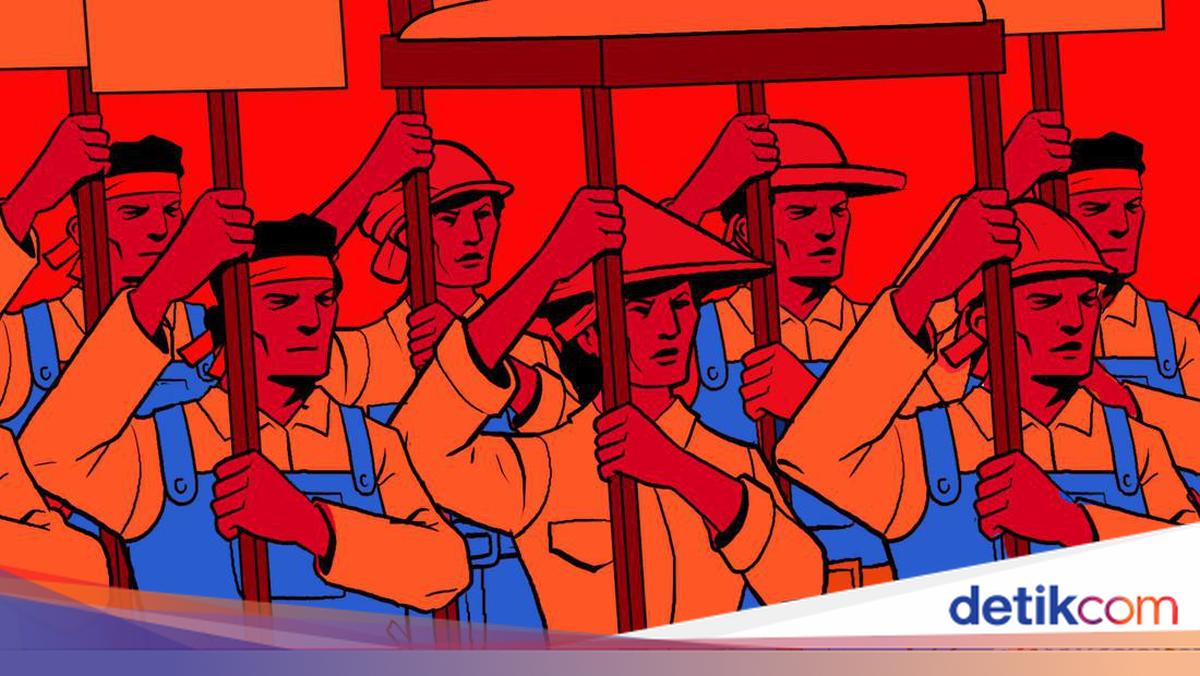
The beginning of May is always welcomed with the commemoration of International Labour Day, which falls on the 1st. This day of remembrance is also known as May Day and is often used as a moment for workers to reflect on their struggles, rights, and working conditions they have faced over time.
The commemoration of Labour Day is generally celebrated by various groups of workers in almost every corner of the world. Usually, they hold peaceful actions and social activities involving trade unions and the general public. Labour Day often becomes one of the commemorations full of historical significance.
In Indonesia, the commemoration of Labour Day has its own dynamics, from the colonial era until it was recognised as a national day of remembrance. So, is International Labour Day on 1 May 2026 in Indonesia a national holiday? Read the following explanation to find out the information based on the provisions of the Joint Decree of Three Ministers, complete with its history.
Is Labour Day on 1 May 2026 a National Holiday?
Quoted from the website of the Ministry of State Secretariat of the Republic of Indonesia, based on the Joint Decree (SKB) of Three Ministers, International Labour Day falling on Friday, 1 May 2026, is designated as a national holiday or red-letter day. With this designation, Indonesian society can enjoy a holiday on that day of remembrance.
The designation of Labour Day as a national holiday in Indonesia happened relatively recently. This regulation began to be implemented in 2014 based on Presidential Decree (Kepres) No. 24 of 2013 on the Designation of 1 May as a holiday. This determination was officialised during the leadership of President Susilo Bambang Yudhoyono.
History of Labour Day in the World
The history of International Labour Day cannot be separated from the events of the Industrial Revolution that occurred in the 18th century. Adapted from the journal article ‘The Struggle for Human Rights of Workers in the Era of Globalisation’ by Roni Febrianto, at that time, there was a major change in society’s economy, namely from an agrarian society to an industrial society dependent on factories. This change brought its own impacts on the lives of workers, both advancements and exploitation that emerged later in the form of harsh working conditions, long working hours, and minimal worker protection.
From that rather difficult situation in life, workers began to realise the importance of fighting for their basic rights as workers, especially as human beings. They demanded job security, fair wages, and social guarantees. This awareness sparked enthusiasm for the labour movement that increasingly spread and became organised in various countries.
The peak of this struggle occurred in the Haymarket Affair event in Chicago, United States, on 4 May 1886. At that time, thousands of workers went on strike and demonstrated to demand more humane working hours, namely 8 hours a day. The action initially ran quite conducively but ended in chaos after an explosion that killed demonstrators and officers.
After the incident, the International Labour Organization (ILO) designated 1 May as International Labour Day in 1889. This designation became a form of solidarity with the workers’ struggle, as well as to commemorate the Haymarket tragedy. Since then, May Day has been commemorated in various countries as a symbol of the struggle for workers’ rights until now.
History of Labour Day in Indonesia
Since the implementation of the forced planting system by the Dutch colonial government in 1830, Indonesian society, which originally worked as farmers, began to shift to becoming unpaid forced labourers. Adapted from the journal article ‘Chronicle of the Labour Union Movement in Indonesia: Map and History’ by Iqbal Faza Ahmad and Syaefuddin Ahrom Al Ayubbi, through the Agrarian Law that began to be implemented in 1870, these forced workers began to be designated as contract workers bound by a wage system. Generally, they were employed in the plantation sector. Although they received wages, the workers were very vulnerable to various exploitations.
Entering the 19th century, transformations marked by urbanisation and large-scale industrialisation began to increase the number of factory workers in cities. This situation became the basis for the development of class consciousness and the labour movement demanding decent wages and working environments. The entry of ideologies such as socialism and communism also contributed to strengthening the labour movement at that time.
Over time, various strikes and the formation of labour unions began to develop. One of the labour unions that emerged at that time was Vereeniging voor Spoor en Tramwegpersoneel (VSTP), the railway workers’ union under the leadership of Semaun and Sneevliet in 1914. The workers’ struggle in demanding workers’ rights continued to develop until the outbreak of the economic crisis in the 1930s, which caused layoffs and wage reductions. These dynamics continue to foster awareness and the workers’ struggle in Indonesia until the present day.
Before being designated as a national holiday by President Susilo Bambang Yudhoyono, the commemoration of International Labour Day in Indonesia was not celebrated with a holiday. Workers still had to go to work, although on that day various labour unions usually held actions or expressed aspirations in public spaces.
The change in the status of Labour Day to a national holiday then became an important turning point because it provides its own space for workers to continue voicing their rights without being hindered by work obligations.
Source: jawawa.id (https://jawawa.id/newsitem/is-labour-day-on-1-may-2026-a-national-holiday-the-provisions-of-the-joint-ministerial-decree-and-its-history-1777337484)
Originally published by detikJogja (https://www.detik.com/jogja/berita/d-8463558/apakah-hari-buruh-1-mei-2026-libur-nasional-ini-ketentuan-skb-dan-sejarahnya), translated from Indonesian