
Is It True That Having an SLIK Record Still Allows You to Get a Mortgage? Here's the Fact
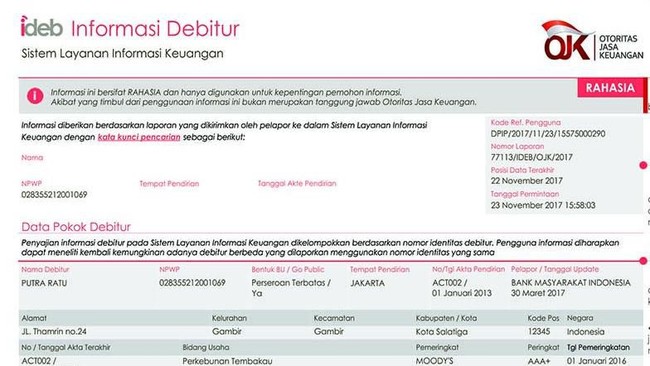
The Financial Services Authority (OJK) is opening wider opportunities for the public to obtain Home Ownership Credit (KPR), including for those with credit records in the Financial Services Information System (SLIK). This latest policy also addresses the frequent question: does a problematic credit history still pose the main obstacle to KPR applications? OJK Commissioner Chairman Friderica Widyasari Dewi stated that OJK will now only display credits exceeding Rp1 million in the SLIK report. This means small arrears below that amount will no longer automatically appear in the records typically used by banks to assess creditworthiness. “In the SLIK report, the information to be displayed is credits with a nominal value above Rp1 million,” she said, quoted on Sunday (19/4/2026). SLIK itself is a system used by financial institutions to view the credit history of prospective debtors, formerly known as BI Checking. This data is indeed an important consideration in credit approvals, including KPR, but it is not the sole determinant. OJK emphasises that SLIK is neutral and not a blacklist, so it does not automatically determine whether a credit application will be approved or rejected. Thus, individuals with non-smooth credit records still have opportunities to access housing financing, as long as the bank assesses the risk as manageable. OJK also confirms there are no rules prohibiting credit provision to debtors with non-smooth credit quality, especially for small-value loans or those that have been settled. In addition to this relaxation, OJK is accelerating data updates in SLIK. Previously, repayment status updates could take up to 30 days; now, it is targeted at a maximum of three working days after the loan is repaid, with this policy applying no later than the end of June 2026. “When someone has repaid their loan, within a maximum of three days, that repayment status will appear in SLIK,” Friderica said. This acceleration is deemed important to help the public who wish to immediately apply for KPR after fulfilling their obligations. On the other hand, OJK reminds that credit scores remain an important factor. OJK’s Executive Head of Financial Institution Supervision Agusman explained that SLIK data can be updated if the debtor has repaid their obligations or resolved credit issues in accordance with regulations. Credit scores in SLIK range from 1 to 5, where score 1 indicates the smoothest condition and score 5 signifies defaulted credit. Generally, debtors with scores 1 and 2 have easier access to credit, while scores 3 to 5 need improvement first, for example, by settling arrears or undergoing restructuring. If there are errors in recording, debtors can also request corrections from the relevant institutions. After repayment, it is important to have a Certificate of Completion as supporting evidence when applying for new credit. OJK continues to encourage banks to regularly update and improve the quality of SLIK data. This policy relaxation is part of OJK’s support for the government’s programme to provide three million homes, especially for low-income communities. Although financing access is becoming more open, the final decision remains with each bank, considering prudent principles. In other words, having an SLIK record is no longer an absolute barrier to obtaining a KPR, but it must still be balanced with credit history improvements and adequate financial capacity.