
Is It Permissible to Pay Butchers with Sacrificial Meat?
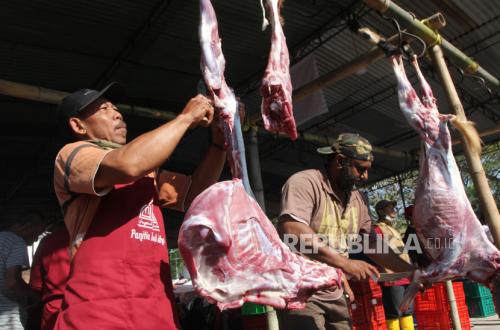
REPUBLIKA.CO.ID, JAKARTA — Sacrificial animal slaughter typically involves professional butchers or slaughterers. Is it permissible to compensate them with parts of the sacrificial animal, such as the head or skin?
According to Ustaz Ahmad Sarwat, director of the Indonesian Fiqh House (RFI), butchers must be paid for their services, as per employment contracts.
However, he added that a clear agreement on payment terms must be established between the organising committee and the butcher beforehand.
Additionally, the agreement should specify the butcher’s duties—whether it is limited to slaughtering or includes skinning, cutting, mincing, weighing, and packaging the meat.
Fundamentally, parts of the sacrificial animal cannot be used as payment.
“The issue is not about not paying the butcher, but rather that it is forbidden to pay them from the meat of the sacrificial animal,” Ustaz Ahmad stated, as quoted on the Indonesian Fiqh House’s official website.
This prohibition is referenced in a hadith narrated by Ali bin Abi Talib, the Prophet Muhammad’s son-in-law, who once served on the sacrificial animal committee.
“The Prophet instructed me to manage his sacrificial camels. I donated the meat, skin, and jilal (the skin placed on the camel’s back for protection from cold). I did not give anything from the slaughtered animal to the butcher. He said, ‘We will pay the butcher from our own money,’” (recorded in Muslim).
Following the Sunnah of Prophet Muhammad, the halal payment (juleha) for butchers must be in cash provided by the person making the sacrifice.
Based on this hadith, Ustaz Ahmad stressed that butchers must not be paid with any portion of the sacrificial meat.
This view is upheld by Shafi’i scholars, as well as Atha’, An-Nakha’i, Imam Malik, Imam Ahmad, and Ishaq.
Additionally, a hadith narrated by al-Hakim states, “Whoever sells the skin of the sacrificial animal has no valid sacrifice.”
In this regard, he noted that committees can pay butchers from alternative funding sources, such as the animal owner, proceeds from selling the animal by the committee, or mosque funds.