
Is It Permissible to Delay Prayers Because of Work?
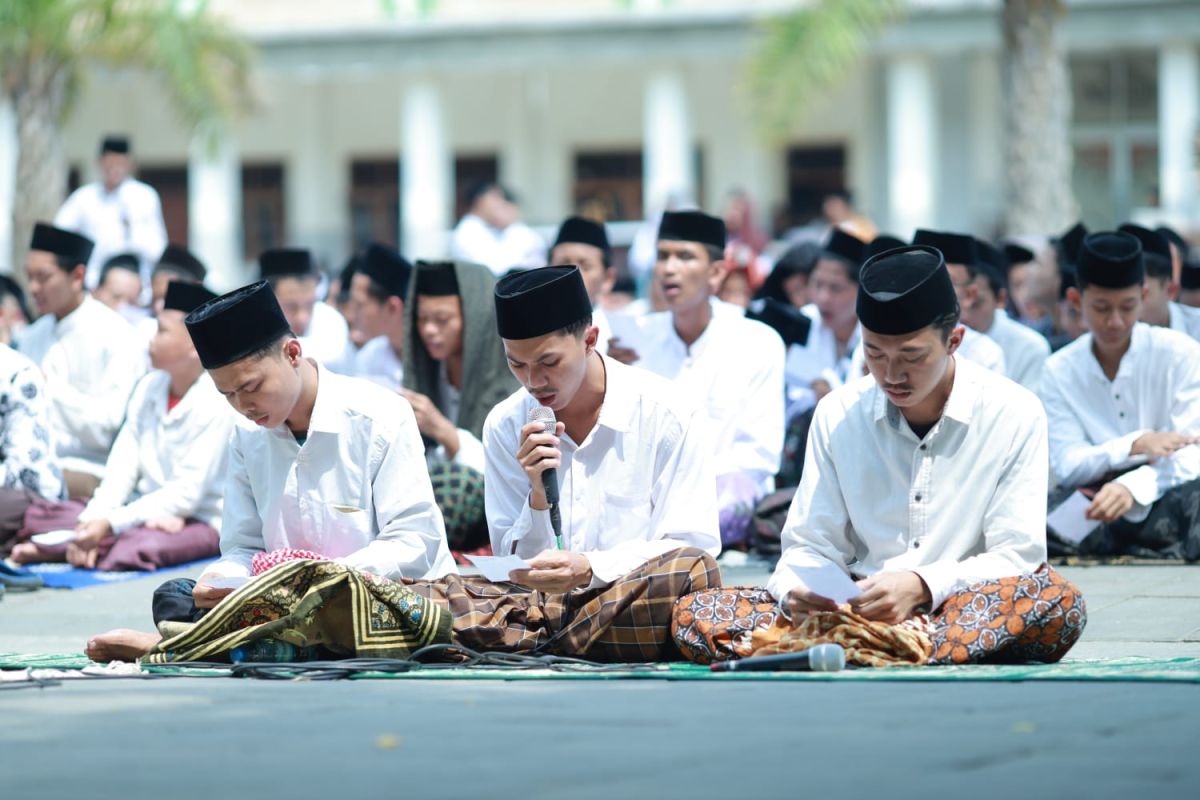
Jakarta (ANTARA) – A heavy workload, lengthy meetings and pressure to finish tasks before deadlines can sometimes lead people to delay their prayers. Some workers do not pray until after their working hours, even though the prescribed time for the prayer has already ended.
Earning a living is part of daily responsibility. But what is the ruling if someone deliberately delays prayer because of work? Is this permitted in Islam?
As a general rule, the five daily prayers are obligatory for every Muslim who meets the relevant conditions. This obligation remains in force while a person is working, as long as they are able to pray.
The ruling on delaying prayer because of work
In Islam, the ruling on delaying prayer depends on when it is performed. A delay does not necessarily violate religious rules, since each obligatory prayer has a prescribed time period.
Allah says in verse 103 of Surah An-Nisa in the Quran:
“When you have finished the prayer, remember Allah—standing, sitting or lying on your sides. When you are secure, establish prayer. Indeed, prayer is a duty upon the believers at prescribed times.”
The verse explains that prayer has a defined period for its performance. A Muslim is therefore not permitted to deliberately let the time for prayer pass simply because they are busy with work.
1. Delaying prayer but performing it within its prescribed time
A person may delay a prayer as long as it is still within the prescribed time. For example, someone who has not yet performed the midday prayer (Zuhur) because they are completing an important task may pray before the time for Zuhur ends.
In this situation, the prayer is still performed within its prescribed time. However, performing it promptly once its time begins is preferable if there is no need or circumstance preventing this.
Dar Al-Ifta Egypt, the country’s official fatwa body, says a person does not have to stop work immediately when prayer time begins. An important task may be completed first, provided the prayer is performed before its time ends.
2. Deliberately delaying prayer until its time has passed
By contrast, deliberately delaying a prayer until its prescribed time has ended, without a reason recognised by Islamic law, is not permitted.
For example, someone may know that the afternoon prayer (Asar) time has begun but choose to keep working until sunset, when the time for the sunset prayer (Maghrib) begins, without performing Asar.
Work commitments, meetings, company targets and deadlines are not generally valid reasons for allowing the time for prayer to pass.
Islam Question & Answer says work cannot be used as a reason to delay an obligatory prayer beyond its prescribed time. Muslims are encouraged to organise their work so they can fulfil their religious duties.
Combining prayers is a concession in Islam that allows two obligatory prayers to be performed during one prayer period.
Not all prayers may be combined. The two permitted pairs are:
Zuhur and Asar.
Maghrib and Isya.
The dawn prayer (Subuh) cannot be combined with another prayer.
There are two ways to combine prayers: jamak taqdim and jamak takhir. Jamak taqdim means performing both prayers during the time of the first prayer, while jamak takhir means performing them during the time of the second.
However, this concession does not mean that every worker may combine prayers simply because they have a busy schedule.
Scholars differ on whether work-related difficulties permit prayers to be combined. The relevant rules and grounds for doing so must therefore be considered, including the view of the school of thought or religious authority a person follows.
Dar Al-Ifta Egypt also explains that important work may be a reason to delay prayer as long as it is still performed within its prescribed time. Combining prayers, however, is a separate matter with its own conditions.
What if the work cannot be interrupted?
Some jobs involve responsibilities that cannot always be paused when prayer time begins. Examples include a doctor performing surgery, a firefighter responding to an emergency, or medical staff treating a critically ill patient.
In such circumstances, a person should consider whether there is a genuine emergency and whether they can pray without putting others at risk.
A fatwa issued by Saudi Arabia’s Permanent Committee for Scientific Research and Ifta says that in certain emergencies—for example, when a doctor cannot leave a patient during an operation—there is a concession to combine Zuhur with Asar or Maghrib with Isya as necessary.
A genuine emergency that makes it impossible to leave a duty should be distinguished from routine work that can in fact be paused.
Where possible, workers can arrange shifts with colleagues so they can pray without disrupting services or endangering others.
Several steps can help balance religious duties and work responsibilities:
Know the prayer times. Use a prayer-time reminder app to avoid missing a prayer while focused on work.
Make use of breaks. Arrange breaks so there is time to perform ablutions and pray.
Speak to a supervisor. Explain the need for time to pray so work can be organised without neglecting the obligation.
Keep prayer equipment ready. Have the necessary items at work to avoid spending too much time preparing.
Prioritise tasks. Avoid leaving work that could have been completed earlier until it clashes with prayer time.
If someone is asleep or forgets and consequently misses a prayer, the Prophet Muhammad (peace be upon him) instructed that it should be performed as soon as the person wakes or remembers.
This is set out in hadith reported by Bukhari and Muslim: anyone who sleeps through a prayer or forgets to perform it should pray when they remember.
Forgetting or sleeping through a prayer is different from deliberately missing it because of work. Someone who knowingly lets the time pass without a valid reason should repent, seek Allah’s forgiveness and take steps to improve their observance.
Scholars differ over how to make up a prayer that was deliberately missed. This issue should therefore be discussed with a qualified scholar or fatwa institution.
Whether delaying prayer because of work is permissible depends primarily on whether it is still performed within the prescribed time. A person may delay it according to need while that period remains, although praying promptly is preferable.
By contrast, deliberately allowing the time to pass simply because of work is not permitted in Islam. Concessions such as combining prayers also have specific conditions and cannot be used indiscriminately.
However busy their work may be, Muslims should organise their time so that earning a living does not lead them to neglect their religious obligations.
Source: jawawa.id (https://jawawa.id/newsitem/is-it-permissible-to-delay-prayers-because-of-work-1794714808)
Originally published by Antara (Indonesian) (https://www.antaranews.com/berita/5855139/hukum-menunda-shalat-karena-pekerjaan-apakah-diperbolehkan), translated from Indonesian