
Is It Obligatory to Form Three Rows for Funeral Prayers?
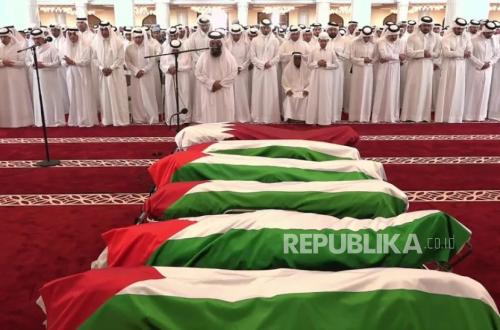
Allah SWT has decreed that every living being will experience death (QS Ali Imran: 185). When a Muslim dies, those who remain must wash and shroud the body, perform the funeral prayer and bury the deceased.
These duties are fardhu kifayah, or communal obligations. They are discharged if some Muslims carry them out; if no one does so, the entire Muslim community bears the sin.
In principle, the funeral prayer is like other prayers. Its requirements include covering the aurat, being free from minor and major ritual impurity, ensuring the body, clothing and place of prayer are clean, and facing the qibla.
One difference is that the funeral prayer has no bowing or prostration. It is also not preceded by the call to prayer or the iqamah. The Prophet Muhammad taught that it should be performed in congregation.
Ustaz Abdul Somad (UAS) said scholars have offered various views on how rows should be arranged for the funeral prayer. For example, Malik bin Anas and Abu Hurairah would ask worshippers to form three rows when the congregation was small.
Malik bin Hubairah, meanwhile, cited a hadith narrated by at-Tirmidhi: “The Messenger of Allah, peace and blessings be upon him, said: ‘If a deceased person is prayed over by three rows, Paradise becomes assured for them.’”
Another hadith, narrated by at-Tabrani and cited in al-Mu’jam al-Kabir, states: “The Messenger of Allah, peace and blessings be upon him, performed a funeral prayer with seven people. He then arranged them in rows: three people in the first row, two in the second and two in the third.”