
Is Iran Ready for a New US-Israeli Attack?
Officials in Tehran must prepare for a new attack following media reports that the US and Israel are examining fresh options to escalate their war against Iran.
The US midterm elections, due to be held on 3 November, and Israel’s elections on 27 October have drawn attention to the two countries’ political calculations as they manage the conflict, which began in late February 2026.
Opinion polls suggest that high energy prices caused by the war with Iran have hurt Donald Trump’s Republican Party. On 8 October, the president posted on social media that the United States would not attack Iran before the midterms, citing “productive discussions” with Tehran. The US last launched an attack on Iran in early September.
After the elections, however, Trump may feel less constrained politically.
Israeli Prime Minister Benjamin Netanyahu has also campaigned on regime change in Iran.
Reports: US-Israeli plans for a short operation are ready
Citing senior US officials, The New York Times reported on Wednesday that the United States and Israel had “drawn up specific plans” for a “short but intensive operation” in Iran. Targets would include nuclear facilities, energy infrastructure, and the country’s missile and drone capabilities.
One official said the aim was to force Iran into a diplomatic compromise by weakening its economy, as talks to end the conflict remain stalled. The United States is also continuing its blockade of Iranian oil exports through the Strait of Hormuz, which has drained Tehran’s oil revenues.
Other media outlets have reported similar plans in recent weeks. In early October, Axios reported that the Pentagon had instructed US Central Command (CENTCOM) to complete preparations to resume major combat operations in Iran.
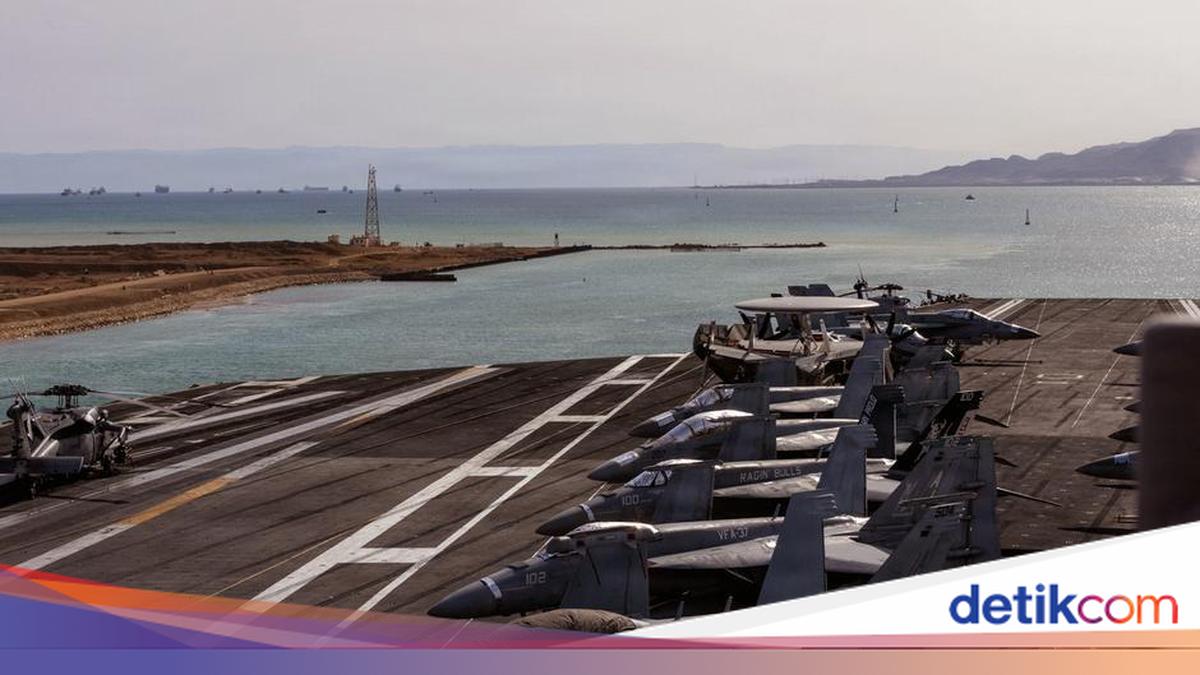
Two US aircraft carriers are currently in the Arabian Sea, and a third is expected to arrive in late November.
On 15 October, Trump told the right-wing television network Newsmax that he was considering an attack on Pickaxe Mountain, near the Natanz nuclear complex, where US officials believe a uranium enrichment facility is located.
The following day, CNN reported that Trump was considering using a Massive Ordnance Air Blast (MOAB) bomb against targets in Iran. As the MOAB produces a huge surface-level blast wave, its effectiveness against underground facilities such as Pickaxe Mountain would be limited.
Has Iran learnt from previous attacks?
Iranian officials say the country is ready for an attack and would respond widely, including by targeting US bases and energy facilities in the Gulf.
Ali Asghar Shafieian, media adviser to Iranian President Masoud Pezeshkian, told DW that although the US retains a significant technological and military advantage, Tehran’s strategy is based on maintaining the regime’s control of the country, rather than matching US power.
“The US has the advantage in military and technological power, but Iran’s strength lies in how it manages crises,” Shafieian said.
Shafieian pointed to Iran’s rapid replacement of senior officials killed in previous attacks as evidence of Tehran’s efforts to make its political structure more resilient. Iran has also rebuilt missile and drone capabilities destroyed during the large-scale attacks in the first weeks of the US-Israeli campaign.
Citing Iranian officials, Reuters reported this week that Iran was “preparing for a new attack by Israel and the US, not preparing to reach a deal with America to end the war”. The report added that Tehran was prolonging negotiations in an effort to weaken Trump ahead of the US midterm elections.
Iran has told governments in the region that US military bases and critical infrastructure could be targeted if neighbouring countries assist US or Israeli operations. Iranian Foreign Minister Abbas Araghchi warned that any participation or co-operation by countries in the region would receive a “firm and proportionate response”.
“Iran is ready to give diplomacy a chance if we see solid evidence of a genuine US desire to build trust and reach a fair solution,” Araghchi wrote on X on Wednesday. “But if the US chooses war over diplomacy, it will certainly lead to a much greater strategic failure.”
How is Iran preparing?
Rahman Ghahremanpour, a Tehran-based political analyst, told DW that Iran’s preparations extend beyond missiles and drones to domestic security.
These include confronting armed opposition groups, preparing for possible protests, and drawing up plans to prevent external military pressure from combining with domestic unrest.
Another conflict, he said, could lead to renewed internet restrictions and stronger mobilisation of government supporters in public spaces.
“In the government’s asymmetric war strategy, the main goal is to convince the United States that regime change through military action is impossible,” Ghahremanpour said.
Ghahremanpour added that some factions in Iran had supported a return to a negotiated agreement. However, he believes Washington’s demands are now considered so extensive that even Iranian officials who favour compromise are struggling to build domestic support for them.
“For now, we are facing a deadlock,” Ghahremanpour said. “Iranian officials do not seem optimistic about reaching an agreement.”
Talks continue to encounter obstacles over Iran’s nuclear programme, which US officials say must be the top priority on the agenda.
Iran’s latest proposal to the United States, sent through Qatari mediators, includes an offer to reopen the Strait of Hormuz under Iranian control in exchange for the lifting of the US naval blockade, the release of frozen assets and an end to military action.
Citing data from ship-tracking firm Kpler, The Wall Street Journal reported this week that oil shipments through the Strait of Hormuz had approached pre-war levels, as the US military escorted tankers and shipping companies became more willing to take risks in pursuit of greater profits. This has raised questions about whether Iran’s influence over oil flows is waning.
Iran: Fear of war at home
The escalation comes amid severe economic pressure and growing political polarisation for Iranians.
A doctor in Tehran told DW of their concern about renewed fighting. Speaking to the media in Iran is considered dangerous, so the doctor agreed to share their views anonymously.
“The economic situation has become very bad,” the doctor said. “Even if you have a good income yourself, you cannot feel comfortable living among so many people struggling with poverty.”
The doctor expects the authorities to restrict internet access again if fighting resumes.
A woman in Tehran described her anger towards regime supporters and said that war combined with domestic protests could increase the risk of street confrontations.
Asked about the possibility of an attack on underground nuclear facilities, she said the issue felt increasingly distant from her everyday concerns.
“What do those nuclear facilities have to do with us?” she said. “They are inside a mountain.”