
Is Indonesia's Ambition for 100 GW of Solar Power and a Coal Exit Realistic?
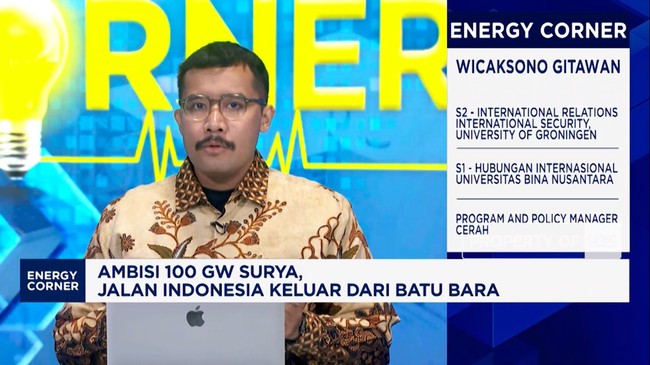
Jakarta, CNBC Indonesia — Wicaksono Gitawan, Programme and Policy Manager at Cerah, believes the target of building 100 GW of solar power plants (PLTS) remains fairly realistic, particularly given Indonesia’s renewable energy potential of 3,300 GW. In his view, the target can be achieved if it is accompanied by a reduction in coal-based power generation.
“Since it was launched by Prabowo, we are still waiting for it to be realised, for instance by being incorporated into energy policy documents,” Wicaksono told CNBC Indonesia on Tuesday (15/9/2026).
He noted that in the National Medium-Term Development Plan (RPJMN), solar energy from PLTS accounts for the largest share of the country’s total renewable energy potential.
“However, the question is whether Indonesia is ready to plan properly so that this 100 GW can be delivered correctly within a target of three or even two years?” he said.
To that end, he stressed that if Indonesia wants the 100 GW to enter the renewable energy system, it must begin planning a phase-out of coal and other fossil fuels.
At the same event, Mada Ayu Habsari, Chairperson of the Indonesian Solar Energy Association (AESI), described the 100 GW solar power target as an extraordinary vision. However, she said the key concern is how the roadmap to achieve it is drawn up.
“Without a clear roadmap, implementation will certainly be very difficult. The government will now focus on promoting solar power as part of Indonesia’s energy transition, which means stakeholders must automatically start working together,” Mada said.
According to Mada, Indonesia is ready, provided the process is carried out gradually. She pointed to the country’s abundant natural resources, as well as its human resources.
“Why do I say this must all be done gradually? Because once the natural resources are there, what comes next? We need to process them, and who will do the processing? The human resources, of course. Then, what technology will we apply? These are the things we probably need to consider. Which is the highest priority scale for us to pursue?” Mada explained.