
Is Gibran’s Resignation Weakening the Rupiah? An Economist Weighs In
Jakarta, CNBC Indonesia — Vice-President Gibran Rakabuming Raka’s resignation is seen as potentially adding pressure on the rupiah by increasing Indonesia’s risk premium.
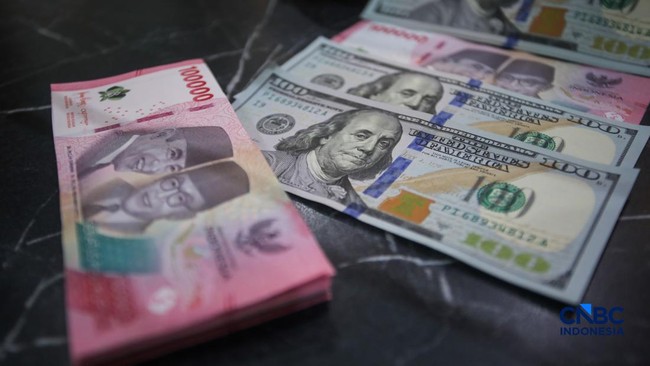
Gibran is reported to have submitted his resignation letter to the Speaker of the People’s Consultative Assembly (MPR) at 11.15am today. CNBC Indonesia’s monitoring showed the rupiah remained under pressure against the US dollar. Refinitiv data showed that at 9.40am, the rupiah had fallen to Rp18,231 per US dollar, down 0.44% from yesterday’s close.
However, the rupiah’s current weakness is considered to be driven mainly by changing market expectations about the US Federal Reserve’s interest-rate direction.
This was explained to CNBC Indonesia on Thursday (12 November 2026) by Irman Faiz, lead economist at Bank Danamon Indonesia.
He said the political developments surrounding Gibran’s resignation could increase uncertainty about the continuity of political stability in Indonesia. This could lead investors to demand a higher risk premium.
Nevertheless, Irman said the initial impact of the political developments was relatively limited. For investors, he said, the continuity of government commitments and policies mattered more.
“Our risk premium is rising because of uncertainty about the continuity of political stability. However, we see the impact as relatively limited because what matters most to investors is the continuity of commitments and policies,” Irman told CNBC Indonesia.
He said it was too early to assess whether the political developments would affect the direction of government policy. If the political process is transparent and proceeds smoothly, the impact on financial markets is expected to be modest.
Conversely, market risks could increase if the issue spills over into political coalition dynamics or affects social stability.
“If the process is transparent and seamless, the impact should be limited. But if this spills over into coalition dynamics or social stability, the impact will be greater,” he said.
Irman stressed that the rupiah’s current pressure was still driven predominantly by external factors, particularly the repricing of market expectations about the Federal Reserve’s interest-rate direction.
Thus, although domestic political developments could add to the risk premium, US monetary policy remains the main driver of pressure on the Indonesian currency.
Asked whether the political impact on the rupiah would be temporary, Irman said this would depend on how events unfold.
The impact could become more lasting if political uncertainty escalates into issues affecting social stability and party coalitions.
“The effect could be permanent if it escalates into social instability and party coalitions. For now, the market is demanding a slightly higher premium, but other factors—especially the repricing of Fed expectations—are more dominant,” he concluded.
Source: jawawa.id (https://jawawa.id/newsitem/is-gibrans-resignation-weakening-the-rupiah-an-economist-weighs-in-1794462770)
Originally published by CNBC Indonesia (https://www.cnbcindonesia.com/market/20261112114952-17-784597/rupiah-melemah-efek-wapres-gibran-mundur-ini-kata-ekonom), translated from Indonesian