
Is Cyclone Champi Really Sucking Up Haze from Forest and Land Fires? BMKG Explains
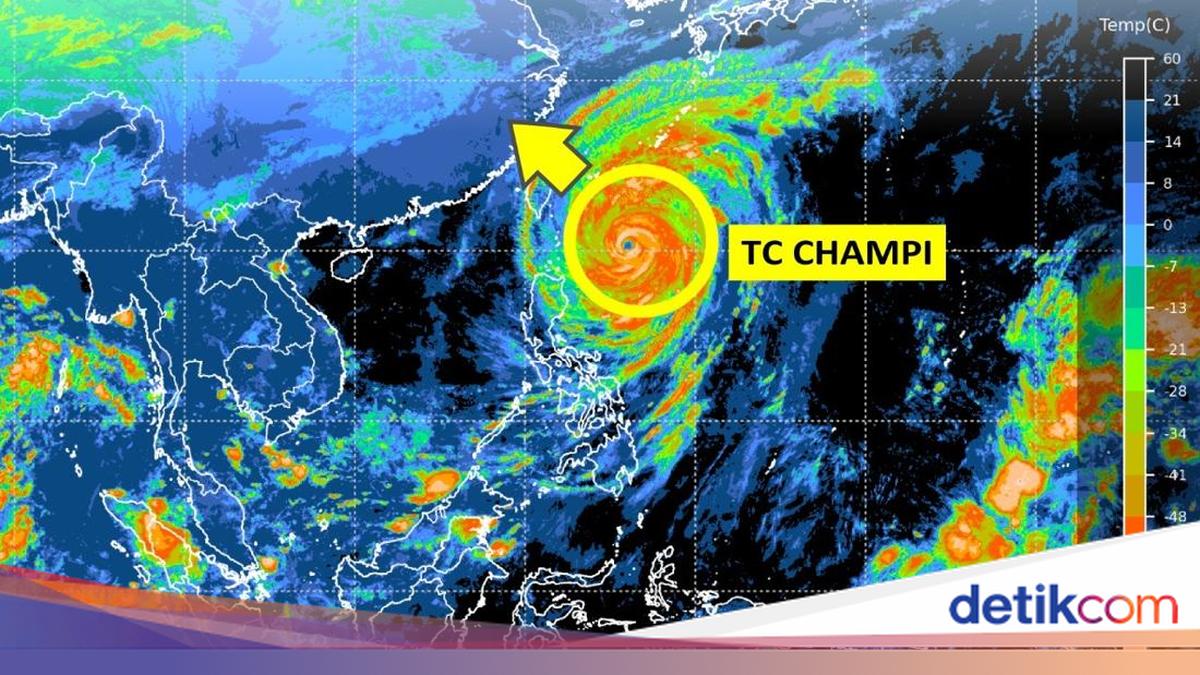
A narrative circulating on social media claims that Tropical Cyclone Champi is sucking up carbon monoxide (CO), sulphur dioxide (SO₂) and aerosols from forest and land-fire smoke in eastern Indonesia. The Meteorology, Climatology and Geophysics Agency (BMKG) has explained the phenomenon.
BMKG Deputy for Meteorology Andri Ramdani said Tropical Cyclone Champi does not directly change the direction in which fire smoke spreads. However, the cyclone’s circulation can still affect atmospheric conditions in parts of Indonesia.
“From a meteorological perspective, Tropical Cyclone Champi does not suck up fire smoke or directly change the direction in which it spreads,” Andri told reporters on Friday (23 October 2026).
He said Champi was currently about 1,890 kilometres north of Tahuna, in the Sangihe Islands Regency of North Sulawesi, and was moving away from Indonesia.
“Even so, its circulation can still affect atmospheric conditions in some parts of Indonesia,” he said.
One possible impact, he said, was moderate to heavy rain in several areas affected by forest and land fires. BMKG said rainfall could help reduce the concentration of smoke particles in the air.
“These indirect effects include moderate to heavy rain in North Kalimantan, northern West Kalimantan and the northern Riau Islands,” he said.
“If rain falls in areas affected by smoke, the water will capture some smoke particles and carry them to the ground, reducing the concentration of particles in the local air,” he added.
BMKG said Champi was a Category 4 cyclone and was forecast to weaken. It was also expected to continue moving away from Indonesia.
“So Champi’s effect on smoke is not through a direct pull from the wind, but through weather conditions, including rain that can help reduce smoke particles in the air. The public is urged to follow official information from BMKG,” he said.
Tropical cyclones are divided into five categories, with Category 1 the lowest and Category 5 the highest.
CNN reported that Super Typhoon Champi was the strongest storm of the year. NHK, meanwhile, reported that the typhoon was expected to approach islands in south-western Japan from Friday through around Saturday.
The Japan Meteorological Agency said the large and powerful typhoon had been moving north-west over waters east of the Philippines since Wednesday. Champi strengthened again on Tuesday night, with central air pressure reaching 900 hectopascals.
The storm was forecast to bring strong winds to the Sakishima Islands in Okinawa Prefecture from Friday. Waters around the islands were expected to become very rough, with waves reaching up to 11 metres.
The area could also see heavy rain as the typhoon approaches. Weather authorities urged residents to make preparations in advance.
The storm was expected to change direction and move north-east. Its exact path remained uncertain, but it could affect some parts of western Japan.
Source: jawawa.id (https://jawawa.id/newsitem/is-cyclone-champi-really-sucking-up-haze-from-forest-and-land-fires-bmkg-explains-1792716692)
Originally published by detikcom (https://news.detik.com/berita/d-8719982/benarkah-siklon-champi-sedot-asap-karhutla-ini-penjelasan-bmkg), translated from Indonesian