
Is Cattle Farming Allowed in Densely Populated Jakarta Settlements? Here Are the Rules and Risks
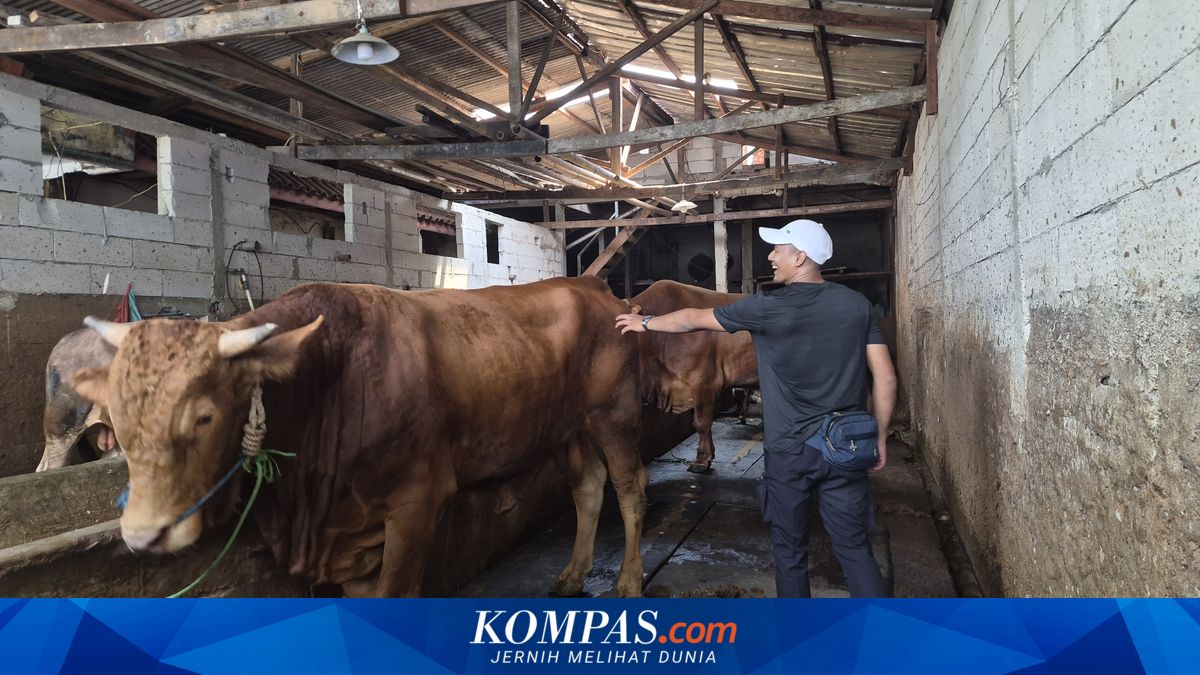
JAKARTA – In the midst of the dense settlements in Cilincing, North Jakarta, a man named Anto (38) has boldly developed a cattle farming business. The venture is not new to his family. Anto is continuing the inherited business from his parents and has expanded it independently in recent years. “I’ve been focusing on it myself for five years, while my parents have been doing it for 14 years,” Anto revealed when interviewed by Kompas.com at the location on Wednesday (22/4/2026). Currently, Anto owns around 40 cattle. Some are kept in the garage next to his house, while the rest are on rented land about 50 metres from his residence. From the outside, it is even hard to imagine that dozens of cattle are housed behind that garage. The presence of a farm in the middle of a dense settlement often raises questions: is it allowed? The Head of the North Jakarta Food Security, Maritime, and Fisheries Sub-Department (KPKP), Novy Christine Palit, explained that cattle farming in dense environments is not a problem, as long as the maintenance and waste management are handled properly. She also noted that the DKI Jakarta Provincial Government does not yet have specific regulations governing ruminant animal farming such as cattle and goats in the area. “However, to minimise conflicts regarding the presence of ruminant farms in North Jakarta, the Sub-Department provides animal health services and disease control,” Novy stated when contacted by Kompas.com on Wednesday. Although there are no specific rules yet, there are several important matters that farmers must pay attention to. First, regarding waste processing. Waste must be managed in an environmentally friendly, hygienic, and efficient manner. Farmers are required to separate solid and liquid waste, provide containment tanks, not dispose of waste into drains, and regularly clean the pens. “To minimise odours, EM4 (Effective Microorganisms 4) can be applied. Solid and liquid waste can be turned into fertiliser with further processing,” Novy added.