
Is Cassava Flour Effective for Extinguishing Forest Fires? BRIN Reveals Unexpected Findings
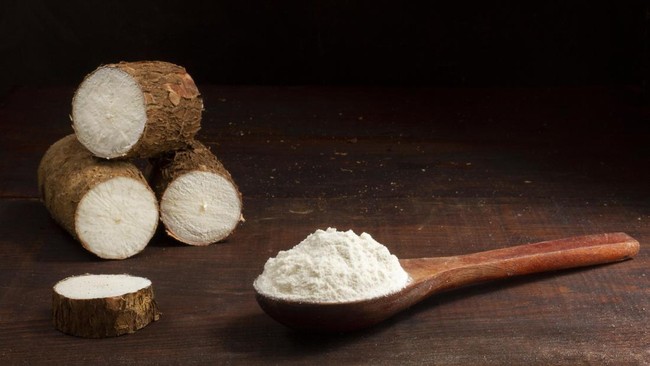
The National Research and Innovation Agency (BRIN) is studying the potential of cassava flour as an effective alternative for extinguishing forest and land fires. This is being achieved through the development of a starch-based retardant material derived from cassava, which is combined with phosphate compounds to enhance the effectiveness of water usage in controlling vegetation fires.
BRIN Molecular Chemistry Researcher, Julinton, explained that the use of cassava starch in fire suppression technology has a scientific basis that can be further developed through chemical engineering and formulation. “The President’s statement regarding the use of cassava-based materials to support fire suppression has a strong scientific foundation. However, the formulation, effectiveness, safety, and environmental impact must still be validated through measured laboratory and field testing,” he stated in an official release on Saturday (5/9/2026).
The primary potential of cassava starch lies in its polysaccharide structure, which is rich in hydroxyl groups and can be chemically modified to regulate film-forming ability, viscosity, water retention, and interaction with retardant components. In the technology currently under development, cassava starch is not used alone but is combined with ammonium polyphosphate (APP), water, and a low-concentration wetting agent.
“This material is designed to work through several complementary mechanisms. Water functions to absorb heat and lower the temperature of the fuel. Modified cassava starch helps increase adhesion and maintain the liquid on the vegetation surface for longer, while the wetting agent helps the liquid spread and penetrate the vegetation fuel more effectively. APP then provides a chemical retardation mechanism when the material receives heat,” Julontin explained.
When heated, APP produces phosphoric acid and polyphosphate species that can catalyse the dehydration of cellulose-rich materials and polysaccharides. This mechanism directs the pyrolysis process towards the formation of more solid carbon residue, or char, and reduces the formation of flammable volatile compounds. This char layer then acts as a barrier against heat and mass transfer, limiting direct contact between the fuel surface and oxygen.
Thus, this technology does not work by “removing oxygen” from the atmosphere. Its primary mechanisms are cooling, increasing wetting and liquid retention, and altering the thermal decomposition pathway of vegetation fuel, which has the potential to suppress the rate of fire spread.
Julinton explained that the production process for this innovation begins with the extraction of raw cassava starch, which is then purified and chemically modified to obtain appropriate physicochemical and rheological characteristics. Several modification pathways, including phosphorylation, cross-linking, or other functional modifications, will be evaluated to improve formulation stability, film-forming ability, water retention, and synergy with APP.
“The modified starch is then formulated with APP or appropriate phosphate components, a low-concentration wetting agent, and water. The composition of each component is not set arbitrarily but will be optimised based on viscosity, storage stability, sedimentation, redispersibility, surface tension, droplet formation, material compatibility, and suppression performance,” he explained.
In the field, its use is designed to remain simple, by mixing concentrates or formulation materials into water tanks before spraying. The optimum concentration has not yet been established and will be determined through research so that the formulation maintains good retention capabilities without causing excessive viscosity, sedimentation, or clogging of pumps and nozzles.
Tactically, the cassava starch-APP-based retardant liquid has the potential to be developed for both aerial and ground applications. However, the formulation for aerial applications must have appropriate viscosity and droplet size distribution to minimise loss due to drift and evaporation without interfering with the capability of pumps and nozzles.
For drone-based operations, the formulation can be directed towards precision spraying on initial fire points, fire flanks, spot fires, and the creation of retardant lines on unburnt vegetation. Thermal cameras can be used to assist in identifying hotspots and evaluating the potential for re-ignition after spraying.
For ground operations, fire fleets can spray it directly onto vegetation fuel around the fire point or on areas that need protection. Another approach is to form a retardant line, which is a path of vegetation coated with retardant material to slow the spread of fire to the next area.
In high-intensity fires, this technology is not intended to replace all existing fire suppression methods. CASSA-P is developed primarily as a supporting technology for initial response, spread control, protection of strategic areas, and spot fire suppression, which must remain integrated with ground personnel and other suppression systems.
The use of fire retardants and water enhancers for managing vegetation fires has been used and developed in several countries. However, the CASSA-P formulation takes a different approach by developing domestic cassava starch as a biomaterial matrix and carbon source, combined with phosphate, water, and a wetting agent to produce an integrated suppression mechanism.
Environmental aspects are one of the main parameters of the research. Although cassava starch comes from renewable biomass, the final formulation cannot immediately be claimed to be “100 percent biodegradable” or “non-toxic”. The environmental safety of CASSA-P must be proven through testing for biodegradability, phytotoxicity, and the impact on soil and water organisms, as well as phosphate content and release.