
Is 5G Worth It for Business? Between Promises of Transformation and Investment Reality
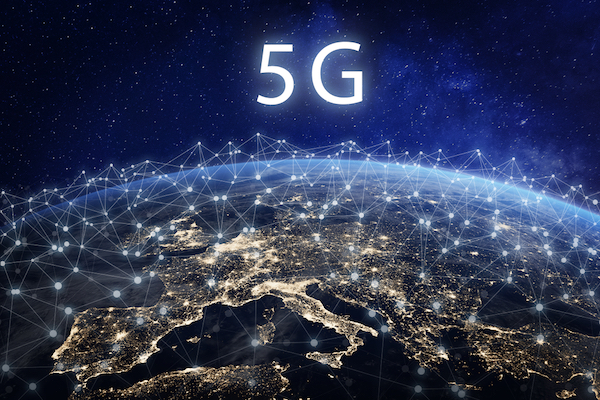
Jakarta. The implementation of 5G is often positioned as a major leap in the evolution of digital technology. With high speeds, low latency, and significantly greater network capacity compared to previous generations, 5G is promised to drive business transformation across sectors. However, the increasingly relevant question for business actors today is no longer “what is 5G”, but rather “is 5G truly worth adopting from a business perspective?” Theoretically, 5G offers a very strong value proposition. In the manufacturing sector, for example, this technology enables IoT-based automation, advanced robotics, and large-scale real-time monitoring. In logistics and ports, 5G can support smart ports with autonomous vehicle systems and precise goods tracking. Meanwhile, in healthcare and agriculture, 5G opens opportunities for more responsive telemedicine services and precision farming based on sensors. All of this leads to one thing: higher efficiency and productivity. However, behind this potential lies a more complex reality when faced with the business context, particularly in Indonesia. One of the main factors is the unclear return on investment (ROI) from 5G implementation. Unlike 4G, which directly increased data consumption and opened monetisation opportunities through digital services, 5G requires substantial investment without guaranteed revenue growth in the short term. The infrastructure to be built not only includes radio networks but also fibre optics, data centres, and more complex digital system integrations. From the telecommunications operators’ perspective, these challenges are even greater given the market conditions with relatively low Average Revenue Per User (ARPU). Tight tariff competition leaves very limited room to raise service prices. As a result, investment in 5G is often viewed as a long-term strategic step rather than a direct source of revenue. This explains why 5G implementation in Indonesia tends to be gradual and selective. For the industrial sector, the business viability of 5G also heavily depends on specific needs. Not all sectors require 5G characteristics such as ultra-low latency or massive connectivity. Many companies can still rely on 4G networks or even Wi-Fi to support their operations. In other words, 5G becomes relevant only when there are needs that cannot truly be met by previous technologies. In this context, the concept of private networks or private 5G networks is gaining attention. This model allows companies to build dedicated 5G networks in their operational areas, such as factories or mining sites, without fully relying on public operators. For industries with high needs for network reliability and security, this approach can provide significant added value. However, implementation costs and technological complexity remain major challenges. Additionally, ecosystem readiness is a determining factor. 5G adoption is not just about networks but also involves devices, applications, and human resources capable of managing the technology. Without a mature ecosystem, investment in 5G risks not yielding optimal benefits. This is evident from the still limited use of 5G in Indonesia, which is largely focused on enhanced mobile broadband services rather than comprehensive industrial transformation. On the policy side, the government’s role is crucial in determining the business viability of 5G. Supportive regulations, such as adequate spectrum allocation, infrastructure sharing policies, and investment incentives, can lower barriers for business actors. Conversely, policy uncertainty will slow adoption and lead industries to adopt a wait-and-see attitude. Ultimately, the answer to whether 5G is worth it for business is not black-and-white. 5G has great potential, but its viability is highly contextual. For sectors that require ultra-reliable and real-time connectivity, such as advanced manufacturing, mining, and large-scale logistics, 5G can be a strategic investment that provides competitive advantages. However, for most other businesses, especially those not yet optimally digitised, 5G may not be the top priority. Thus, the most rational approach is to view 5G as a long-term enabler rather than an instant solution. Investment decisions must be based on clear business needs, ecosystem readiness, and measurable benefit calculations. Without that, 5G risks becoming a technology that promises much on paper but does not fully deliver real value in business practice.
Source: jawawa.id (https://jawawa.id/newsitem/is-5g-worth-it-for-business-between-promises-of-transformation-and-investment-reality-1778241233)
Originally published by majalahict.com (https://www.majalahict.com/apakah-5g-layak-untuk-bisnis-antara-janji-transformasi-dan-realitas-investasi/), translated from Indonesian