
Is 10 November 2026 a Public Holiday? The History of Heroes’ Day
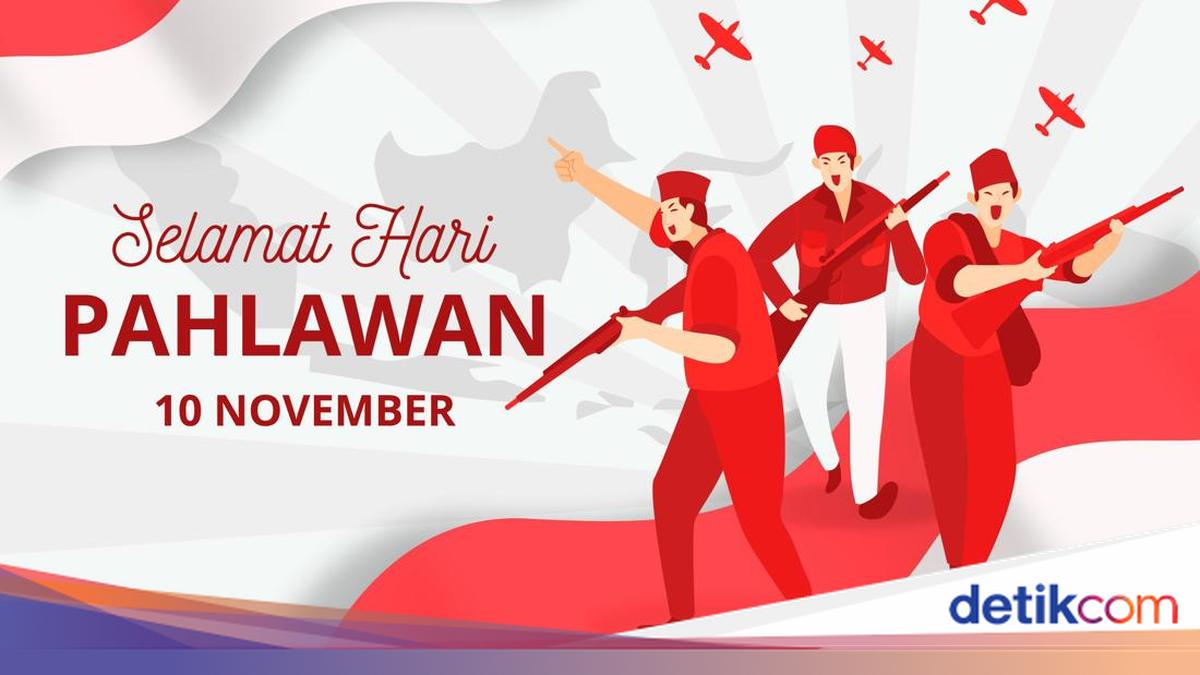
Offices and schools will operate as usual on Tuesday, 10 November 2026. Nevertheless, the Red and White flag is being encouraged to fly at every home. Heroes’ Day is not a public holiday, but its significance is undiminished. This year, Indonesia will commemorate it for the 81st time.
For readers, particularly those in Bali, there is an aspect of the story that is rarely discussed. The events of 10 November 1945 are connected to the island, from a voice on the airwaves to a battle in Tabanan.
10 November is not a public holiday
The government has not designated 10 November 2026 as a national public holiday or collective leave day. This is in accordance with the Joint Decree of Three Ministers No. 1497 of 2025, No. 2 of 2025 and No. 5 of 2025, issued on 19 September 2025. In September, October and November 2026, there are no national public holidays or collective leave days apart from Sundays.
Heroes’ Day has been a national observance, rather than a public holiday, since its inception. President Soekarno established it through Presidential Decree No. 316 of 1959 on 16 December 1959.
The 81st Heroes’ Day
The Ministry of Social Affairs has chosen the theme “My Hero, My Role Model: Moving Together to Continue the Struggle”. Its official logo combines a flame, hands and a heart, symbolising courage, mutual cooperation and selfless service.
The commemorations include a national pilgrimage and solemn reflection at the Kalibata Main National Heroes Cemetery, a flower-laying ceremony in Jakarta Bay, and the presentation of National Hero titles at the State Palace. Flag-raising ceremonies will be held at 08.00 local time at government offices and institutions. The public is also encouraged to fly the national flag at full mast at homes, offices and in residential areas.
A torn flag and an ultimatum
The Battle of 10 November did not erupt overnight. The story began on 19 September 1945, when a group of Dutch people raised the red, white and blue flag at the Hotel Yamato in Surabaya. Angered residents climbed the hotel and tore off the blue section, leaving the red and white.
Allied forces landed in Surabaya on 25 October 1945, and the first battle with British troops broke out on 27 October. The conflict reached a turning point on 30 October, when Brigadier General A.W.S. Mallaby was killed in a firefight. Mallaby’s successor, Major General Robert Mansergh, issued an ultimatum on 9 November 1945, demanding that Indonesian fighters surrender their weapons by 06.00 on 10 November.
The ultimatum was rejected. East Java Governor Soerjo firmly refused it, and for the people of Surabaya, surrendering their weapons was tantamount to surrendering an independence that was only a few months old. A major battle broke out and continued for several weeks.
A voice from the Radio Pemberontakan
The most powerful weapon of the Surabaya fighters was not only the bamboo spear. Radio Pemberontakan, which first went on air on 15 October 1945, broadcast Bung Tomo’s calls to resistance across the city. Its broadcasts were in Indonesian, regional languages and English, so that the world would know what was happening.
The English-language broadcaster had close ties to Bali. She was K’tut Tantri, a Glasgow-born woman whose birth name was Muriel Stuart Walker. She had been adopted by a Balinese royal family and took a Balinese name meaning “fourth child”.
On 10 November 1945, amid bombs and mortar shells falling around the transmitter, she continued reading speeches in English. She became known to the world as “Surabaya Sue”. When she died, her ashes were scattered on Bali.
Just 11 days after the first anniversary of the Battle of Surabaya, Bali had its own heroic chapter. On 20 November 1946, I Gusti Ngurah Rai, born in Canangsari, Badung, led the Puputan Margarana battle in Marga village, Tabanan. According to historical records, he and about 96 of his men faced more than 2,000 Dutch troops and chose to fight to the death rather than surrender. The government awarded him the title of National Hero in 1975.
The memory of the battle is preserved at Taman Pujaan Bangsa Margarana, about 25 kilometres north-west of Denpasar. Every 20 November, residents hold a commemoration of Puputan Margarana Day there.
How to commemorate National Heroes’ Day 2026
Commemoration need not take the form of a ceremony. Here are some simple ways to mark the day:
Fly the Red and White flag at full mast at home or at your place of business.
Attend a ceremony at school, at work or in your neighbourhood.
Revisit stories of the independence struggle, including those of regional figures such as I Gusti Ngurah Rai.
Visit Taman Pujaan Bangsa Margarana and its struggle museum in Tabanan.
Put the spirit of the occasion into practice through concrete actions, such as helping others and safeguarding unity.
Source: jawawa.id (https://jawawa.id/newsitem/is-10-november-2026-a-public-holiday-the-history-of-heroes-day-1794207023)
Originally published by detikBali (https://www.detik.com/bali/berita/d-8744783/10-november-2026-apakah-tanggal-merah-ini-sejarah-hari-pahlawan), translated from Indonesian