
Iridescent Clouds Explained: The Science Behind the Rainbow Effect
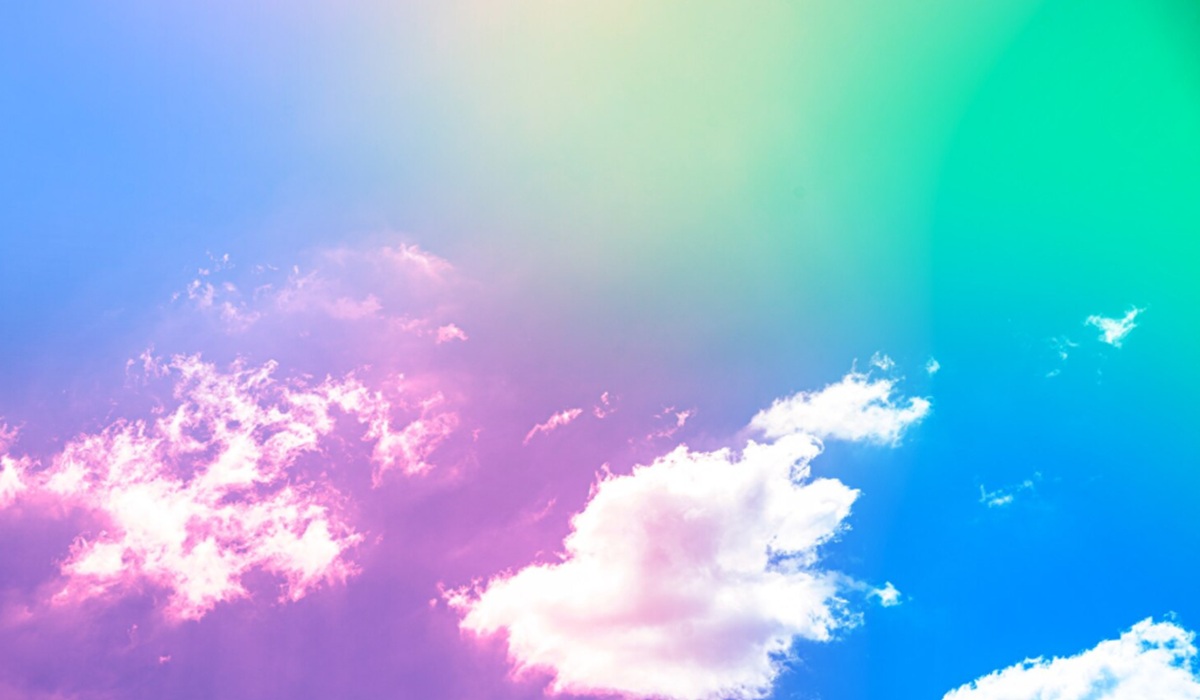
The phenomenon of colourful clouds, commonly known as ‘iridescent clouds’, has been trending on social media. Photos and videos showcasing skies with beautiful gradient colours have sparked public curiosity about the natural processes behind them.
In response, Sonni Setiawan, a lecturer in the Department of Geophysics and Meteorology at IPB University, explained that iridescent clouds are a natural atmospheric optics phenomenon. The vibrant colours arise from solid scientific principles.
According to Sonni, iridescent clouds occur when sunlight undergoes diffraction by tiny particles within the clouds. These particles can be microscopic water droplets or ice crystals, measuring between 0.001 and 0.01 mm.
“Sunlight is polychromatic radiation, so diffracted light with different wavelengths either reinforces or cancels each other at certain angles. This creates the red, green, blue, and purple hues along the edges of the clouds,” Sonni explained.
However, not all clouds can display this rainbow effect. The phenomenon requires thin clouds to allow sunlight to penetrate and interact with the particles. If the clouds are too thick, the light is blocked and the colour effect does not appear.
Although they may seem similar at first glance, the formation of iridescent clouds differs significantly from rainbows seen after rain. The key difference lies in how light interacts with water particles.
Sonni noted that in iridescent clouds, there are numerous very small water droplets, leading to double diffraction and overlapping interference patterns. The result is not a perfect arc but a chaotic yet beautiful gradient of colours along the cloud edges.
“Iridescent clouds typically form in newly formed altocumulus clouds, where water droplets are uniform and haven’t yet merged into larger droplets,” he added.
The phenomenon can occur in various regions provided atmospheric conditions are favourable, including the influence of previous cumulonimbus clouds contributing to the formation of thin high-altitude clouds. The public is encouraged to appreciate this natural spectacle as an educational phenomenon.
“People can enjoy its appearance as part of nature’s beauty while understanding the scientific processes behind it,” Sonni concluded.