
IRI Indonesia Launches Campaign
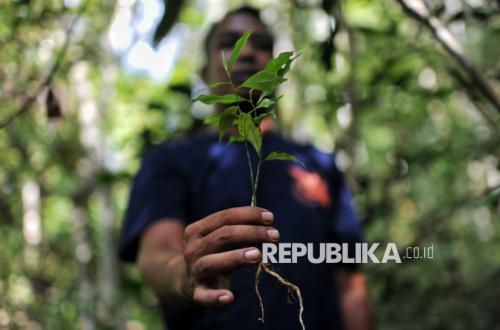
REPUBLIKA.CO.ID, JAKARTA — The Interfaith Rainforest Initiative (IRI) Indonesia has launched the “No Forests, No Future” campaign as a moral, interfaith movement to strengthen the protection of tropical forests and indigenous communities in Indonesia. This launch marks the beginning of the third phase of IRI Indonesia for the period 2025–2029, while also expanding cross-sector collaborations.
In its statement, IRI revealed that the “No Forests, No Future” campaign is not merely ceremonial but serves as a space for consolidating ideas and shared commitments in response to the increasing pressures on forests. IRI Indonesia’s National Facilitator, Hening Parlan, stated that the campaign emerges as a response to the rising threats to tropical forests over the past few decades.
“Forests are not just landscapes. They safeguard the water we drink, stabilise the climate, and support the lives of indigenous communities. If forests disappear, the future vanishes with them,” she said during the campaign launch in Jakarta on Friday (17/4/2026).
According to her, past forest protection efforts have tended to emphasise technocratic approaches, while moral and value-based dimensions have not been fully maximised. With more than 90 per cent of Indonesia’s population embracing religion, Hening believes that a values-based approach has great potential to foster collective awareness.
The launch of this campaign is inseparable from the ongoing pressures on Indonesia’s forests due to plantation expansion, mining, logging, and large-scale development. Deforestation leads to the loss of forest cover, accelerates the climate crisis, and threatens the sustainability of communities’ lives.
Representative of the IRI Indonesia advisory board, M. Ali Yusuf, stated that the strengths of religion, indigenous communities, academics, and civil society organisations need to be united in a single joint movement. “IRI wants to accelerate the protection of tropical forests by uniting forces that have previously operated independently,” he emphasised.
Dean of the Faculty of Biology and Agriculture at Universitas Nasional, Fachruddin Mangunjaya, views the root of forest damage problems as lying in human behaviour. He emphasised that religious values such as prohibitions against destruction, encouragement to share, and self-control can serve as important foundations in preserving the environment.