
IRI Indonesia Expands Interfaith Movement to Protect West Papua's Forests
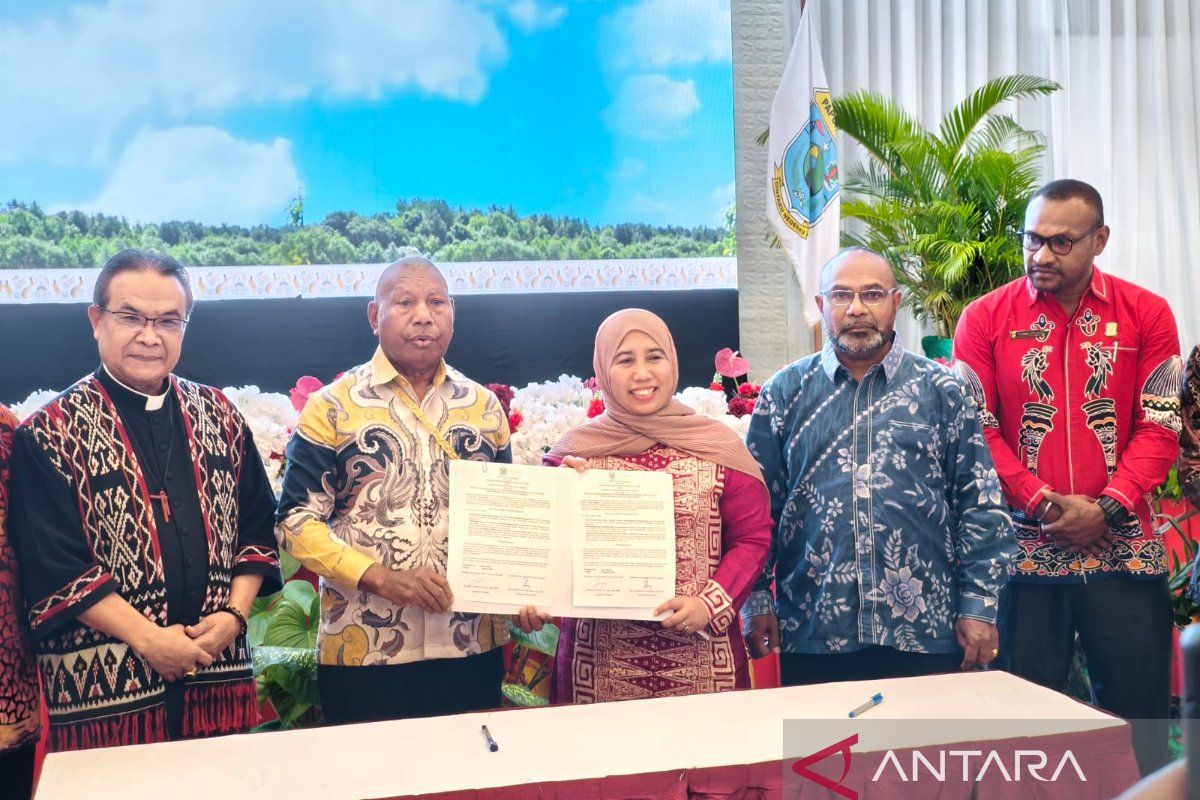
Interfaith Rainforest Initiative (IRI) Indonesia is expanding its interfaith collaboration movement to achieve ecological justice and sustainable protection of forests in West Papua Province.
IRI Indonesia National Facilitator Hening Parlan in Manokwari on Thursday said forests should not be viewed merely as objects, but as nature and a gift from God that serves as a balancer of life.
“Forests also serve as places of worship for all religious communities. Therefore, we must all prioritise moral values in caring for forests,” she said.
According to her, every religion teaches values of compassion and prohibits actions that could potentially damage forest sustainability so that life between humanity and God’s creation runs in harmony and balance.
Humans as social beings endowed with intellect, body and spirit have a responsibility to protect forests, so that illegal logging practices or natural resource exploration activities do not occur.
“Long before that, indigenous communities already lived side by side with nature. So, I invite interfaith communities to collaborate with indigenous communities to protect forests,” Hening said.
She said the expansion of the interfaith movement in protecting forest sustainability is highly relevant to West Papua’s commitment, which has declared itself a conservation province or sustainable development province.
“We want development to proceed hand in hand with efforts to protect forests, not the other way around by damaging forest ecosystems,” she said.
West Papua Governor Dominggus Mandacan said indigenous communities view forests not only as natural resources, but as an inseparable part of their socio-cultural identity, spirituality and local wisdom.
West Papua plays an important role in protecting biodiversity and mitigating climate change, because forest areas serve as habitats for various species and absorb carbon dioxide emissions.
“Religion and faith must not stop at spiritual rituals in places of worship, but must be present in real life to shape ethics and morals in protecting the environment,” he said.
He said the West Papua Provincial Government, through Special Regional Regulation Number 10 of 2019 on Sustainable Development, has committed to protecting at least 70 percent of forest ecosystems and 50 percent of water areas.
Maximum forest protection requires the involvement of indigenous communities, religious organisations, civil society, businesses, academics and mass media because the government cannot work alone.
In addition, Dominggus also asked IRI Indonesia to support the development of indigenous community economies based on green economy principles and local potential through the Productive West Papua programme.