
IRGC Takes Control of the Strait of Hormuz as 26 Ships Are Granted Passage
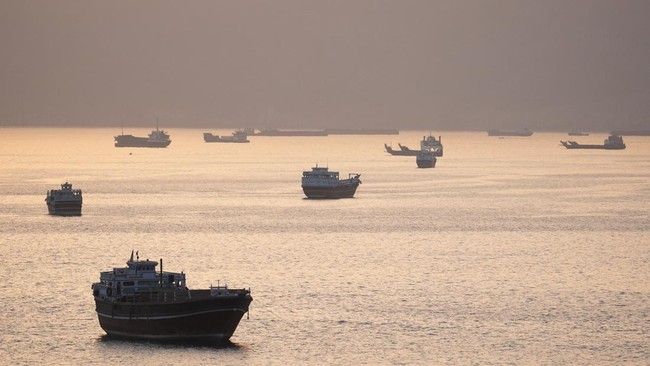
The Islamic Revolutionary Guard Corps (IRGC) announced that all vessel traffic through the Strait of Hormuz is now under the coordination and direct permission of its naval forces. The statement came amid a stalemate in negotiations between Tehran and Washington over reopening the world’s most vital energy shipping route. In a statement cited by Iran’s government-affiliated news agency ISNA on Wednesday (21 May 2026), the IRGC said it had coordinated the passage of 26 ships in the previous 24 hours through the Strait of Hormuz. ‘Traffic through the Strait of Hormuz is conducted with permission and in coordination with the IRGC Navy,’ the IRGC said, as reported by Al Jazeera. The move shows that Iran is tightening its control over the Strait of Hormuz, the narrow sea lane that previously carried about one-fifth of global energy exports before the US-Israel war against Iran erupted on 28 February. Shortly after the IRGC statement, the Persian Gulf Strait Authority (PGSA) also released a new map of the Strait of Hormuz via its official X account. In the map, Iran marks a maritime zone described as off-limits to vessels without official authorisation from Iranian authorities. PGSA explains the zone extends from Kuh-e Mubarak in Iran to the southern coast of Fujairah in the United Arab Emirates at the eastern entrance to the strait. On the western side, the monitoring area extends from the tip of Qeshm Island to Umm al-Quwain. The announcement underscores a major shift in the governance of international shipping routes, which for decades has been a lifeline of global energy trade. Amid the situation, U.S. President Donald Trump said there was still ‘progress’ in talks with Iran. But at the same time, Trump again threatened to resume military action if Tehran does not agree to a peace deal. A hard line also came from Tehran. Foreign Minister Abbas Araghchi warned that if war breaks out again, the next conflict would bring much greater consequences. ‘The return of war would bring far more surprises,’ Araghchi said. The IRGC even stressed that if Iran is attacked again, the conflict would no longer be confined to the Middle East. They said this ‘battle this time’ would be expanded beyond the regional area. Some analysts say that both Washington and Tehran now share the belief that prolonging economic pressure will yield greater bargaining leverage against their opponent. Will Todman, a senior fellow at the Center for Strategic and International Studies (CSIS), said both sides appear confident their opponent will be economically hit first if the deadlock persists. ‘I think it is very hard to see something that could truly alter their calculations, because both sides seem to believe that the longer this stalemate lasts, the greater their bargaining power as their opponent suffers economically,’ Todman told Al Jazeera.