
IRGC Hints at Targeting Hormuz Strait Internet Cables, Raising Global Concern
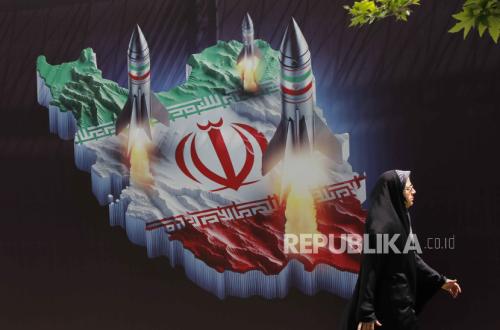
JAKARTA — Iran has widened its military threats by hinting that undersea internet cables in the Strait of Hormuz could be targeted. The warning from the Islamic Revolutionary Guard Corps (IRGC) raises new risks for international communications networks that support banking transactions, digital trade, healthcare services and cross-border economic activity. Qatar quickly warned that such a move could also harm Iran itself.
IRGC spokesman Brigadier General Hossein Mohebbi said seven major communications cables run along the seabed of the Strait of Hormuz. He made the warning at the launch of a new publication by 27 Ba’sat publishers at the Holy Defence Museum in Tehran on Monday (19 October 2026).
“Seven major internet cables cross the seabed of the Strait of Hormuz. All internet and trade data pass through these cables,” Mohebbi said, according to Iranian media outlets Entekhab and IranWire on Tuesday (20 October 2026).
Mohebbi then said Iran was preparing to expand its military targets if tensions with the United States rise again.
“We only want them to know that new targets will be revealed. New weapons will also be introduced,” he said.
The remarks drew attention because they came as the United States-Israeli war against Iran entered its eighth month. Although major military operations largely subsided after an understanding was reached in June, tensions in the Strait of Hormuz have continued and attacks on commercial vessels have increased again in recent weeks.
IranWire reported that Mohebbi also warned of a more severe energy crisis if Washington launched another military operation against Iran. He said any new US military action would prompt a harsher response from Tehran.
However, the IRGC’s statement was not an announcement that the Iranian government had decided to attack or sever undersea communications cables. There have also been no confirmed reports that the seven cables mentioned by Mohebbi have been attacked.
Qatar warns the consequences could rebound on Iran
The threat to undersea communications networks quickly drew the attention of Gulf states. Qatar’s Ministry of Foreign Affairs warned Iran on Tuesday (20 October 2026) to consider the wide-ranging consequences of any attack on international communications cables in the Strait of Hormuz.
Ibrahim Al Hashmi, the ministry’s director of media, said severing internet cables could harm countries across the region, including Iran’s own population.
As reported by The National, Al Hashmi warned that disruption to communications cables, the threat of sea mines and oil pollution could cause major losses for countries dependent on trade routes and regional infrastructure.
Qatar also called for freedom of navigation to be respected and for the marine environment to be protected.
Doha’s warning indicates that threats to digital infrastructure are not solely a matter for the United States and Iran. Gulf states have a direct interest in undersea cable security, as the region is a hub for trade, energy, finance and digital technology development.
Qatar, the United Arab Emirates, Bahrain, Oman and Saudi Arabia rely on international communications networks to support economic activity, including payment systems and cloud-computing services. Disruption to regional connectivity could affect countries not directly involved in military operations.
Qatar said diplomatic communication between Washington and Tehran was continuing, although negotiations to end the conflict had yet to produce a resolution.
Threats to digital infrastructure have been voiced before
The IRGC’s latest warning is not the first time Iranian officials have identified digital infrastructure as a possible target in the conflict.
Al Jazeera reported on 13 October 2026 that Mohsen Rezaei, secretary of Iran’s Supreme National Security Council, had previously warned of possible attacks on communications cables, data centres and artificial intelligence (AI) facilities in the region.
Rezaei said digital infrastructure linked to US interests could be targeted if military hostilities escalated again.
The threat signals Iran’s expanding focus beyond energy facilities and shipping lanes to the technological infrastructure underpinning the modern economy.
In its report, Al Jazeera quoted Andreas Krieg, a senior lecturer in security studies at King’s College London, who said Rezaei’s threat should be taken seriously.
Krieg explained that data centres depend on electricity supplies, cooling systems and stable telecommunications connectivity. Disruption to any one of these key components could halt a facility’s operations even if its main computing equipment were not directly damaged.
However, Krieg distinguished between a country’s ability to cause major disruption and its ability to destroy digital infrastructure comprehensively. He said Iran’s threats also had a political dimension, intended to pressure Gulf governments to consider the consequences of any renewed escalation in US military operations.