
Iraq Deliberately Devalues the Dinar by 14.5%
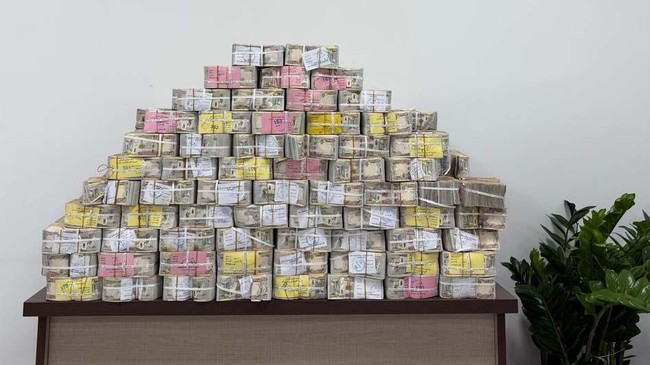
Jakarta, CNBC Indonesia — The Iraqi government has taken a major step by officially devaluing its currency, the dinar, against the US dollar.
The decision comes as Iraq’s economy faces pressure from the US-Israeli war against Iran. The conflict, which has lasted for months, has disrupted Iraqi oil shipments, even though oil is the country’s main source of revenue.
According to Reuters, the Iraqi government on Wednesday (7 October 2026) officially set a new exchange rate of 1,520 dinars to the US dollar. The move represents a reported 14.5% devaluation against the previous rate.
The cabinet approved the decision on Tuesday (6 October 2026), and it took effect the following day.
Under the new rules, the Finance Ministry set the rate for purchasing dollars at 1,500 dinars, while banks and non-bank financial institutions will sell dollars to end recipients at 1,510 dinars per US dollar.
The move makes Iraq one of several countries to officially devalue its currency in 2026 amid economic pressure from geopolitical conflict and disruption to international trade.
Why is Iraq deliberately weakening its currency?
Iraq’s decision may seem unusual. While many countries try to prevent their currencies from weakening against the US dollar, the Iraqi government has chosen to reduce the dinar’s value officially.
The move is closely linked to mounting pressure on the country’s finances.
Iraq relies heavily on oil sales for revenue. However, the war in Iran has disrupted oil shipping routes through the Persian Gulf, causing Iraqi exports to fall sharply.
Before the war, Iraq was able to export more than 3.6 million barrels of oil a day. In August 2026, exports fell to about 2.34 million barrels a day.
This decline came even as global oil prices surged above US$100 a barrel because of energy supply disruptions in the Middle East.
Iraq’s 2026 budget plan had projected oil exports of about 4 million barrels a day, including exports from the Kurdistan region, and assumed an oil price of US$58 a barrel.
The government, meanwhile, planned spending of 217 trillion dinars, or about US$166 billion, and projected a deficit of more than 40 trillion dinars.
Under these circumstances, the government needs more dinars to fund public spending while dollar revenue from oil exports is being disrupted.
Devaluation is one way to address this problem. When the dinar loses value, each dollar earned from oil sales can be exchanged for a larger amount of dinars.
For example, at the previous rate of 1,320 dinars to the US dollar, US$1 million was worth 1.32 billion dinars. At the new rate of 1,520 dinars to the dollar, the same amount is worth 1.52 billion dinars.
The government therefore receives an additional 200 million dinars for every US$1 million converted at the two respective rates, even though its dollar income has not increased.
“The devaluation of the dinar is essentially a fiscal response to pressure on Iraq’s oil revenues caused by the war with Iran and disrupted exports,” Iraqi analyst Mohammed al-Saffar told Reuters.
However, the policy also carries risks for the public.
“The move gives the government more dinars for every dollar of oil revenue, but increases import costs and reduces household purchasing power,” he added.
When the dinar weakens, companies have to pay more to buy goods from abroad. If those costs are passed on to consumers, the prices of a range of essential goods may also rise.
Devaluation may therefore help government finances in the short term, but it will not automatically solve Iraq’s economic problems.
Iraq follows other countries that have devalued their currencies
Iraq is not the only country to have officially lowered the value of its currency this year. Several others have taken similar steps under economic pressure, including falling export revenues and difficulty obtaining US dollars.
Two countries that devalued their currencies in 2026 are Libya and Bolivia.
Libya
Libya devalued its currency earlier, on 18 January 2026. The country’s central bank cut the value of the Libyan dinar by 14.7% to 6.3759 dinars per US dollar.
It was the second devaluation in less than a year. In April 2025, Libya had already reduced the value of its currency by 13.3%.
The causes were similar to those in Iraq, namely pressure on oil revenues.
Libya has also faced domestic political problems, including a divided government, the absence of a unified national budget and rising public spending.
As a result, the government has struggled to maintain economic stability, despite Libya being one of Africa’s oil-rich countries.
Bolivia
Bolivia took a similar step in June 2026, although the circumstances were somewhat different.
The Bolivian government decided to end its pegged exchange-rate policy against the US dollar, which had been in place for about 15 years.
The official rate had previously been kept at between 6.86 and 6.96 bolivianos per US dollar since 2011.
However, dwindling foreign-exchange reserves and a shortage of dollars made the policy difficult to maintain. On the unofficial market, the US dollar had at one point traded at nearly 20 bolivianos.
The Bolivian government eventually shifted to a more flexible exchange-rate system. The central bank set an official rate of about 9.73 bolivianos per US dollar, reflecting a currency devaluation of around 30%.
The decision was also part of Bolivia’s effort to restore economic stability and open the way to potential funding from the International Monetary Fund (IMF).
The three countries’ 2026 devaluations reflect different underlying problems. Iraq and Libya are facing pressure on oil revenues, while Bolivia is struggling to obtain dollars and maintain a fixed exchange-rate system.
All three, however, face the same risk after devaluation: higher prices for imported goods and weaker household purchasing power.
Source: jawawa.id (https://jawawa.id/newsitem/iraq-deliberately-devalues-the-dinar-by-14-5-1791553916)
Originally published by CNBC Indonesia (https://www.cnbcindonesia.com/research/20261009112223-128-774691/irak-sengaja-bikin-dinar-anjlok-devaluasi-besar-besaran), translated from Indonesian