
Iran's New Strategy to Confront the US: Weaponising the Strait of Hormuz
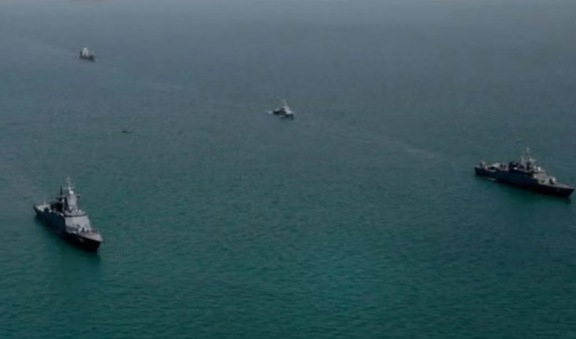
Iran has altered its approach to confronting the United States after being targeted twice by joint US-Israeli attacks. Tehran now considers its geographical location to be a far more potent strategic asset than its military might. This new calculation emerged after Iranian leaders concluded that the Western economy is heavily dependent on oil supplies passing through the Gulf region. Consequently, Iran is reportedly preparing scenarios to disrupt global energy distribution channels should the conflict escalate further.
Tensions reignited after the US struck around 90 targets in Iran, prompting Tehran to retaliate with missile and drone attacks on American military bases in Kuwait and Bahrain. The counter-attack was described as the initial phase of punishment against Washington. Amid the volatile situation, Iranian officials have issued increasingly stern warnings. Ebrahim Azizi, Chairman of the Iranian Parliament’s National Security and Foreign Policy Commission, stated that any new action or miscalculation by America would be met with a firm, devastating, and painful response, threatening to strip enemies of their security worldwide if Iran’s security is compromised.
A doctrine published by the Fars news agency, which is affiliated with the Islamic Revolutionary Guard Corps, outlines four main steps should war break out again. The first step involves closing the Strait of Hormuz, a waterway through which roughly one-fifth of the world’s oil trade passes, by deploying naval mines, attacking tankers, and crippling neighbouring countries’ production facilities and refineries. The second strategy is to extend the pressure to the Bab el-Mandeb Strait in the Red Sea through the Houthi group in Yemen. The simultaneous disruption of both chokepoints would significantly impact energy distribution from the Middle East to Europe and Asia.
The third step aims to increase the political and military costs for the US by encouraging asymmetric attacks on American military personnel, making Washington deem the cost of war far greater than the benefits. The fourth strategy involves applying ‘strategic ambiguity’ to create uncertainty about the limits of Iran’s response, forcing opponents to consider more extreme possibilities. The doctrine asserts that any new aggression must be met with attacks directly targeting the vital interests of the United States and its allies. Despite suffering damage from previous wars, Iran is reportedly accelerating its defence preparations, boosting the production of ballistic missiles, combat drones, and air defence systems since a ceasefire took effect. A military official stated that preparations for war are being intensified, with no current shortages, though uncertainty remains about America’s next moves.