
Iran's Influence in the Strait of Hormuz Weakens, How Long Can Tehran Hold Out?
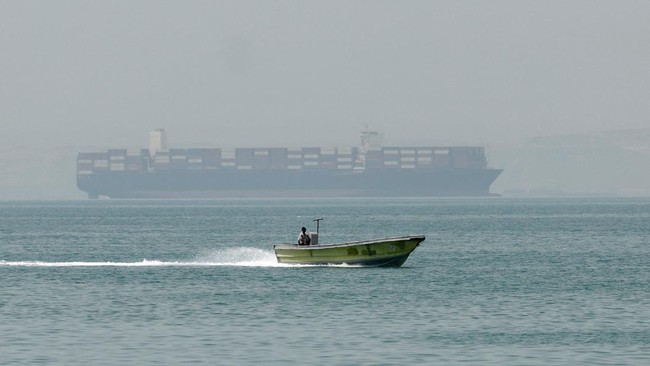
Iran is reportedly beginning to lose some of its control over the Strait of Hormuz, the strategic waterway that has become one of the main flashpoints in the war with the United States. The latest data shows that tankers are increasingly choosing the lane on the Omani side despite threats from Iran.
According to shipping analytics firm Kpler, more than 80% of vessels transiting the Strait of Hormuz over the past two weeks have used the Oman route, the official UN-designated shipping lane that Iran has long opposed.
“It increasingly appears that Iran has at least lost some control over the strait,” said Kpler’s Head of Crude Oil Analysis, Homayoun Falakshahi, as quoted by CNN International on Wednesday (19/8/2026).
The change is quite drastic compared with a month earlier, when almost no ship traffic used the Oman route. Now, vessels are ignoring Iran’s demands and transiting while relying on promises of protection from the United States Navy.
The situation is also making it difficult for Iran to collect tolls from ships passing through the Strait of Hormuz. Dan Pickering, founder and chief investment officer of Pickering Energy Partners, said the Oman route is the most sensible option for ship operators.
“Iran’s demand to collect tolls is something most people in the Middle East do not want to do and have not done,” he said.
Kuwait, Saudi Arabia and the United Arab Emirates are even said to be chartering VLCC tankers to carry oil out of the Persian Gulf through the Strait of Hormuz. According to Lipow Oil Associates President Andy Lipow, the oil is then transferred to customer tankers outside the danger zone in the Gulf of Oman to reduce the risk of Iranian attacks.
A number of ships have also switched off their transponders for weeks to avoid attack, creating what is being called “dark traffic”. Nevertheless, the United States, with its military power in the region, claims to be able to monitor ship movements and record larger oil shipment volumes than previously estimated.
US Energy Secretary Chris Wright said total oil transit through the Strait of Hormuz and alternative routes reached around 15 million barrels per day over the past week. That figure is close to the pre-war average of around 20 million barrels per day, prompting President Donald Trump on Monday to claim the US has “full control over the strait”.
However, that claim is considered to go too far because Iran is still able to attack ships and retains some capacity to disrupt shipping.
“If their goal is to be ‘in charge’, then I would say they were never fully in control to begin with,” Pickering said.
Amid these conditions, Oman and Iran are also in discussions to restore freedom of navigation without US involvement, which could once again redraw the map of control over the world’s most strategic oil route.
Source: jawawa.id (https://jawawa.id/newsitem/irans-influence-in-the-strait-of-hormuz-weakens-how-long-can-tehran-hold-out-1787151130)
Originally published by CNBC Indonesia (https://www.cnbcindonesia.com/news/20260819190756-4-760731/pengaruh-iran-di-selat-hormuz-melemah-sampai-kapan-teheran-bertahan), translated from Indonesian